Few Signs of a Pullback in Life Sciences in North Carolina’s Research Triangle
By Amanda Abrams
March 1, 2023
Text Size:AAAPrintEmailShareFacebookLinkedInTwitter
“It has been a historic run,” said Matthew Gardner, CBRE’s head of life sciences for the Americas, speaking at ULI’s 2023 Carolinas Meeting in February.
Gardner was addressing the U.S. market for life sciences real estate. While the field had been hot since around 2015, it began to boom in 2020 as a result of the COVID-19 pandemic and the race to create a vaccine. That boom hit a peak in mid-2022, and the market has since cooled. But the contraction has been relatively mild, said Gardner.
“The absorption rate has slowed, but not at the levels we feared,” he explained. In many of the nation’s hottest life sciences markets, like Boston and San Francisco, vacancy rates still hover around 2 percent. While conversions of existing spaces have slowed, the pace of new construction remains steady.
And the potential for continued growth is robust. Among venture capital firms, the funding is there to support startups. Meanwhile, the rate of drug development has increased. In 2000, there were 2,000 Phase 2 and Phase 3 clinical trials happening throughout the country; a decade later, only 3,000 were occurring. This year, 12,000 trials are taking place.
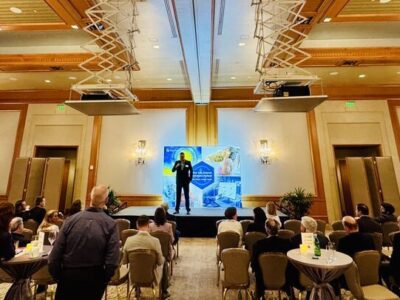
From left to right: Chase Kerley, managing director at Crescent Communities; Sarah Gaskill, head of sustainability and ESG at Fujifilm Diosynth Biotechnologies; Michael Haley, executive director of Wake County’s economic development department; and Matthew Gardner, CBRE’s head of life sciences for the Americas, speaking at the 2023 ULI Carolinas Meeting in Raleigh.
“The fundamentals are still overwhelmingly positive,” said Gardner.
Gardner was speaking in North Carolina’s Raleigh-Durham metropolitan area, one of the nation’s top five regions for life science companies. That market, said Gardner, “has seen a generational wave of new construction,” absorbing $10-$15 billion in new investment over the past three years. It hasn’t just occurred in the Research Triangle Park or downtown Raleigh: new life science companies are locating all over Wake County and the wider region.
Read the full article at: urbanland.uli.org