
For more than two decades, Philadelphia has steadily established itself as a powerhouse of Advanced Therapy innovation. Breakthroughs at the University of Pennsylvania, Children’s Hospital of Philadelphia (CHOP), Jefferson and Temple Universities, and the Wistar Institute have fostered a vibrant biotech ecosystem tackling some of the world’s most challenging diseases.
That ecosystem just received a major vote of confidence. Gilead’s Kite, one of the world’s leaders in engineered T-cell therapies, has agreed to acquire Interius BioTherapeutics, a Penn spinout pioneering in vivo delivery of CAR-T therapies, in a deal valued at $350 million in cash. Interius’ platform aims to engineer CAR-T cells directly inside the patient—an approach that could simplify manufacturing, lower costs, and expand access.
This isn’t Kite’s first Philadelphia venture. In 2023, the company acquired Tmunity Therapeutics for an undisclosed sum, gaining a pipeline of next-generation T-cell programs and a research agreement with CAR-T pioneer Dr. Carl June. As part of the deal, Tmunity’s Norristown, PA, manufacturing facility was divested and later sold to Resilience. Kite maintained Tmunity’s Philadelphia R&D operations for about a year but eventually closed the labs, consolidating work into its other sites. By October 2024, Kite had fully exited its Philadelphia operations.
Against this backdrop, the Interius acquisition takes on even greater significance. It signals that, despite past contractions, Philadelphia’s Advanced Therapies sector remains indispensable to the future of cell therapy—and Interius is now positioned as one of its leading torchbearers.
Interius: Born in Philadelphia, Built for the Future of CAR-T
Founded in 2019 based on the idea of Dr. Saar Gill at the University of Pennsylvania, Interius BioTherapeutics embodies Philadelphia’s leadership in cell therapy. Co-founded with biotech veteran Bruce Peacock and headquartered at Pennovation Works, the company has grown to nearly 50 employees and is backed by top investors, including Cormorant Asset Management, Fairmount Funds, Pfizer Ventures, and RA Capital Management. To date, Interius has raised approximately $170 million, including a $76 million Series B in 2024.
CAR-T therapy has transformed cancer care, but its reach remains limited. The standard ex vivo model—extracting, modifying, and reinfusing a patient’s cells—is costly, slow, and accessible to only a fraction of the patients who need it.
Interius is rewriting that model. Instead of removing cells from the body, its in vivo CAR-T platform uses a proprietary gene-delivery vector to engineer immune cells directly within the patient—in the spleen, bone marrow, and lymph nodes. With a single infusion, the approach has the potential to deliver the benefits of CAR-T without the bottlenecks of manufacturing, chemotherapy, or long wait times.
That vision is already advancing in the clinic. In October 2024, Interius dosed the first patient in Australia in a Phase 1 trial of its lead candidate, INT2104, for B-cell malignancies. Preclinical studies showed potent B-cell depletion in animal models without neurotoxicity or cytokine release syndrome. The trial will enroll up to 30 patients, with initial safety and proof-of-concept data expected in 2026.
In Vivo and Philadelphia’s Role in Advanced Therapies
Kite’s acquisition of Interius BioTherapeutics is more than just another M&A move — it signals that the future of cell therapy may be shifting toward in vivo approaches. Founded in 2009 and acquired by Gilead in 2017, Kite has a decade-plus history of pioneering CAR-T therapies, including the development of Yescarta, one of the first FDA-approved CAR-T treatments for blood cancers. Unlike traditional ex vivo CAR-T therapies that require complex manufacturing outside the body, in vivo platforms aim to engineer CAR-T and CAR-NK cells directly inside the patient. The promise is faster treatment, lower cost, and broader accessibility — addressing some of the biggest bottlenecks that have limited the reach of cell therapies.
Kite isn’t the only pharma organization staking a claim in this space. Just weeks earlier, AbbVie announced its $2.1 billion acquisition of Capstan Therapeutics, another leader in in vivo cell therapy for autoimmune diseases. While Capstan is based in San Diego, it was originally spun out of the University of Pennsylvania — a reminder of Philadelphia’s central role as an epicenter of cell and gene therapy innovation. But it also highlights a persistent challenge: can Philadelphia not only drive the science, but also establish itself as the hub where advanced therapies can grow, scale, and commercialize?
The loss of Capstan, which grew roots elsewhere, underscores the risk that groundbreaking companies born from Philadelphia’s science may look beyond the region as they scale. That’s why all eyes will be on what Kite does with its newly acquired Interius team. If Philadelphia is to fully capitalize on its world-class science, the region needs to do everything possible to keep these companies, their talent, and their growth here. The question is no longer whether Philadelphia can generate the next big breakthroughs — it’s whether the region can hold on to them.
Philadelphia’s advanced therapies sector is navigating a period of turbulence and transition. Layoffs, slower venture funding, and high-profile exits — including Kite’s closure of Tmunity’s local operations and Spark Therapeutics’ recent workforce reductions — have challenged confidence. Spark’s $4.8 billion gene therapy acquisition in 2018 and its $575 million manufacturing facility remain a point of uncertainty, with questions about if and when the facility will actually come online.
Yet despite these headwinds, Philadelphia continues to generate breakthroughs that reaffirm its status as a global biotech hub. Kite’s acquisition of Interius BioTherapeutics signals that global pharma still sees Philadelphia as fertile ground for transformative science.
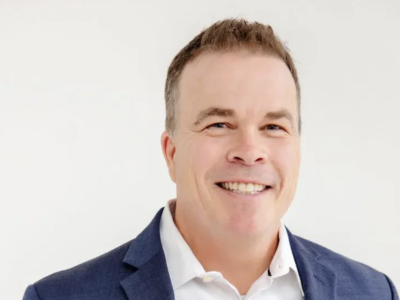
Dr. Phil Johnson CEO of Interius, said:
“Philadelphia has long been at the forefront of cell and gene therapy, and this acquisition is a testament to the strength of the ecosystem here. Interius was born out of Penn (Dr. Saar Gill), shaped by the incredible scientific talent, infrastructure, and collaboration that makes this region a global leader in advanced therapies. Becoming part of Kite is not only a milestone for our company but also a win for Philadelphia, reinforcing its role as the birthplace of innovation that is transforming how we treat disease and expanding what’s possible for patients everywhere.”
Adding to that momentum, Dispatch Bio — launched by Penn innovators including Dr. Carl June with Spark co-founder Jeff Marrazzo as board chair — recently emerged from stealth with $216 million to advance next-generation CAR-T therapies for solid tumors. With deep roots in Philadelphia also has opened up a San Francisco office, Dispatch Bio underscores the city’s ongoing role as an epicenter for scientific breakthroughs in cell and gene therapy. Philadelphia’s ecosystem doesn’t just invent science — it gives companies the environment, resources, and community to grow, scale, and thrive.
Philadelphia Advanced Therapies Investment: Numbers Tell the Story
Investment data paints a nuanced picture, highlighting both challenges and opportunities for growth in Philadelphia’s life sciences sector. According to the upcoming BioBuzz Greater Philadelphia Life Science Investment Report, due this September:
While funding in the first half of 2025 trails prior years, the numbers show that Philadelphia continues to attract substantial investment, particularly in gene therapy, which has more than doubled since 2023. This signals sustained confidence in the city’s scientific and technical potential.
However, investment alone is not enough. Generating new companies is only half the battle; retaining them in Philadelphia requires ongoing local venture support, strong networks, and a culture that encourages companies to scale here. Maintaining the city’s status as a leading biotech hub will depend on ensuring that startups not only emerge from Philadelphia but also remain anchored in its ecosystem for the long term.
Beyond the Headlines: What Comes Next?
While the acquisition is widely celebrated, questions remain about how Kite will integrate Interius’ platform and whether operations will remain rooted in Philadelphia. The memory of Tmunity’s closure lingers, and many in the community hope Kite will deepen its investment in the region rather than consolidate elsewhere.
The potential impact of the deal is undeniable. If Kite successfully advances Interius’ in vivo CAR-T platform, it could accelerate the availability of more accessible, scalable cell therapies—delivering tangible benefits for patients while reinforcing Philadelphia’s role as a global biotech powerhouse.
Now is the time to double down on these therapies and protect the innovation happening here. Let’s not allow another cluster to take our science. Philadelphia has the skillset, the IP, and the talent—we just need the investment. As a region, we must work together to drive funding, support startups, and ensure our life sciences ecosystem continues to thrive.
Kite’s acquisition of Interius BioTherapeutics is more than an M&A headline. It’s both a symbolic and strategic moment: for Kite, it secures next-generation technology capable of expanding the reach of CAR-T therapies; for Philadelphia, it reaffirms the city as a global hub for advanced therapies, capable of generating the science that attracts world-class partners.
At a time when the biotech industry is recalibrating after years of rapid growth, this deal is a reminder that breakthrough innovation endures—and that Philadelphia is where the future of medicine is being written.