
America’s biotech advantage lies in its clusters — from Boston to the BioHealth Capital Region to the emerging Ohio Discovery Corridor, where science, talent, and capital fuel jobs and innovation.
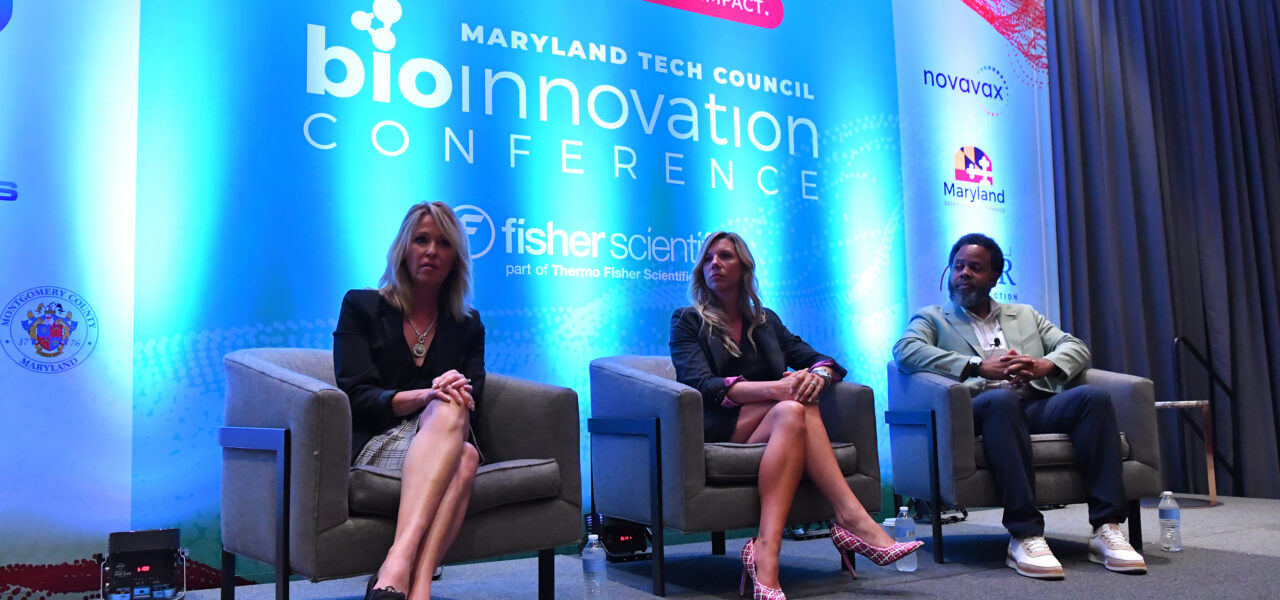
At the Maryland Tech Council’s BioInnovation Conference, hundreds of attendees gathered to for an important conversation about what powers America’s top life science clusters. The session, “U.S. Life Science Clusters: Driving Economic Growth and Workforce Development,” brought together three leaders who are shaping biotech ecosystems across the East Coast: Kelly Schulz (CEO, Maryland Tech Council), Kendalle Burlin O’Connell (President & CEO, MassBio), and John Newby (CEO, Virginia Bio). Moderated by Patrick Plues, Senior Vice President for State Government Affairs at BIO, the panel underscored how regional hubs have become not just economic engines, but also catalysts for the workforce of the future.
The Rise of U.S. Life Science Clusters
From Boston to Bethesda, America’s biotech clusters are fueling innovation, investment, and job creation at a pace that rivals any sector. But their growth hasn’t been accidental—it’s the result of decades of strategic investment, intentional ecosystem building, and collaboration between industry, academia, and government.
Plues opened the discussion by framing the stakes: “Workforce development is probably the most critical component of reshoring our supply chain in the U.S., particularly in the biopharmaceutical sector. And how we train a workforce really is a regional effort”.
Maryland: A Global Biotech Powerhouse
Often overshadowed by Boston or the Bay Area, Maryland has quietly built itself into the third-largest life sciences cluster in the world. With a rich concentration of federal institutions, academic centers, and private companies, it is an ecosystem that thrives on both talent density and policy intentionality.
Kelly Schulz, CEO of the Maryland Tech Council and former Secretary of Labor and Commerce, framed it succinctly: “You cannot have economic development without workforce development, and you cannot have workforce development without economic development. There has to be intentionality around how you build that in a very meaningful way.”
What sets Maryland apart is its federal footprint. The state is home to the NIH, FDA, National Cancer Institute, and more than 80 federal labs, creating unparalleled proximity to regulators, funding agencies, and cutting-edge research. As Schulz put it, “There really is just a plethora of talent in this region—NIH, FDA, the National Cancer Institute, our academic institutions. Access to talent, access to resources, and availability of land have all made this region strong.”
Talent density is another differentiator. Maryland boasts the highest concentration of PhDs per capita in the U.S., not only in biotech but across STEM. This concentration fuels a steady stream of startups and federal spinouts, making the state fertile ground for both established firms and new ventures.
Unlike costlier hubs, Maryland also offers scalability advantages—from land availability to a more accessible cost of living and strong transportation infrastructure. These factors position it as a pragmatic alternative for companies looking to expand operations without the price tag of Boston or the Bay Area.
Maryland’s influence extends beyond its borders through the BioHealth Capital Region, a partnership with Virginia and D.C. that deliberately branded the area as a national biotech hub. The coalition set a goal of breaking into the top three clusters by 2023—a milestone they achieved on schedule. The region now ranks #3 in the nation, leading in patents and NIH funding, with continued momentum.
Still, challenges remain. Schulz acknowledged that Maryland faces budget deficits that could strain its ability to sustain long-term investments. Yet she sees collaboration as the way forward: “We compete as regions and states, but we’re also collaborators. Our workforce is transient—they’ve already been to Boston or they’re going to California. These industries need that multi-state influence.”
Together, these assets and strategies position Maryland not just as a top-tier cluster, but as a critical hub that anchors the future of U.S. biotech.
Boston: The Epicenter of Biotech
Representing Massachusetts, O’Connell reminded the audience why Boston is often considered the epicenter of global biotech. With more than 1,000 biotech companies, 18 of the top 20 global biopharma firms with a presence, and a strong pipeline of startups spun out of academic institutions, the numbers speak for themselves.
But even the strongest clusters face challenges. O’Connell was candid about the financing headwinds: “This year looked quite different than past years… 22% of all VC funding in U.S. life sciences came to Massachusetts, but that was the lowest since 2017. Only one IPO came out of Massachusetts this year, compared to 20–25 just a few years ago”.
Despite that slowdown, she remains bullish: “What was really positive is that breakthrough science is still making its way through despite all the headwinds. Transformative, potentially curative therapies are still reaching patients. Good science will attract money, no matter what”.
She also pointed to the Massachusetts Life Sciences Initiative, a landmark public-private partnership launched in 2008 that has pumped billions into infrastructure, tax incentives, and startup funding. “You can directly correlate that money to the growth and success we’ve seen… Employment has grown over 114% since the start of the initiative”.
Virginia: Emerging Cluster with an Investment Mindset
Virginia may not yet rival Massachusetts or Maryland, but it’s quickly becoming a biotech force. Newby traced the origins of Virginia Bio back to 1992, when a forward-looking coalition of leaders recognized biotech’s long-term potential. Fast forward three decades, and the state is now making headlines for major wins in advanced pharmaceutical manufacturing.
Governor Glenn Youngkin has accelerated that growth. “Probably the biggest thing most folks know about is capital infusion… $100 million to four R1 universities to juice up our biotech capabilities in Virginia,” Newby said. More recently, the new Lab-to-Launch program was announced as a collaborative effort that unifies six R1 research universities under a unified goal to double the number of startup spinouts by removing red tape and unclogging traditional commercialization bottlenecks.
The results are tangible: Novo Nordisk, AstraZeneca, and Eli Lilly have all announced major investments in the state. As Newby put it, “We’ve been able to really establish a foothold in advanced pharmaceutical manufacturing… Virginia is now attracting global companies at an unprecedented scale”.
Collaboration Over Competition
While states naturally compete for talent and investment, the panelists agreed that collaboration across regions is essential. Schulz noted that Maryland, Virginia, and D.C. formed the BioHealth Capital Region to amplify the area’s strengths. The payoff came in 2023, when the region was ranked as the nation’s third-strongest biohealth cluster by Genetic Engineering & Biotechnology News. This is a great example of regional collaboration.
“Our workforce is transient,” Schulz explained. “They’ve already been to Boston, or they’re going to California. These industries need multi-state influence”. Talent that is trained at University in one hub, will move to another to be part of a growing startup or a leading biopharma player, and then often move again to launch their first startup company. We see the same workforce migration in the biomanufacturing and commercial sectors of the field as well.
Several emerging hubs are also showcasing a good example of how a collaborative, business friendly and workforce-first culture is attracting top biopharma companies and spurring innovative startups. Outside of Virginia, Ohio is on the rise with hubs in Columbus and Cincinnati were recently ranked #1 and #2 among emerging national biotech clusters. The state’s commitment can be seen in the recent Life Sciences Futures Industry Sector Partnership (ISP) that was approved for state funding in 2025 to accelerate workforce development by aligning educational institutions with industry demand.
Ohio Life Sciences is collaborating with leading companies including Forge Biologics, Amgen, AmplifyBio, and Andelyn Biosciences to build a coordinated talent pipeline to fuel the hundreds of new manufacturing jobs being created in the coming few years by these companies. Ohio Life Sciences and Jobs Ohio have shown a strong collaborative approach to working together with policy makers to develope the investment and culture needed to become a top hub and build confidence in some of the top names in biopharma that Ohio’s ecosystem will deliver.
Policy, Funding, and the Future
Federal and state policymakers have a crucial role and the panelists had direct feedback on what they can do to ensure clusters continue to thrive. For Schulz, the immediate concern is sustained investment, especially as Maryland grapples with budget deficits. O’Connell called for reauthorization of SBIR grants and greater NIH funding stability. Newby emphasized the long-term nature of the game: “This doesn’t happen overnight. All the great victories we’ve had in Virginia were the result of forward thinking that started decades ago”.
The Bottom Line
If there was one message from the panel, it’s that biotech clusters are more than just geographic concentrations of labs—they are strategic assets for America’s competitiveness, workforce, and healthcare future.
As O’Connell put it, “We’re all in this because we want to help patients. If Virginia builds more manufacturing, Massachusetts wins. If Maryland attracts more NIH grants, we all win. The competition is real, but the mission is shared”.
The U.S. life sciences industry may be facing capital headwinds, regulatory uncertainty, and global competition. But with strong clusters like Massachusetts, Maryland, and Virginia leading the way, the sector is poised not just to weather the storm—but to drive the next wave of economic growth and medical breakthroughs.