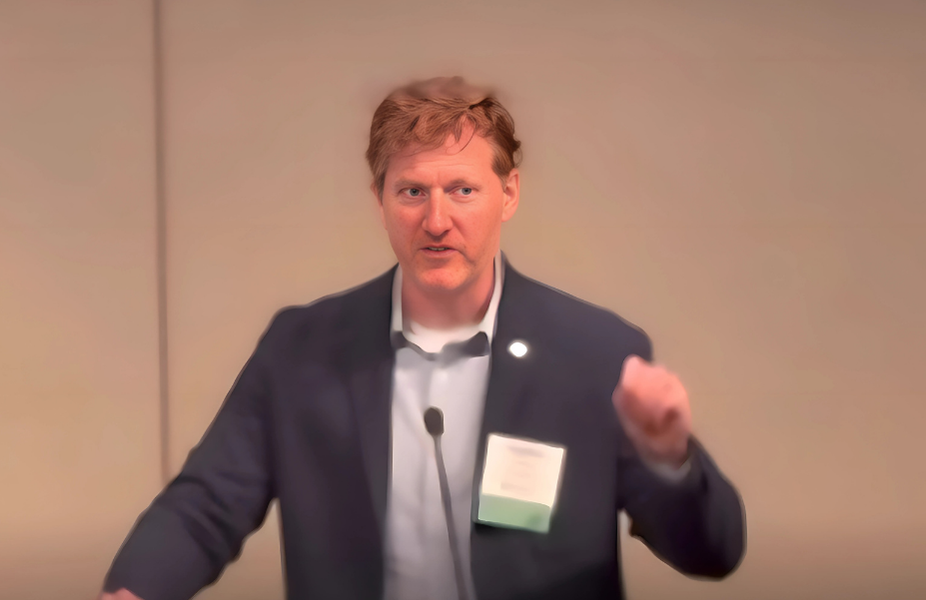
As AI reshapes the future of biotech, Stephen M. Perry reminds us that no company can go it alone.
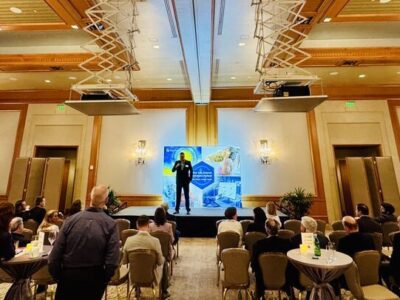
North Carolina Life Sciences Week is a week of events sponsored and promoted by the North Carolina Biotechnology Center is a collaborative effort with other organizations, such as universities and regional partners, that host events throughout the week. On the final day, the ballroom was full of energy. The audience had spent days celebrating the region’s growth, trading ideas, and looking ahead. But it was Stephen M. Perry, the founder and CEO of Kymanox, who delivered the memorable closing notes — a speech that was less about what North Carolina has already accomplished and more about what the future demands.
Perry began with a story from more than twenty-five years ago, when he first moved to North Carolina from Chicago. He recalled how the state lost a major pharmaceutical manufacturing project to Atlanta. The disappointment lingered, a reminder of a time when the Research Triangle Park was still fighting for recognition on the national stage. “That stung quite a bit,” he admitted. But then he looked out across the room and said with conviction: “We are on a winning streak, folks. This has been amazing.”
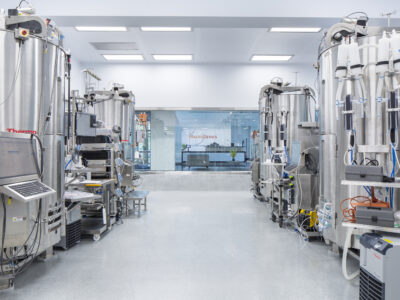
That winning streak is now undeniable. Amgen, Genentech, Biogen, and Fujifilm are not just expanding—they are doubling and tripling down on North Carolina. The facilities rising across RTP signal a new era of confidence, the kind that only comes when global leaders bet big on a place they believe can carry the industry forward. For Kymanox, which has had a hand in designing, commissioning, and validating many of these facilities, the growth is deeply familiar. But Perry wasn’t there to talk about buildings or biomanufacturing. He had something else in mind.
“The real revolution isn’t just facilities and manufacturing. It’s AI,” he said, pausing to let the words sink in. He described how, in mere months, tools have given us what feels like “instant PhD-level expertise” on laptops and smartphones. The work of drug development, regulatory approval, and manufacturing will still get done—but how it gets done will never be the same. That, he suggested, is both thrilling and unsettling. “It may feel unsafe to you,” he acknowledged, speaking directly to the uncertainty that often shadows transformation.
For Perry, though, disruption is not a reason to hesitate; it’s a reason to lead. He pointed to the unique position of Kymanox, a company built over twenty-one years to embody something rare: context. With 300 teammates supporting 200 programs every single day, the firm operates across disciplines and timelines—science and engineering, lab and quality, small molecules and advanced therapies, early development and post-market support. “If you’re the sponsor, you’re the coach on the field,” he explained. “We’re your coordinator up in the press box. We’ve got the playbook, we’ve got the binoculars, we’ve got the rule book, we’ve got instant replay.”
It was a metaphor that brought clarity to what Kymanox offers, but it also underscored something larger: that no company, no matter how successful, can navigate the coming era alone. The revolution unfolding is bigger than any single organization. It will require an ecosystem—companies, researchers, regulators, and innovators—choosing to move forward together.
Perry closed with a quote from leadership thinker Simon Sinek: “Greatness is only possible with a belief—and a belief that has no doubt—that the future is bright.” He lifted his eyes from the podium, speaking not just to the room but to the broader community that North Carolina has built over decades. “The future is bright,” he said. “We’re gonna pursue greatness as a whole ecosystem together. We’re gonna be successful. And we’re gonna have shared optimism.”
As the audience rose in applause, the message lingered. North Carolina is no longer the state that losses out to Atlanta. It is a magnet for the world’s most ambitious life science companies. And if Stephen Perry is right, it is also a place ready to shape not just the next chapter of biotech, but the very way science itself is done – as an ecosystem.