Frederick, MD (September 25, 2025) — The National Institutes of Health (NIH) has awarded $87 million in contracts over three years to establish the Standardized Organoid Modeling (SOM) Center at the Frederick National Laboratory for Cancer Research (FNLCR). The initiative will serve as the nation’s first dedicated organoid development center, designed to reduce reliance on animal testing and set new standards for preclinical research.
The SOM Center will focus on developing reproducible, human cell–derived organoid models for drug discovery, toxicology, and disease research. It will initially target liver, lung, heart, and intestinal organoids, with plans for expansion into additional systems. The center’s infrastructure will integrate artificial intelligence, robotics, and open-access repositories to ensure consistent protocols and accessible data. (nih.gov)
“It will serve as a national resource … offering a unique combination of AI and machine learning … advanced robotics … and open-access repositories.” — Nicole Kleinstreuer, NIH
A Shift in Preclinical Standards
The launch of the SOM Center comes at a time when regulators and scientists are seeking new approach methodologies (NAMs) that better predict human biology than traditional animal models. The reproducibility crisis in biomedical research — where findings often fail to replicate across labs — has added urgency to the search for alternatives. NIH officials emphasize that SOM will collaborate with regulatory agencies to ensure the new models gain acceptance in safety and efficacy assessments.
The implications for industry are significant. Biopharmaceutical companies will gain access to standardized protocols that can streamline drug development and improve data comparability. Academic labs and startups will also benefit from shared infrastructure, lowering barriers to entry for organoid-based research.
“By creating standardized, reproducible, and accessible organoid models, we will accelerate drug discovery and translational science,” said NIH Director Dr. Jay Bhattacharya.
Why Frederick?
FNLCR was selected as the hub due to its infrastructure, scientific leadership, and history of supporting national research initiatives. For the Frederick region, the award represents not only a scientific milestone but also an economic boost. The project will require teams of scientists, engineers, and support staff — providing stability and growth at a time when the state’s life science workforce has faced turbulence from federal restructuring.
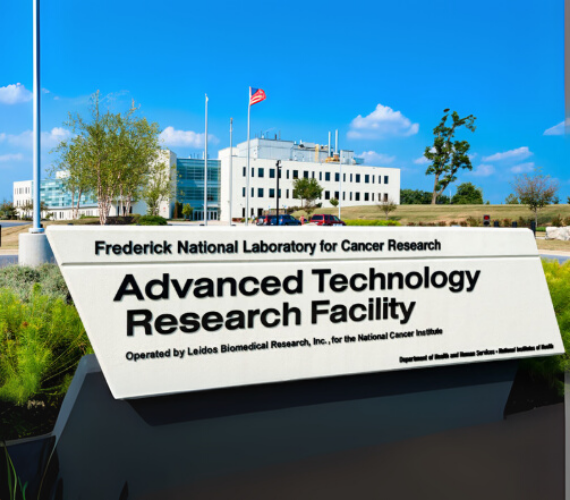
The Frederick National Laboratory for Cancer Research (FNLCR) is the only Federally Funded Research and Development Center (FFRDC) devoted exclusively to biomedical research, operated under contract for the National Cancer Institute. Based in Frederick, Maryland, it supports national priorities in cancer, infectious disease, and translational science by providing advanced infrastructure and specialized expertise that many individual labs cannot sustain on their own.
Its core programs include the Biopharmaceutical Development Program (manufacturing vaccines, antibodies, and gene therapies for early-phase trials), the Molecular Characterization Laboratory (genomic and molecular testing for precision oncology), and the Patient-Derived Models Repository (tumor models for drug screening). Additional capabilities span natural products discovery, advanced imaging and informatics, laboratory animal sciences, and vaccine and immunology programs — making FNLCR a national hub where cutting-edge research platforms are built, standardized, and shared across the broader life sciences community.
Notable Maryland Organoid Players
There are a few companies in Maryland that are already working on organoid products and research.
- Seraxis, Inc. (Germantown, MD)
Seraxis is developing pancreatic organoid therapeutics, including off-the-shelf pancreatic organoids sourced from stem cell lines, intended for treatment of insulin-dependent diabetes. BioSpace+1 - MIMETAS (Gaithersburg, MD)
MIMETAS is a leading company in the field of organ-on-a-chip-based disease models, that offers Stem Cell (ASC)-derived tubular organoids in an assay-ready format. As part of its OrganoReady® product line, MIMETAS offers two organoid-based products: ASC-derived Colon1 and Kidney2 Organoid tubules. - Isoprene Pharmaceuticals (Baltimore / UMB area)
While not an organoid company per se, Isoprene has been part of projects using pancreatic cancer–derived 3D organoids to evaluate treatment responses, as part of an entrepreneurial fellows program in Maryland.