A deep dive with Deborah Hemingway, Ph.D., on building Baltimore’s medtech ecosystem, combining data-driven investing with purpose-driven impact and how her vision for equitable innovation is transforming the city’s future.
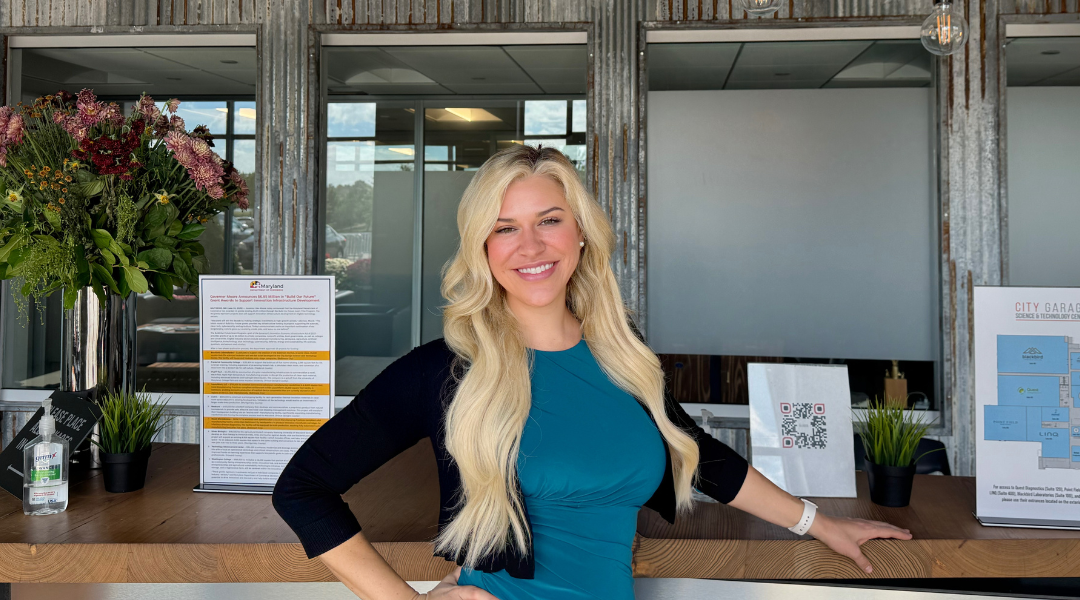
Few leaders have influenced Baltimore’s medtech trajectory as much as Deborah Hemingway. As founder and managing partner of Ecphora Capital, Hemingway has become one of the region’s most visible champions for medical innovation. With a Ph.D. in biophysics, experience working with more than 50 startups, and a track record of translating cutting-edge science into market-ready products, she is helping Baltimore claim its place on the global map for medtech commercialization.
Her firm’s approach is distinct: investing in companies that not only deliver strong financial returns but also anchor jobs, opportunity, and equity in Baltimore. “We’re not just building companies,” Hemingway says. “We’re building a community one investment, one job, one enduring legacy at a time.”
Q: Let’s start off with the basics. Who are you, and what is Ecphora Capital all about?
A: If you were to look at LinkedIn, it would say that I’m an Investor, an Entrepreneur, Research Scientist, an Innovator, a Board Director, a Strategic Advisor, and a Startup Champion. That last one–Startup Champion–really sums up where my heart is and what I am all about. I believe in startups and in the power of entrepreneurship to change lives, change industries, and ultimately, change the world.
I could not be happier to be championing startups every day as a venture capitalist, and the founder and managing partner of Ecphora Capital. Ecphora Capital is an early-stage medtech venture capital firm based right here in the heart of Baltimore.
We see an incredible opportunity here for Baltimore to become the next global hub of medical commercialization. This region has all the right pieces: major universities, leading research institutions, brilliant people, and groundbreaking discoveries. What we don’t have a lot of is capital.
The challenge in our region is that too often, startups leave for established hubs like Boston or Silicon Valley. If all of our startups that were established here stayed here, Baltimore would be very different. And at Ecphora Capital, our mission is to change that. We’re working to keep companies here, help them grow here, and ensure Baltimore claims its position as a leader in global medical innovation and commercialization.
Q: What are you doing to keep those companies in Baltimore?
A: We’re closing the capital gap on the resources that they need and the resources that are currently available. We have a plethora of resources that support medical research and innovation and launch startups, but we are missing that next step that helps them grow and flourish. Medtech startups in particular require substantial financial resources to develop their tech, navigate the regulatory approval process, and reach the market. Without it, they cannot make it. And so often, because those financial resources had not been available here, they will leave the region for more established ecosystems where those resources are more readily available.
Q: What role do job creation and local manufacturing play in Ecphora Capital’s vision for Baltimore?
A: At Ecphora, we provide that critical financing and pair it with strategic support to get companies to the commercialization stage which means through regulatory milestones and into market manufacturing. Right now, we have a created number of local medtech manufacturing jobs in-house at our strategic partner, the LaunchPort, which is a medical device manufacturing accelerator. But our vision is much bigger–thousands of such jobs.
Baltimore is poised for explosive growth in terms of medical commercialization, and each investment we do moves us closer to this goal. We are strengthening the ecosystem, creating opportunity, and bringing life-changing medical technology to patients globally. And this vision isn’t abstract or in the distant future. It’s very real, and it is happening right now.
Q: You have a Ph.D. in biophysics. How does your scientific training shape your investment decisions?
A: My scientific background makes me relentlessly data-driven. Scientific research is evidence-based: you identify the theory, scope, parameters, and objectives in an extremely rigorous way. I approach investing the same way.
After working with more than 50 startups, I’ve seen clear patterns. At Ecphora, we focus on four parameters:
- Value proposition: Is the pain point strong enough to overcome barriers to change? What evidence supports widespread market adoption?
- Technical feasibility: Can the solution work at scale? What’s proven, and what’s still unknown?
- Protectability: Are there strong patents or defensible IP—especially around the value proposition?
- Exit strategy: Who will acquire the company, at what stage, and at what price? Can this realistically deliver a 10x return for investors?
That framework keeps our team disciplined and focused on companies with the strongest foundations that are poised and ready for explosive growth.
Q: So your investments aim to balance profit and impact. Can you say more about that philosophy?
A: Absolutely. We want to maximize both returns and impact. Investing in these early stage medical companies is about financial returns, but it is not only about financial returns. That is where impact comes in. There are plenty of ways to make money, but they are not fulfilling and certainly are not meaningful or impactful. We are investing in medical solutions that are literally changing the world. It’s incredibly rewarding from an impact perspective when you meet people whose health is radically impacted or whose life has been saved because of your work.
At the same time, our investors have entrusted us to also deliver a return. They are taking a financial risk on these innovations and our job is to reward that risk. And the financial returns and the mission impact are not distinct–they go hand in hand. The more impact we create, the more opportunity there is for returns. And the more financial success we achieve, the more we can reinvest in these medical startups and in Baltimore’s growth. It’s a virtuous cycle.
Q: I love the name “Ecphora.” Where did it come from?
A: A fun fact is that Ecphora is Maryland’s official state fossil! It is a fossilized sea snail shell that’s endured for millions of years. At first, my business partner laughed about naming a firm after something extinct. But the point is that the creatures that built these shells are extinct. We are not named after the creature. We are named after the shell. The shell is what they built. The shell is what has endured. And not only endured but made such an impact on the world that we are still discussing it to this day.
What Ecphora is building–through our companies and their impact–will last long after we’re gone. These advances in health and medicine will remain strong, resilient, and withstand the test of time. Just like the fossil, we are building an enduring legacy.
Q: What’s been the hardest part of this journey?
A: Bandwidth. Until recently, I was the only full-time employee. It’s been a challenge to balance responsibilities while building something this ambitious. We now have eight people on the team which is wonderful though I feel like we could use another 20 more!
Q: You’ve worked with more than 50 startups. What patterns do you see in the ones that succeed?
A: It always comes down to the customer’s pain point. This is the first question we ask when we are evaluating a startup. The best companies are solving something that’s urgent and widespread. If you were to interview a hundred potential customers and ninety or more say the same thing is the worst part of their day, then you’re onto something.
Customers should be actively seeking your solution, not needing to be convinced. That’s the heart of product-market fit, and it’s true across every industry. And companies should be constantly listening to the market because markets aren’t stagnant. They are constantly adapting and changing and companies should be too.
Q: What advice would you give to women who want to launch their own VC fund in life sciences?
A: Start by asking yourself why. Just as founders identify the problem they’re solving, you need to define the gap your fund will fill. What’s your niche? What differentiates you? How have you de-risked your model? And are you investing your own capital or raising a fund?
I’ve been both an angel investor investing my own money and a venture capitalist investing on behalf of other people. Deploying your own capital is one thing—deploying someone else’s is another. Investors are entrusting you with their money, and that comes with enormous responsibility and pressure.
Raising capital is extraordinarily difficult, especially in today’s climate as the VC model consolidates into larger funds and alternative structures gain traction. To succeed, you need grit, vision, and a truly differentiated angle. You must know your “why” and hold onto it, because that’s what will carry you through. It’s not easy, but it’s possible. And when it works out, it’s deeply rewarding and fulfilling.