By Chris Frew, CEO of BioBuzz
When three of the world’s most influential biopharma companies—AstraZeneca, Eli Lilly, and Merck—announce a joint $120 million investment to build a workforce training center in Virginia, it’s not just another corporate press release. It’s a signal flare for the entire industry. This is about more than one state’s win. It’s about how the future of life sciences talent will be built, distributed, and sustained across America.
For years, we’ve all talked about the growing workforce crisis in biomanufacturing. From cell therapy and biologics to advanced drug production, companies are scaling faster than talent pipelines can keep up. The stakes are no longer theoretical: supply chains are strained, timelines are slipping, and the “talent shortage” has become the single biggest barrier to growth. What Virginia has just done—with industry at the table from day one—changes the equation.
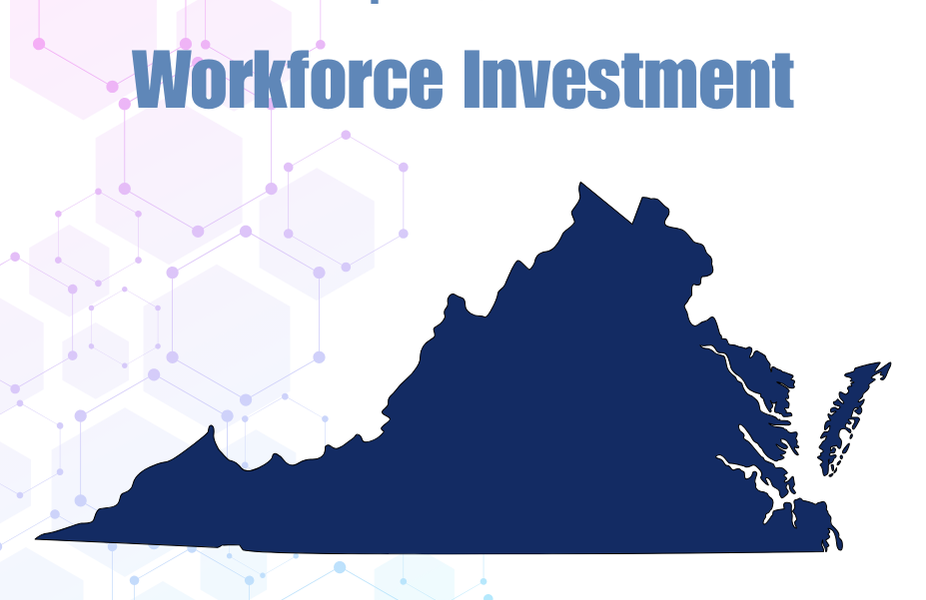
According to Virginia Business, the new Virginia Center for Advanced Pharmaceutical Manufacturing (VCAPM) will anchor a statewide initiative designed to train 2,000 to 2,500 students annually through stackable credentials and degrees. That means everything from technician-level certifications to advanced graduate programs, each tied directly to real GMP manufacturing environments. AstraZeneca, Lilly, and Merck didn’t just pledge money—they co-designed the model. And that’s what makes this a turning point.
For too long, workforce initiatives have been reactive—funded after shortages appear, or detached from the realities of production floors. What we’re seeing in Virginia is the opposite: a proactive, ecosystem-led model where industry and academia align from the start. The state’s higher education system, including Virginia Tech and the University of Virginia, has rallied around a hub-and-spoke framework that can scale access across regions. It’s what I call a “Talent Logistics” approach—one that treats human capital as infrastructure, not an afterthought.
It is this type of landmark investment that sets the foundation for generational ecosystem growth. Look no further than their neighbor to the south for proof of this. North Carolina has built a biomanufacturing powerhouse on the basis of talent and workforce training. Their program started years ago with the state tobacco money and it has since fueled one of the most successful talent-based economic development strategies in the country.
Let’s Unpack what Virginia’s Talent Strategy Is Built On
The strength of this initiative lies in five fundamental principles that reimagine how talent pipelines should be built for biomanufacturing’s future.
First, talent precedes infrastructure. The MOU signed on October 31, 2025, between the state, its higher education partners, and the three companies establishes the Virginia Center for Advanced Pharmaceutical Manufacturing (VCAPM) as a new model for advanced training—one projected to graduate up to 2,500 learners each year. What’s revolutionary is that these companies are investing in people before the physical infrastructure is even complete. They understand that scale only matters if the workforce exists to support it.
Second, it’s built on regional ecosystem synergy. Virginia’s community colleges, major universities, and workforce agencies are tied together through a hub-and-spoke system centered in the Richmond–Petersburg–Charlottesville corridor. That structure ensures access, mobility, and real-time feedback between employers and educators. It’s an approach that mirrors what we at BioBuzz have long advocated: regional, networked, and inclusive workforce systems—not siloed or short-term training programs.
Third, it sends a powerful signal beyond Virginia. By anchoring this kind of advanced manufacturing and training collaboration in the Commonwealth, three of the world’s largest life sciences companies are declaring that talent readiness is now a strategic priority. It’s not incidental; it’s intentional. This model will inevitably draw the attention of other states and global players looking to de-risk their supply chains and manufacturing timelines through local workforce development.
Fourth, it shows a mature alignment of talent and manufacturing strategy. The VCAPM framework doesn’t stop at entry-level training—it builds upward mobility into its DNA. Technician certifications feed into associate, bachelor’s, and even graduate degrees, all connected to hands-on GMP simulation environments. It’s a full-stack system for workforce development—one that grows capability and opportunity in parallel.
And fifth, it represents industry leading the investment. For years, I’ve said that the private sector must be the investor in workforce because it’s the one that reaps the return. Public programs can catalyze momentum, but it’s commercial companies that gain competitive advantage from a well-trained, ready-to-scale workforce. What we’re witnessing here is a new kind of ownership—industry stepping up to fund and shape the future talent economy, much like how major league baseball teams invest in farm systems. It’s about commitment to a region, belief in its potential, and a willingness to help grow the very infrastructure that will sustain your business.
“When industry invests in workforce, it’s not philanthropy—it’s strategy.”
This move doesn’t just strengthen Virginia’s position; it sets a national precedent. If three global pharma powerhouses are willing to invest directly in regional talent creation, the message to other states and companies is clear: the competition for biomanufacturing growth will be won not by tax incentives, but by workforce readiness.
At BioBuzz, we’ve written for years about the convergence of talent, cohesiveness, and geography. We’ve explored how the next phase of biotech growth depends on distributed ecosystems—where community colleges, research institutions, startups, and anchor companies collaborate to make hiring more fluid and accessible. Virginia’s model validates that thesis in real time.
It also demonstrates something deeper: that workforce strategy is no longer HR’s problem—it’s a boardroom priority. When Eli Lilly commits to a training facility in the same breath as a multibillion-dollar manufacturing investment, it signals a shift from talent consumption to talent creation. It acknowledges that the next generation of industry growth will depend on who can build, not just who can buy, the capabilities they need.
This should be a wake-up call to other biopharma clusters—especially those watching their pipelines tighten. Massachusetts, North Carolina, Maryland, and California have long been magnets for biotech talent, but the gravitational pull is changing. States like Virginia are proving that with strategic investment, academic partnership, and industry collaboration, they can compete on equal footing.
The lesson here isn’t about geography; it’s about alignment. Virginia didn’t just build a center—it built a coalition. And that’s the part every ecosystem should be studying.
From BioBuzz’s vantage point, this is the moment we’ve been building toward. Our mission has always been to connect and catalyze regional biotech ecosystems by making talent and opportunity more accessible. We’ve argued that the future of biopharma growth won’t come from fragmented hiring or isolated training programs, but from connected platforms and shared infrastructure. This announcement is proof that the market is catching up to that vision.
As we look ahead, the question for the rest of the industry isn’t whether Virginia’s approach will work—it’s how quickly others will follow. The companies that treat workforce as a competitive asset, not a cost center, will own the next decade of biomanufacturing. And the communities that build collaborative, data-informed talent ecosystems will be the ones that attract them.
Virginia has just given us a blueprint. The challenge—and opportunity—for the rest of us is to act on it.