As venture capital continues to concentrate later, seed-stage life science founders are increasingly turning to angel investors not just as a first check—but as foundational partners in company formation.
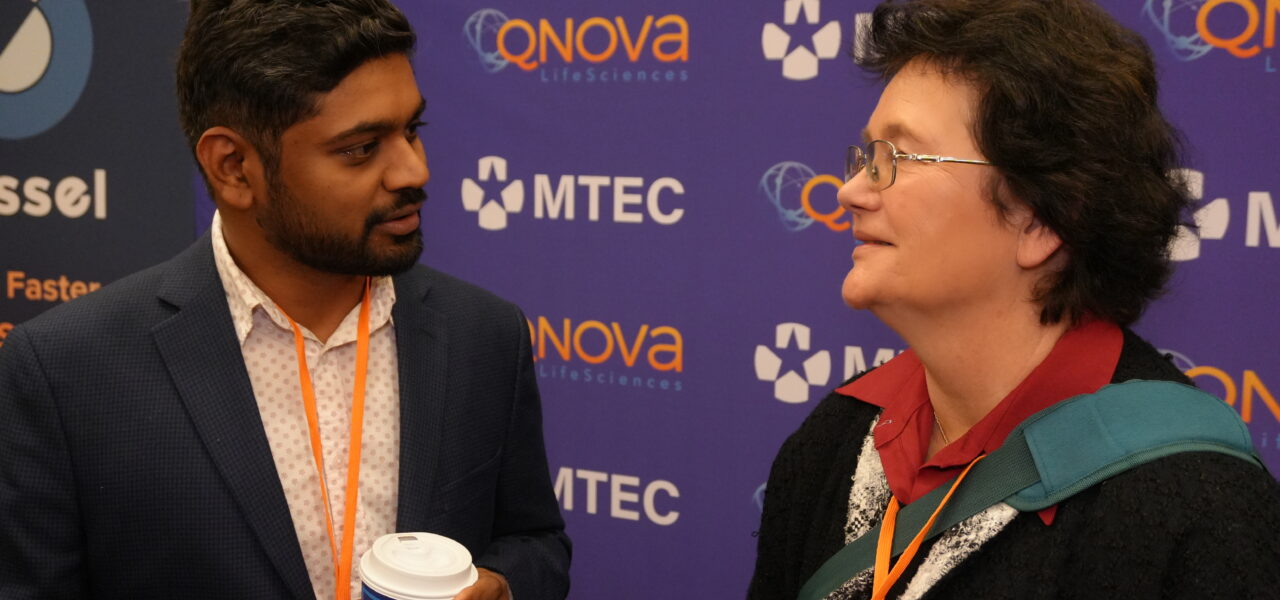
That shift was the focus of a panel discussion at the QNova LifeSciences Partnering Forum titled Angel Funding Sources for Seed-Stage Startups, moderated by Chris Steele, PhD, Chief of Strategy and Business Development at the Medical Technology Enterprise Consortium (MTEC). Joining him were Peter Socarras, President of Life Science Angels; Anne DeGheest, Founder and Managing Director of HealthTech Capital; and Kristin King-Jankiewicz, MBA, Head of Group Management at Boston Harbor Angels.
Together, the panelists offered a clear-eyed look at how angel investing in life sciences is evolving—and what founders must do differently to secure early capital in today’s environment.
Angels Are Filling a Growing Gap
In prior cycles, angel rounds often served as a brief bridge between institutional seed and Series A financing. Today, that model has broken down. With venture firms writing fewer early checks and demanding more technical and regulatory de-risking upfront, angels are increasingly underwriting the longest and riskiest phase of company development.
Panelists emphasized that this shift is not temporary. Angels are now stepping in where traditional seed funds once played, particularly in capital-intensive sectors such as biotech, medtech, and diagnostics. As a result, angel rounds are lasting longer, carrying more milestones, and often determining whether a company can reach venture-readiness at all.
For founders, this means early capital strategy is no longer about speed—it is about alignment.
What Angels Are Really Looking For
Despite differences in structure and geography, the angel groups represented on the panel shared common expectations.
Scientific credibility remains table stakes, but it is no longer sufficient on its own. Angels are looking for founders who can articulate a clear regulatory strategy, a credible path to non-dilutive funding, and an understanding of how early technical milestones translate into downstream value inflection points.
Equally important is coachability. Angels, particularly organized groups with deep operating experience, expect active engagement. Founders who view angel investors as passive capital providers often struggle to build momentum in diligence and syndication.
Panelists also underscored the importance of realism. Overly aggressive timelines, vague use-of-funds narratives, or assumptions that a Series A will materialize quickly are red flags in the current market.
Different Angel Groups, Different Value
One recurring theme was that angel capital is not monolithic.
Some groups specialize in life sciences exclusively, offering domain expertise, regulatory insight, and sector-specific networks. Others operate as broader investment communities with structured diligence processes and active portfolio support. Some focus regionally, while others invest nationally or globally.
For founders, understanding these differences matters. The “right” angel group is not necessarily the one offering the highest valuation, but the one best positioned to help a company reach its next credible financing or partnership milestone.
Panelists encouraged founders to do as much diligence on investors as investors do on founders—particularly around follow-on behavior, syndication history, and long-term engagement.
The Role of Syndication and Signaling
With larger seed rounds increasingly assembled from multiple angel groups, syndication has become a strategic consideration rather than an afterthought.
Panelists noted that strong early angel participation can act as a signaling mechanism for later investors—demonstrating that experienced operators and domain experts have vetted both the science and the team. Conversely, fragmented or misaligned angel syndicates can complicate governance and slow decision-making at critical moments.
Clear communication, transparent expectations, and disciplined cap table construction at the angel stage were highlighted as essential to preserving flexibility down the line.
Where Non-Dilutive Capital Fits In
Consistent with other discussions throughout the forum, the panel emphasized the growing importance of non-dilutive funding—particularly government and defense-related sources—as part of early financing strategies.
Angels increasingly expect founders to understand how grants, cooperative agreements, and strategic partnerships can extend runway and reduce dilution. In some cases, the presence of a credible non-dilutive strategy can materially influence an angel group’s willingness to invest.
Rather than viewing angels and non-dilutive capital as separate paths, the panel framed them as complementary tools that, when coordinated effectively, can unlock early progress without overcapitalizing prematurely.
A More Intentional First Round
The discussion made clear that seed-stage financing has become more intentional—and more demanding—than in past cycles.
For founders, angel rounds now represent a proving ground: an opportunity to demonstrate not just scientific insight, but strategic discipline, regulatory fluency, and the ability to build durable relationships early.
For angel groups, the role has expanded from early believers to active stewards of company formation, often carrying startups further than originally intended.
In a market where early capital is scarcer and expectations are higher, the panel’s message was pragmatic: the best seed rounds are no longer just about raising money—they are about building the foundation for everything that comes next.