At the Pivot with Purpose Career Expo, Maryland’s Department of Labor outlined how it is scaling up services and reshaping its workforce programs to meet a wave of displaced federal workers where they are.
Last Wednesday, mid- and senior-level professionals gathered at the Johns Hopkins University Bloomberg Center on Pennsylvania Avenue in Washington, DC for the Pivot with Purpose Career Expo. The one-day event was hosted by a coalition of workforce development partners spanning Maryland, Virginia, and DC – including Johns Hopkins University, Virginia CareerWorks, the DC Office of the Deputy Mayor for Education, the Maryland Department of Labor, Maryland Workforce Association, SkillSource Group, the DC Investment Board, and Virginia Works. The message of the day was clear: a career pivot is not a setback. It is a strategy.
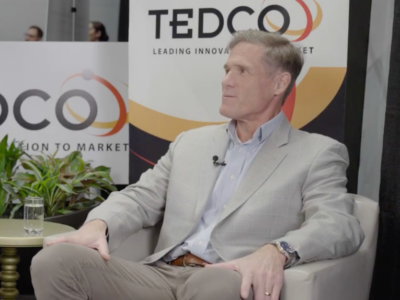
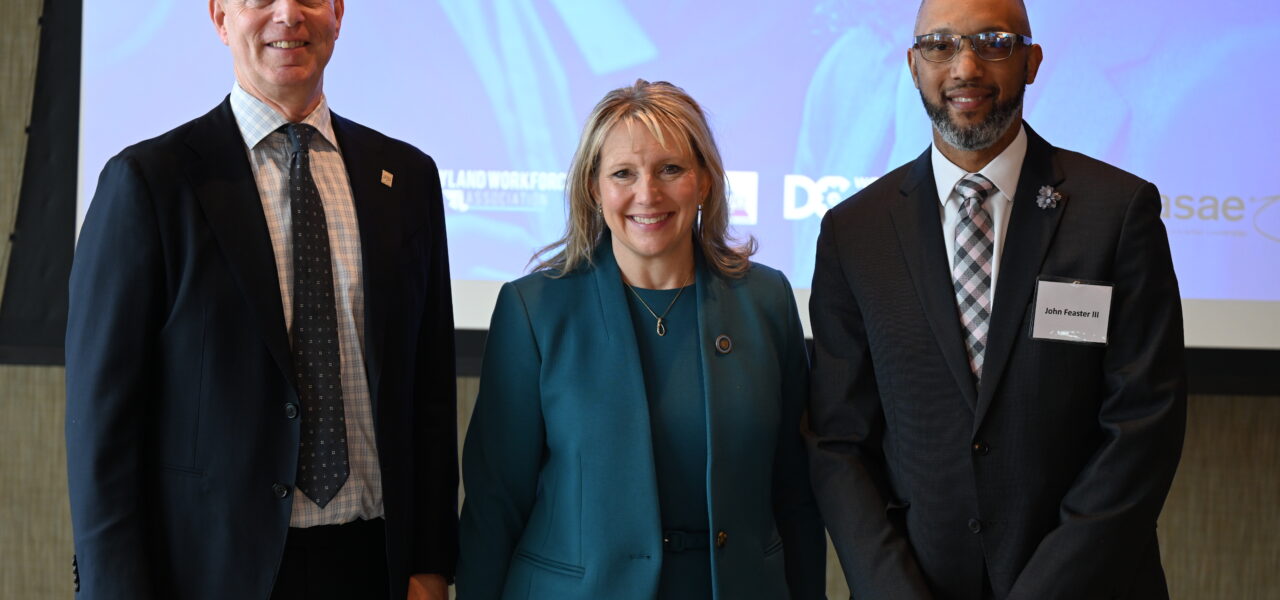
Among those on hand to deliver that message was John Feaster, Deputy Assistant Secretary of Maryland’s Department of Labor, Division of Workforce Development and Adult Learning. In a conversation on the event floor, Feaster laid out how his agency is rapidly evolving to serve a new kind of job seeker: the formerly employed federal worker.
A Surge Unlike Anything We Have Seen Before
Since early last year, Maryland has been absorbing a wave of federal workforce departures on a scale the state’s job placement infrastructure was not originally designed for.
“We saw a huge influx of federal workers into the marketplace – folks that are getting laid off by the tens of thousands,” Feaster said.
What makes this surge particularly challenging, he explained, is the profile of the people coming through the door. These are not entry-level workers looking for a foothold. They are experienced, credentialed professionals–scientists, engineers, policy analysts, and senior managers–who were, in many cases, earning six-figure salaries.
“Not only are they highly skilled and highly educated, but they’re highly paid as well,” he said. “That’s probably been the biggest challenge we’ve faced as a state in trying to place folks.”
Scaling the Professional Outplacement Assistance Center
Maryland’s Department of Labor operates 33 American Job Centers across the state. While these centers are open to anyone searching for work, they have historically focused on a broader range of job seekers rather than higher-level professionals. Only one facility was designed specifically for workers in senior and specialized roles: the Professional Outplacement Assistance Center, or POAC, located in Linthicum, Maryland.
To meet the current moment, the agency has moved quickly to expand the POAC’s reach beyond its physical walls. The centerpiece of that effort is the workshop Seeking New Opportunities after Work as a Federal Employee or Contractor – a weekly, four-hour virtual session tailored specifically to former federal employees and federal contractors. More than 2,100 people have attended that workshop so far.
“Right now our POAC is serving many more job-seeking professionals virtually than we were seeing in person,” Feaster said. “That’s because of the reach we’re able to offer virtually.”
The workshops cover practical ground: how to translate a federal resume into a format that resonates in the private sector, how to articulate the value of government experience to civilian employers, and how to identify transferable opportunities in industries the participant may not have previously considered.
The POAC model is also catching on regionally. Feaster noted that WorkSource Montgomery recently opened a dedicated federal career center within its American Job Center location, a sign that the approach is resonating with local workforce partners closest to the epicenter of the layoffs.
Filling the ‘Missing Middle’
Beyond the immediate challenge of displaced workers, Feaster described a broader strategic initiative driving Maryland’s workforce development agenda: addressing what the department calls “the missing middle.”
Maryland’s Moore administration has placed a growing emphasis on the state’s “Lighthouse” sectors–high-growth industries including life sciences, technology (spanning industries including quantum computing, cybersecurity, and AI), aerospace and defense, and manufacturing. In February, the administration announced a $4 million investment administered by the Maryland Department of Labor through three grant programs aimed at expanding hands-on training opportunities and growing the talent pipeline in these fields.
One of these programs is directly relevant to mid-career professionals in transition:
The Maryland Lighthouse Industries Upskilling and Reskilling Program brings together workforce development partners to strengthen transferable and emerging technology skills for Marylanders seeking lighthouse industry careers–a particularly well-suited pathway for mid-career professionals looking to reskill.
Feaster explained that across these sectors, entry-level and senior-level positions are largely filled. It is the mid-tier roles that remain stubbornly hard to staff. One solution Maryland is pursuing is to upskill workers already in the labor market–helping entry-level employees move into mid-tier roles, which in turn creates openings for new job seekers to fill.
For displaced federal workers whose skills span multiple domains, this pipeline could represent a genuine on-ramp. The goal is not only to fuel the growth of emerging industries but to offer mid-career professionals who have been displaced a path toward long-term stability and career longevity in fields with real growth ahead.
The Biggest Resource: Hope
When asked what he most hoped attendees would take away from the expo, Feaster’s answer was grounded.
“I think the biggest takeaway, and it sounds a bit cliché to say, is for folks to have hope,” he said.
He spoke candidly about the psychological dimensions of career transition, particularly the imposter syndrome that can creep in when someone moves not just between jobs, but between industries. Even a lateral move, he noted, can trigger self-doubt.
He also acknowledged that what may feel like a step back in the next career move may simply be part of the path forward–a strategic repositioning rather than a retreat.
“It may not be immediate, but we’re in the business of finding folks careers,” he said.
The State Is Here. The Door Is Open.
Feaster closed with a message he wants to reach as many Marylanders as possible: the state’s workforce infrastructure is not just for entry-level workers or people in crisis. It is there for anyone navigating change.
“Everything that we do is in support of folks that are pivoting,” he said. “The new big industry may not be the thing that your experience is in. Let us at the Maryland Department of Labor help you make that transition.”