Diagnostic Biochips, a Maryland-based company founded in 2013, is leveraging advancements in stem cell models and organoids to drive a long-awaited renaissance in neurological drug discovery.
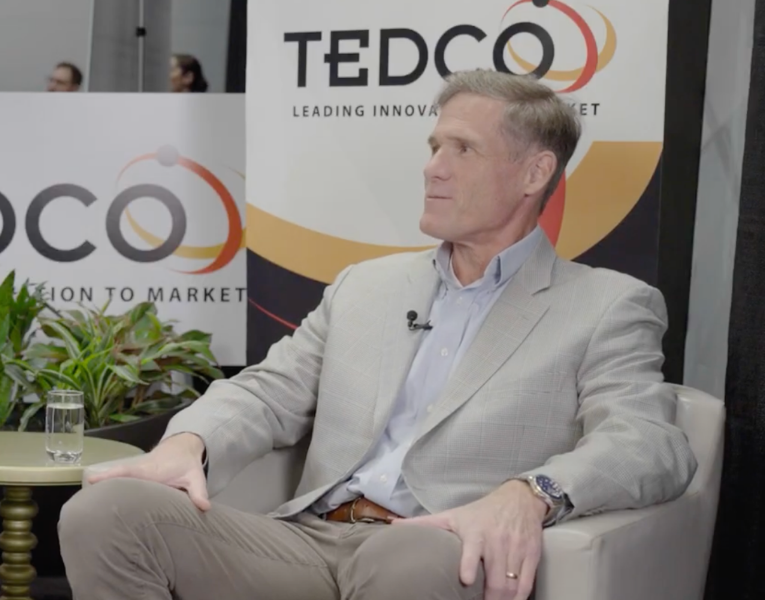
Back in October at the 2025 TEDCO Expo, we sat down with Brian Jamieson, Founder and CEO of Diagnostic Biochips. Jamieson humorously described his company’s journey as a “12-year overnight success story.” It’s a line delivered with a knowing smile, but it captures something true about the long, unglamorous grind of building a biotech from the ground up.
Building Better Bets for Drug Development
Founded in Maryland in 2013, Diagnostic Biochips develops stem cell models, organoids, and other tools used in pre-clinical drug discovery. Their focus is a critical but often underappreciated part of the pharmaceutical pipeline: making sure the right drugs advance to expensive clinical trials in the first place.
“Clinical trials in the drug space are expensive,” Jamieson explained. “You want to make sure you’re making a good bet. The notion of bench-to-bedside translation is really important, making sure you’re advancing the right products. That’s where we come in. Pre-clinical work on the bench against the efficacy and safety of drugs. We use stem cell models and cell models that we developed to scan and advance drugs.”
The company’s focus is squarely on neuroscience: an area where the need for better pre-clinical tools is especially acute. Neurological diseases have historically been among the most difficult therapeutic areas to crack, with drug development lagging behind other fields for decades.
“This revolution we see happening in stem cells and organoids is really driving a renaissance — and it’s been a long time coming for neuro.”
See the full moment here:
A Renaissance for Neurological Research
Jamieson is candid about the history of his field. “It’s been a bit of a dry spell, specifically in the drug development space for neuro,” he said. “We are all affected by this. We all know someone who has a neurological disease, and previously advancements have not been as quick as in some other areas.”
That’s changing. The rapid advancement of stem cell technology and organoid research–miniaturized, lab-grown tissue models that mimic the behavior of real organs–is opening new doors for CNS drug discovery. Organoids have increasingly captured mainstream attention, and in a timely development, a new federal organoid center recently launched at Frederick National Labs in Maryland.
For Jamieson, the timing couldn’t be better. Diagnostic Biochips is preparing to debut its first automated stem cell analysis instrument at the Society for Neuroscience Conference in San Diego, a moment Jamieson described simply as “the moment of truth.”
“We have some resales and data customers, but really, this is the moment of truth,” he said. “To put our product out there on the open market, and we’re hoping–fingers crossed–that people will appreciate the product.”
Maryland’s Ecosystem: More Than a Home Base
Jamieson and his wife moved to Maryland deliberately. With a physician spouse and a biotech startup to grow, the state’s deep talent pool, robust institutional resources, and economic vitality made it the obvious choice.
He pointed to Johns Hopkins–a world leader in neuroscience research–as a cornerstone of the region’s scientific community, alongside the NIH’s BRAIN Initiative, which generated significant activity and investment in the greater D.C. and Maryland area. Programs like NeuroTech Harbor and a growing cluster of neurotech startups round out an ecosystem that Jamieson described as “pretty amazing.”
Institutional support has also been a defining feature of the company’s trajectory. TEDCO provided critical seed capital in the early days, early-stage funding that Jamieson praised for coming without strings attached. More recently, Diagnostic Biochips was awarded a grant through the Maryland Stem Cell Research Fund (MSCRF). Anne Arundel County and the state of Maryland have also been supportive partners along the way.
“Everybody who founds a company, whether it’s the right funding or venture capital, it comes with strings attached,” Jamieson reflected. “For us, we were getting what we needed from TEDCO funding with no strings attached. That’s why we were able to use those resources to advance the company.”
Advice for the Next Generation of Neurotech Founders
For entrepreneurs considering the neurotech space, especially those eyeing Maryland as a home, Jamieson’s message is clear and enthusiastic.
“Maryland is a great place to do business,” he said. “I would encourage people to look at Maryland as a great place to gain employees, to create a customer base, and be part of that lively biotech ecosystem, generally in biotech, and in neuroscience specifically.”
After 12 years of building, Diagnostic Biochips is stepping into a moment that feels, at last, like the field is catching up to the founders who believed in it early. With a product launch on the horizon and a renaissance underway in neurological research, Jamieson’s overnight success story may be entering its most exciting chapter yet.
If you want to see the latest in innovation ecosystems firsthand, register for the 2026 TEDCO Innovation Expo today.