The path from academic discovery to biotech startup is rarely straightforward. It requires more than breakthrough science—it demands entrepreneurial training, mentorship, and an ecosystem capable of translating ideas into companies. The latest RealLIST Maryland Startups 2026 offers a clear signal that one pipeline helping bridge that gap is gaining traction: four companies on this year’s list—20 percent of the cohort—are alumni of the Nucleate Activator program.
For early-stage founders emerging from university labs, the gap between scientific insight and venture-backed startup can be one of the most difficult transitions in the life sciences ecosystem. Many promising ideas stall not because of weak science, but because researchers lack exposure to commercialization pathways, venture formation, regulatory strategy, or the networks needed to assemble founding teams.
That is precisely the challenge the Nucleate Activator program was designed to address.
Launched by student leaders across major research universities, Nucleate operates a global, trainee-led nonprofit network focused on empowering the next generation of biotech founders. Its flagship program, Activator, pairs graduate students and postdoctoral researchers with experienced industry mentors, venture investors, and operators to help transform academic innovations into startup-ready ventures.
Over the course of several months, participating teams refine scientific value propositions, develop commercialization strategies, form founding teams, and prepare for fundraising. The program has increasingly become a launchpad for early-stage biotech startups emerging from academic institutions across the United States.
In the BioHealth Capital Region, the Nucleate DMV chapter—which includes Baltimore, Washington D.C., and surrounding research hubs—has quietly become a key contributor to the region’s early-stage innovation pipeline.
The newest evidence of that momentum arrived this month.
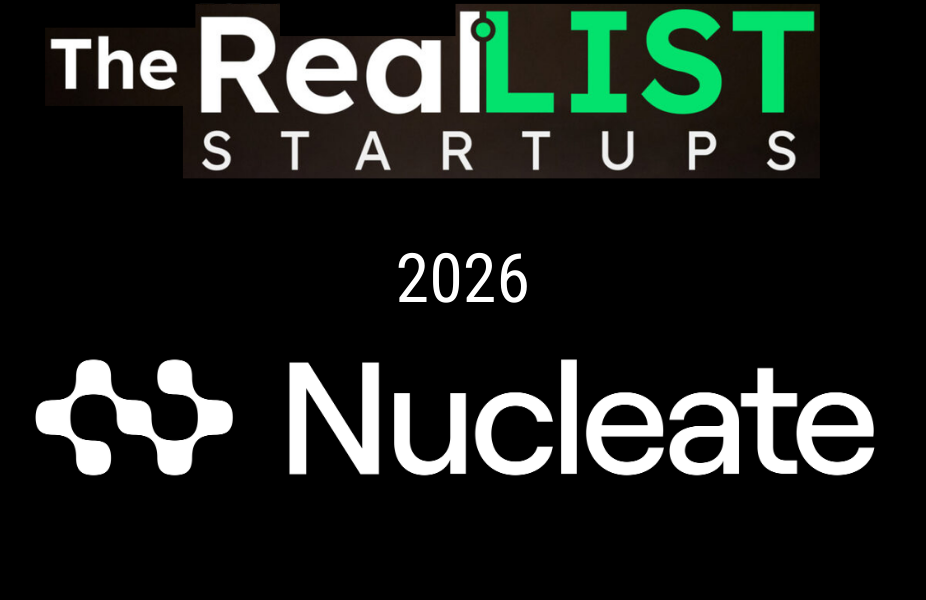
Nucleate’s RealLIST Maryland Startups
The 2026 edition of RealLIST Maryland Startups, which highlights high-potential ventures shaping the state’s innovation economy, includes four companies that previously participated in the Nucleate Activator program.
Each represents a different frontier of life science innovation—ranging from regenerative medicine to medical devices, bioinformatics, and biomanufacturing analytics.
SereNeuro Therapeutics (Nucleate DMV)
SereNeuro Therapeutics is developing a novel approach to chronic pain management that avoids traditional opioid pathways. The company’s lead candidate, SN101, is an induced pluripotent stem cell–derived therapy that uses mature peripheral pain-sensing neurons to treat chronic osteoarthritis joint pain. By targeting nociceptors directly, the approach challenges conventional pain management strategies. The company received commercialization funding in 2025 as it advances toward preclinical development.
SinuStim (Nucleate DMV)
SinuStim is tackling a problem that affects millions of patients living with chronic sinus disease. The company has developed a mouthguard-like device designed to stimulate nerves in the mouth that help open nasal passages. The non-invasive device provides relief within minutes and represents a potential drug-free alternative to existing treatments. The team successfully completed its first human trials last year.
BioBuild (Nucleate NY)
As genomic data continues to grow exponentially, BioBuild is focused on helping researchers translate that complexity into actionable insight. The company is building an AI-powered bioinformatics prototyping platform that enables scientists to visualize, analyze, and share genomic insights within a single environment. BioBuild recently secured $150,000 in capital and completed the Pava Center Fuel Accelerator.
Modelus (Nucleate DMV)
Modelus is addressing a growing bottleneck in advanced biomanufacturing: quality control for complex biological systems. The startup has developed AI-powered analytics designed to automate quality assurance workflows across organoids, 3D tissues, and other high-value biological products. The company has raised $220,000 to date and has participated in initiatives with the Critical Path Institute.
While the technologies vary widely, the founders behind each company share a common origin story—early scientific discovery paired with entrepreneurial development through Nucleate’s Activator program.
Why It Matters
For regional ecosystems like Maryland and the broader BioHealth Capital Region, the emergence of founder-development pipelines is becoming increasingly important.
Universities across the region—including Johns Hopkins University, the University of Maryland, and others—produce a steady flow of cutting-edge biomedical research. But historically, much of that intellectual property has been commercialized elsewhere, often migrating to established startup hubs like Boston or the Bay Area.
Programs like Nucleate Activator aim to change that dynamic by equipping student scientists with the entrepreneurial skills and networks needed to launch companies where the research originates.
The fact that four Activator alumni appear on this year’s RealLIST Maryland Startups suggests that this model is beginning to produce tangible results.
It also highlights a broader trend reshaping biotech entrepreneurship: founders are getting younger, startup teams are forming earlier in the research lifecycle, and student-led communities are increasingly acting as catalysts for innovation.
As the biotech industry continues to evolve, the question facing many regions is not simply whether they can generate breakthrough science—but whether they can convert that science into companies, jobs, and therapies.
Programs like Nucleate Activator are helping answer that question by creating structured pathways for academic researchers to become founders.
With four alumni already representing a significant share of this year’s RealLIST Maryland Startups, the program’s growing presence suggests that some of the region’s most promising biotech companies may now be emerging not only from the lab bench—but from the student-led communities learning how to turn discovery into impact.