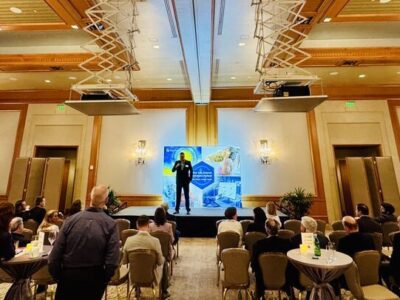
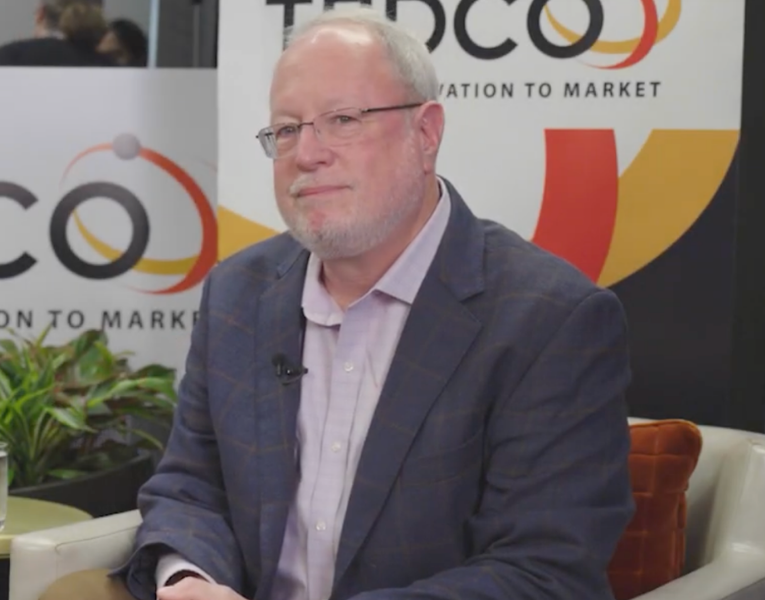
At the 2025 TEDCO Expo, ABL, Inc. Chief Scientific Officer Timothy Fouts discussed how the company, a contract development and manufacturing organization for viral-based therapies, is expanding its capabilities following its merger with Ascend Advanced Therapies.
In cell and gene therapy, most of the public attention goes to the clinical results. Less goes to the organizations that figure out how to actually manufacture the product. That’s been ABL, Inc.’s business since 1961. At the 2025 TEDCO Expo in Maryland, Timothy Fouts, Ph.D., the company’s Chief Scientific Officer, sat down with BioBuzz to talk about what the company does, its recent merger with Ascend Advanced Therapies, and where the field is headed.
What ABL Does
ABL is a contract development and manufacturing organization (CDMO) based in Rockville, Maryland, specializing in viral-based products: gene therapies, oncolytic viruses, and viral vaccines. When a biotech company or research institution needs to take a candidate product into clinical trials, ABL builds the manufacturing process around it, covering cell line development, cGMP production, QC release testing, fill/finish, and regulatory support.
The company has deep ties to the federal government, which date back to its origins as a biomedical research contractor. In 2022, ABL was awarded a multi-year contract with NIH’s National Institute of Neurological Disorders and Stroke (NINDS) to support manufacturing and nonclinical studies for the NIH URGenT ultra-rare gene therapy initiative. It has also held long-running contracts with NIAID’s Division of AIDS. On the industry side, Fouts described the work simply: “Our job is to help entrepreneurs take their products from bench to market.”
Watch the full interview here:
Merging with Ascend Advanced Therapies
In November 2024, ABL merged with Ascend Advanced Therapies, a CDMO with clinical AAV manufacturing experience going back to 1991. EW Healthcare Partners, ABL’s private equity backer, made a significant capital investment to support the combined organization.
ABL had been working primarily in the Phase I and Phase II space. Ascend brought two things that extended that capability considerably: a commercial-scale manufacturing operation and a well-developed AAV technology platform. AAV, or adeno-associated virus, is the most commonly used viral vector in gene therapy, and manufacturing it reliably at commercial volumes has been a persistent challenge across the industry. Ascend also added GMP capacity in Alachua, Florida, which expanded in 2024 to include new fill/finish capabilities.
Together, the two organizations now cover early clinical manufacturing through commercial launch, a range that relatively few viral vector CDMOs can manage within a single company.
A Good Time to Be in the Field
Fouts pointed to new vectors coming out of research labs and a growing number of cell therapy products entering the clinic as reasons for optimism. After a period where the gene therapy sector saw high-profile setbacks and commercial struggles, the pipeline has matured and manufacturing infrastructure has grown with it.
For ABL, Maryland has been the right place to do this work. The proximity to NIH, the density of federal contracts, and what Fouts called a biotech hub that is “very rich in terms of the diversity of different companies” working on viral products have kept the company well-connected to both the science and the clients it serves.
If you want to see the latest in innovation ecosystems firsthand, register for the 2026 TEDCO Innovation Expo today.