For nearly 70 years, Research Triangle Park has run on one model: sprawling, single-use corporate and research campuses. That’s now changing. In late June, RTP landowners and companies unanimously approved a new development framework called RTP 3.0, opening the door to housing and mixed-use projects across the Park for the first time in its history — a shift with real implications for the thousands of life science professionals who work in and around one of the country’s biggest biotech and pharma clusters.
The Vote
On June 25, members of the RTP Owners and Tenants Association unanimously approved the updated RTP Development Code. The Research Triangle Foundation of North Carolina’s board followed with its own approval shortly after, capping a five-year effort to modernize the Park’s land-use rules.
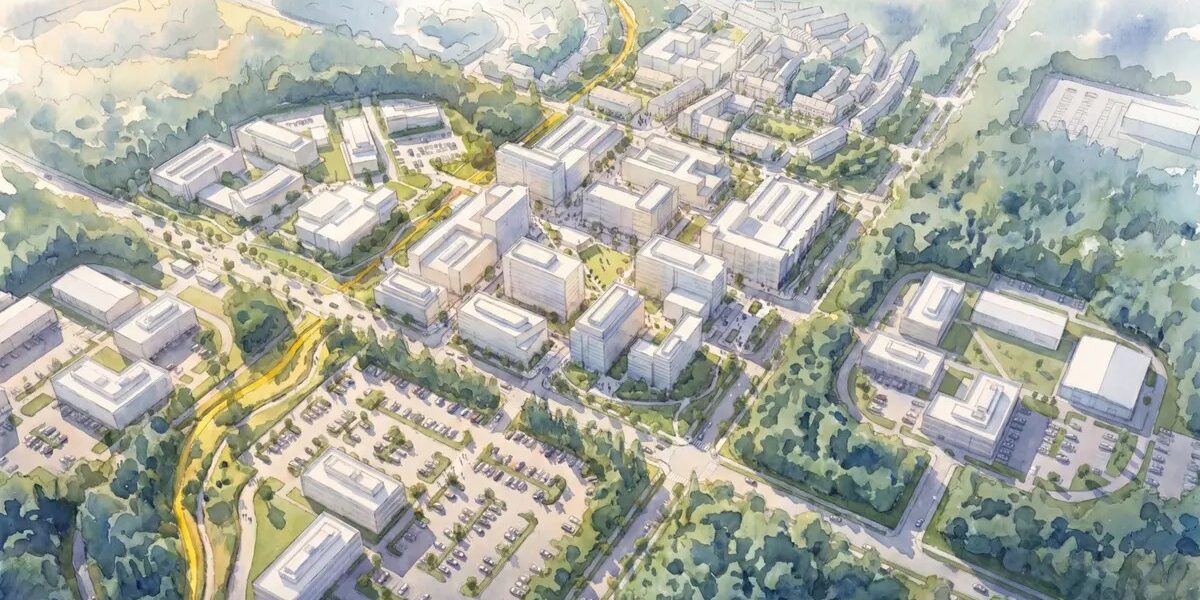
The new code keeps the traditional corporate campus option intact but layers in three additional paths for landowners:
- Enhanced Corporate Campus (ECC) — a more flexible, modernized version of the classic RTP campus
- Residential Neighborhood Development (RND) — limited housing, a first for the Park
- Mixed-Use Node (MUN) — walkable areas combining work, retail, and community space
The changes also loosen physical constraints on development, including reduced setbacks and higher allowable density, building on zoning approvals already secured from Wake and Durham county commissioners.
Why It Matters for Biotech and Life Sciences
RTP is home to more than 385 companies and national labs and over 55,000 employees, anchored by major life science and pharma players including Biogen, Lilly, Labcorp, United Therapeutics, and NIEHS, alongside research powerhouses like Duke, NC State, UNC-Chapel Hill, and NC Central. The Foundation pegs the Park’s annual economic impact at $25.1 billion.
For an industry where competition for lab talent and research staff is constant, the ability to add walkable, mixed-use, and residential space next to campuses is a workforce play as much as a real estate one. Scott Levitan, president and CEO of the Research Triangle Foundation, put it plainly: the single-use campus model served RTP well for decades, but the future calls for spaces where people can work, live, collaborate, and connect. That’s a notable pivot for a region where commuting into the Park has long been part of the deal, and it signals an effort to make RTP itself a more competitive draw as talent increasingly weighs quality of life alongside salary and lab space.
Gina Andersen, RTP site engagement lead for Cisco and president of the Owners and Tenants Association, framed the unanimous vote as a sign of shared confidence in the Park’s direction — noting that the new standards give every organization room to evolve its footprint on its own terms, whatever that looks like across different sectors and company sizes.
Connectivity Gets a Boost Too
The RTP 3.0 framework also lays out a vision for a 10-mile north-south greenway threading through the Park, connecting campuses, mixed-use nodes, and green space, and building on RTP’s existing 20-mile trail network. The plan additionally anticipates future bus, bus rapid transit, and rail connections — groundwork for making the Park more accessible without a car, another factor that matters for recruiting and retaining early-career scientists and technicians who may not want a car-dependent commute.
What’s Next
RTP landowners can begin submitting applications under the new standards starting July 16. For companies and developers wanting a closer look at how the process works, the Foundation — alongside the Greater Durham Chamber of Commerce — is hosting an “RTP 3.0 Lunch & Learn: Reimagine the Park” session on August 13, covering the newly available development options and the application and approval process.
More details on the RTP 3.0 Vision Plan are available at rtp.org/visionplan.