Glucotrack, the company long known for developing an implantable continuous blood glucose monitor, has closed a $5.5 million financing, its first significant capital raise since completing a strategic combination with Lōkahi Therapeutics just weeks earlier. The financing is really a story about what Glucotrack has become rather than just a fundraising headline: a publicly traded shell that’s now majority-controlled by an AI-driven biopharma asset-acquisition company, with the original glucose monitoring business continuing on as a subsidiary underneath it.
The Bigger Change That Set This Up
In mid-July, Glucotrack completed a business combination with Lōkahi Therapeutics, a capital-efficient biopharmaceutical company built around identifying and acquiring overlooked therapeutic assets using what it calls its “ai²” platform, an AI-driven system for sourcing and advancing drug candidates, paired with an execution model it calls the “ai² Futures Lab.” Under the terms of that deal, Lōkahi securityholders ended up owning roughly 90% of the combined company on a fully diluted basis, effectively making Lōkahi the operating business inside Glucotrack’s existing public listing. Erik Emerson, who leads the combined company as CEO, described the intent as building “a capital-efficient, publicly listed platform designed to systematically identify, acquire, and advance differentiated healthcare assets.”
That’s the context this new financing sits inside. Rather than being a glucose-monitoring company raising money for its device pipeline, Glucotrack is now essentially Lōkahi’s public vehicle, raising capital to support a much broader biopharma asset-acquisition strategy.
The Financing Itself
The $5.5 million raise is split into two pieces: a $2.0 million equity offering priced at $0.75 per unit, with each unit including one share of common stock and a five-year warrant exercisable at $1.50 per share, and $3.5 million in convertible debt from institutional investors. E.F. Hutton served as exclusive placement agent on the deal and, per the company, will continue advising Glucotrack as it evaluates further financing opportunities, suggesting this raise is more of a bridge than a final capital event. Emerson framed the raise plainly: “This financing strengthens our balance sheet, provides additional growth capital, and reflects confidence in our long-term strategy.”
What Happens to the Glucose Monitor
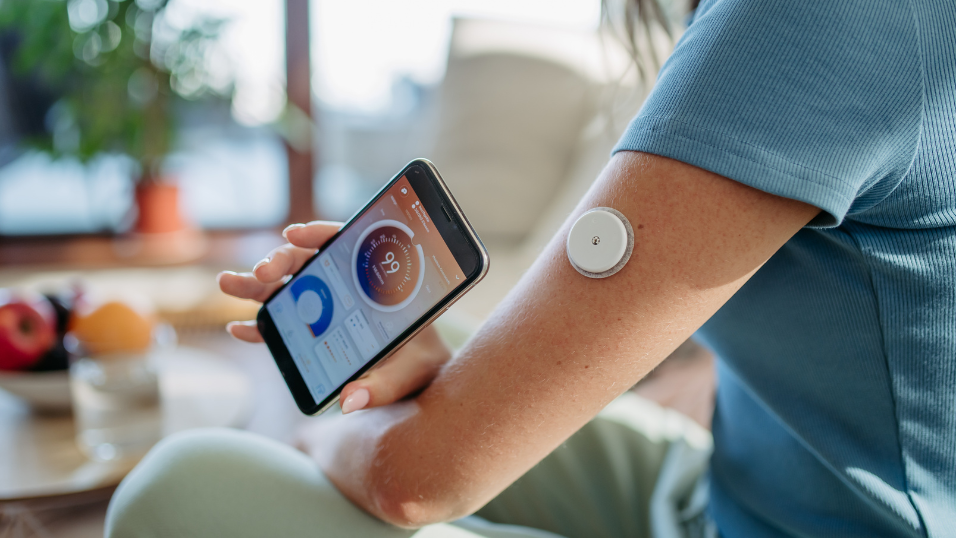
The original business isn’t going away, it’s just no longer the headline. Glucotrack’s continuous blood glucose monitoring technology, a long-term implantable device still in the investigational stage and currently limited to research use under federal law, continues operating as a separated, wholly owned subsidiary, Glucotrack Technologies, Inc., with its own operations and capital structure. Paul Goode holds a dual role across the new structure, serving as Chief Technical Officer of the combined parent company while remaining CEO of the CBGM subsidiary specifically, which suggests the device program will keep advancing on its own track even as the broader company’s strategic identity shifts toward Lōkahi’s acquisition model.
Why This Is Worth Watching
Reverse mergers and business combinations that let a struggling small-cap device or biotech company’s public listing get repurposed by a new operating business have become a fairly common path in this market, since it’s often faster and cheaper than a traditional IPO. What makes this one worth tracking is the specific model Lōkahi is bringing to that shell: an AI-assisted approach to sourcing undervalued therapeutic assets, layered on top of a legacy medical device business that still has its own regulatory path to walk. Whether the combined entity ends up being valued more for Lōkahi’s acquisition pipeline or for wherever the CBGM device lands with the FDA is exactly the kind of question this $5.5 million is meant to buy the company time to answer.