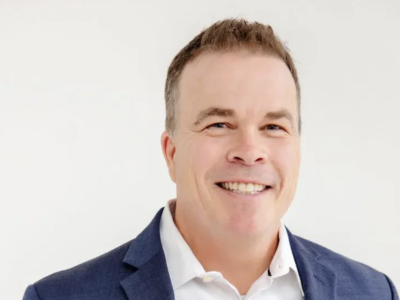
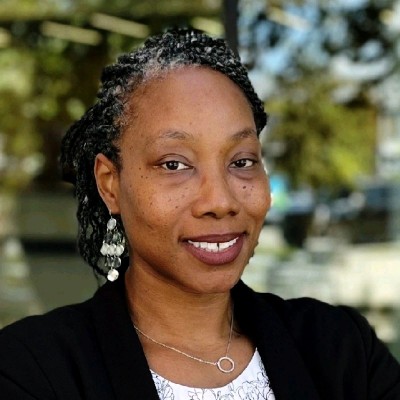
A rejection letter from graduate school. A mentor who initially refused to support her PhD pursuit. For someone still figuring out their path, moments like these can make you question everything. For Dr. Athenesia Faggins, they became the experiences that built her resilience. It hasn’t always been easy, but her mindset: “keep learning, keep showing up, and trust that persistence will open doors,” has carried her through every stage of her career.
Today, Dr. Athenesia Faggins is the Director of Analytical Sciences at Minaris Advanced Testing, a biologics-focused, ISO-certified testing organization at the Philadelphia Navy Yard. She oversees the testing and technical services that ensure advanced therapies are safe and effective — assay development, validation, GMP testing, viral clearance, and the biological safety and molecular testing developers rely on for regulatory submissions. It’s precise, high-stakes work bridging scientific discovery and patient access.
Beyond the bench, she’s become a trusted mentor for early-career scientists, helping them navigate uncertainty and grow with confidence. It’s a reflection of how she sees the industry as a whole. No one scientist or organization drives innovation alone; the biggest breakthroughs come from collaboration, open conversations, and a community that’s willing to learn from one another
We sat down with Dr. Faggins to talk about her path, the analytical science behind advanced therapies, and how persistence — not a straight line — built her career.
1) What did you want to be when you grow up? How’d you get from there to here?
Growing up, I wanted to be a pediatrician. I always enjoyed science and math, so I pursued life sciences at Penn State Abington with every intention of following the pre-med track.
Everything changed when I became involved in undergraduate research. Once I got into the lab, I discovered that I loved the actual process of science — asking questions, solving problems, and making discoveries. That interest pulled me in a direction I hadn’t originally planned for, moving me away from the clinic and toward the bench.
My journey wasn’t without challenges. After earning my bachelor’s degree in 2006, I applied to graduate school but wasn’t accepted on my first attempt. Instead of walking away, I began a master’s program at Temple University in 2007. When I later expressed interest in pursuing a PhD, my mentor initially didn’t think I was ready and declined to support that path.
Rather than giving up, I just continued working hard. I proved myself over time, and eventually, I earned both my mentor’s recommendation and my PhD in Biology in 2013. Looking back, those setbacks became some of my greatest teachers. They reinforced the value of perseverance and reminded me that success rarely follows a straight line.
2) How are you helping to build a more connected community?
I take every opportunity I can to engage with scientists who are early in their careers. Because my own path had its share of friction, I want to make sure I am sharing my experiences and offering guidance to the next generation.
Whether it’s encouraging someone who is finding their own path or just having an honest conversation about the realities of the work, I hope my journey helps others see that early setbacks don’t have to define your future.
I also stay connected to the broader scientific community by attending conferences and industry events. I enjoy exchanging ideas, learning from others, and building relationships that strengthen our field. Science moves forward through collaboration, and I value being an active part of that ecosystem.
3) What are currently buzzing about? Anything and everything…
I am especially focused right now on the continued evolution of advanced therapies and the analytical science that is helping make them possible. As these therapies become more sophisticated, analytical testing has to evolve right alongside them.
I’m also energized by the opportunity to work alongside talented scientists who are passionate about solving complex challenges. It’s an exciting time to be in this industry, and I’m looking forward to seeing where the next generation of scientific innovation takes us.
4) If you could travel back in time — what early career advice would you give yourself?
I would tell my younger self to have patience and be consistent. When you are early in your career, it is easy to feel like you are falling behind if things don’t go exactly to plan. But not every opportunity will come when you expect it to, and not every setback is permanent.
Some of the biggest obstacles I faced ultimately helped shape my career in ways I couldn’t have anticipated.
“Keep learning, keep showing up, and trust that persistence will open doors.”
5) If you could have any superpower what would it be?
Teleportation, without a doubt. I love traveling and experiencing new places, but I could definitely skip the commute. Being able to instantly be anywhere in the world would let me spend more time actually exploring the destination, and significantly less time sitting in airports or Philadelphia traffic.