
Nanochon, the medical device company that operates out of Baltimore’s LaunchPort manufacturing accelerator, has received regulatory approval from Panama’s Ministry of Health to begin a First-in-Human clinical study of Chondrograft, its implant for repairing focal cartilage defects in the knee. The study will run at The Panama Clinic in Panama City under principal investigator Dr. Juan Osorio and co-investigator Dr. Emilio Tufiño, enrolling patients ages 22 to 60 who have focal chondral defects and have already failed conservative treatment.
Why a Small Medtech Company Is Starting in Panama
Running a first-in-human study outside the U.S. is a common path for early-stage medical device companies, since it can move faster than the U.S. regulatory process while still generating real clinical safety and performance data. CEO and co-founder Ben Holmes framed the approval as a sign the company’s broader development plan is working: “This approval marks a significant milestone for Nanochon and validates the momentum behind our clinical development program. Panamá’s streamlined regulatory environment and strong clinical ecosystem provide an excellent foundation for advancing innovative orthopedic technologies like Chondrograft into human studies.” Panama isn’t the only jurisdiction where the study is moving forward, either. Health Canada has separately authorized the trial, and Nanochon is already actively recruiting patients in Ontario, giving the company two parallel tracks for early human data.
What Chondrograft Actually Is
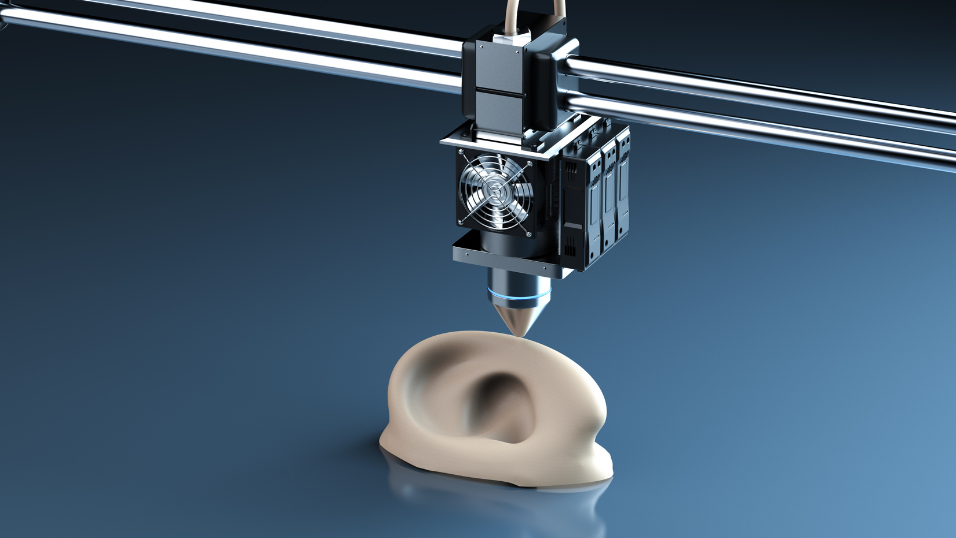
Nanochon describes articular cartilage injury as one of the more stubborn problems in orthopedic medicine, since cartilage has limited ability to heal itself and untreated defects tend to progress toward chronic pain and joint degeneration over time. Chondrograft is designed as a minimally invasive, what the company calls a “burn-no-bridges,” implant meant to provide immediate mechanical support at the defect site while encouraging longer-term cartilage regeneration, without closing off other treatment options like joint replacement down the road. The underlying technology traces back to research co-founders Ben Holmes and Nathan Castro began in 2016: a nanostructured synthetic material, 3D-printed to mechanically mimic real cartilage while still supporting the bone integration an implant needs to stay in place. The device has already picked up FDA Breakthrough Device Designation, a status meant to speed up the agency’s review process for technologies addressing serious conditions, though Chondrograft itself remains unapproved for marketing anywhere at this stage.
A Company Built Into Baltimore’s Device Manufacturing Scene
Nanochon has spent recent years growing inside Baltimore’s medtech ecosystem specifically. The company is a past winner of Crab Trap, Baltimore’s biotech and medtech pitch competition, previously worked out of Johnson & Johnson’s JLABS incubator space, and now operates as a resident at The LaunchPort, a Baltimore-based medtech manufacturing accelerator. Nanochon has also received funding from the Maryland Stem Cell Research Commission, adding state research dollars to a company whose actual first-in-human data will come from clinics thousands of miles away in Panama and Canada, a reminder that a device company’s manufacturing base and its earliest clinical evidence often don’t live in the same place.