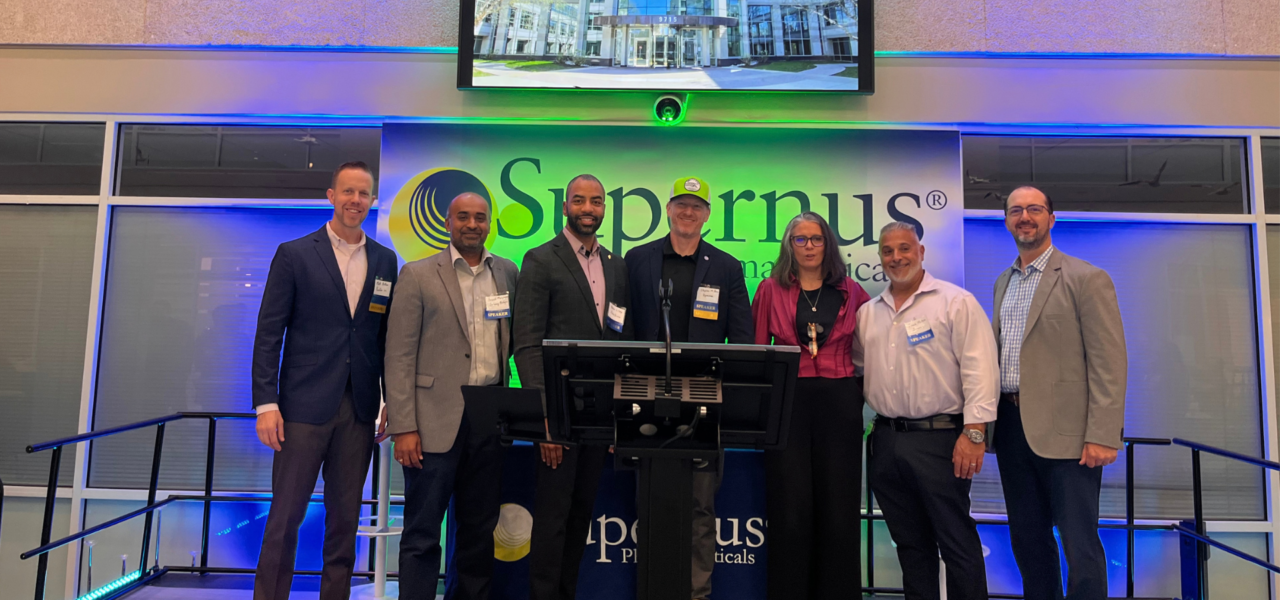
On Wednesday, September 23, Maryland’s pharmaceutical operations leaders gathered at Supernus Pharmaceuticals in Rockville for Built to Scale: The Operational Infrastructure Behind Commercial-Stage Pharma. Part of our Insights to Impact Series, the evening featured three fireside chats exploring quality culture, manufacturing partnerships, and the infrastructure behind commercial-stage pharma.
Chris Frew, Founder and CEO of BioBuzz, opened the evening by introducing two initiatives aimed at the people behind Maryland’s bioeconomy. The first, BioCatalyst, is a TEDCO Equitech Growth Fund-backed program that connects Maryland employers with students and early-career talent. Its inaugural summer cohort spans 11 schools, including three HBCUs. The second, the AI-GMP Training Accelerator, is funded through Governor Moore’s Maryland Lighthouse Industries Upskilling and Reskilling Program, where BioBuzz is the sole life sciences awardee. It will train experienced workers at Maryland development and manufacturing companies to lead AI adoption inside GMP-regulated environments, with ProcellaRX leading the curriculum and Kymanox among its partners.
Then came three fireside conversations, each tackling a different layer of what it takes to scale.
Quality at Scale
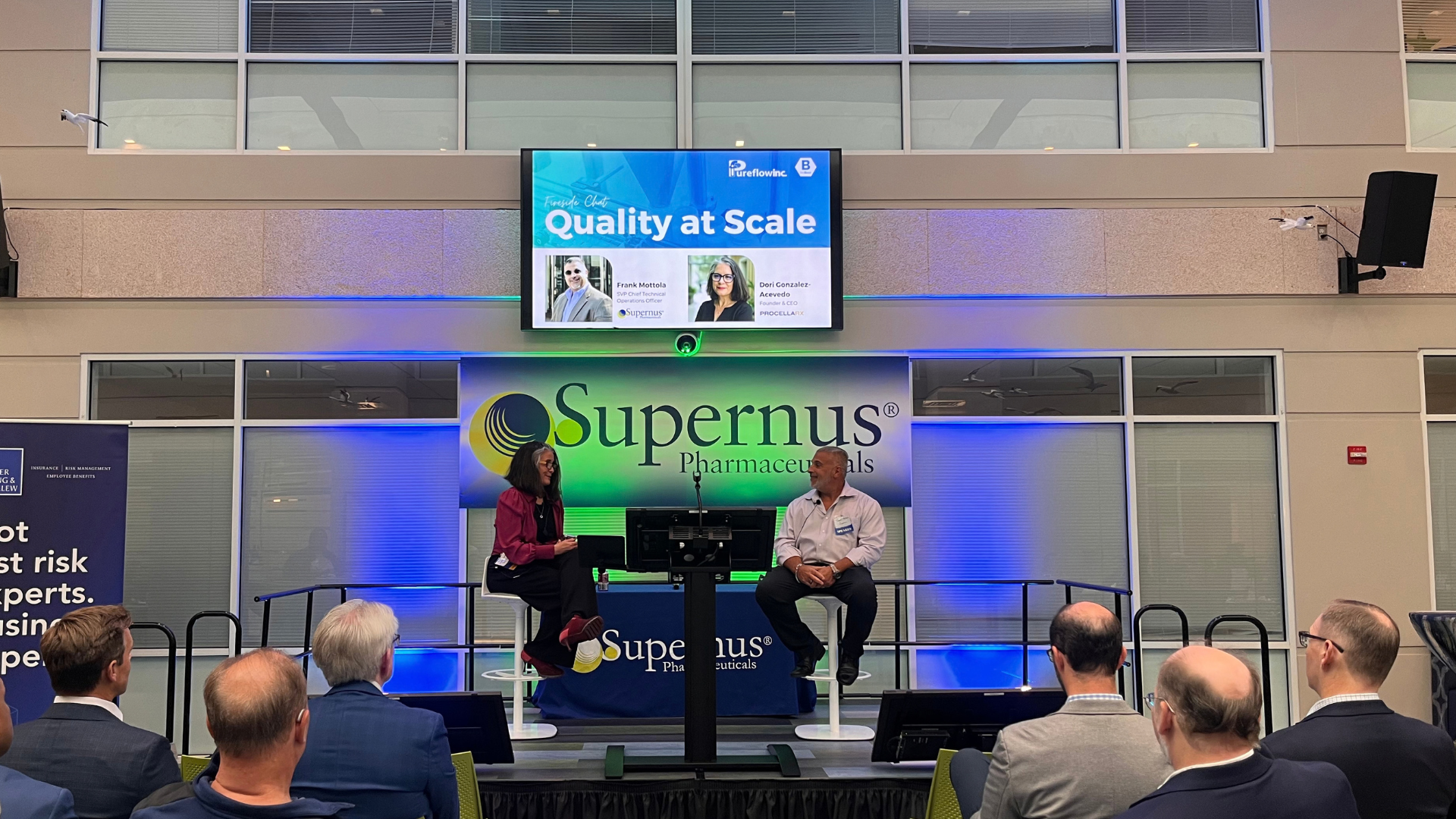
The first conversation brought together two perspectives on quality. Frank Mottola, SVP and Chief Technical Operations Officer at Supernus, has spent nearly 21 years helping grow the company from 33 employees into a commercial neuroscience organization. Moderating was Dori Gonzalez-Acevedo, Founder and CEO of ProcellaRX.
Frank’s central lesson from that journey is that quality cannot live in a single department. It has to be a culture that every employee owns, every day, and it has to be built into the organization from the start.
Dori asked how organizations should respond to pressure to reduce quality teams. Frank’s answer was to reframe the question for leadership: can the company afford not to invest in quality? In every recall he has seen, stronger quality systems could have prevented the issue or improved the response. Quality may not generate revenue, but it protects everything that does.
He also spoke about leading across functions. A title is not what earns a seat at the table; understanding the challenges of other teams and serving as a voice of reason does. He encouraged leaders to treat failures as learning opportunities, and emphasized that while AI is changing the workplace, the fundamentals of work ethic remain the same. “There is no secret to not working,” he said. He closed with a reflection on leadership: “You’re nothing without your team.”
Manufacturing Discipline
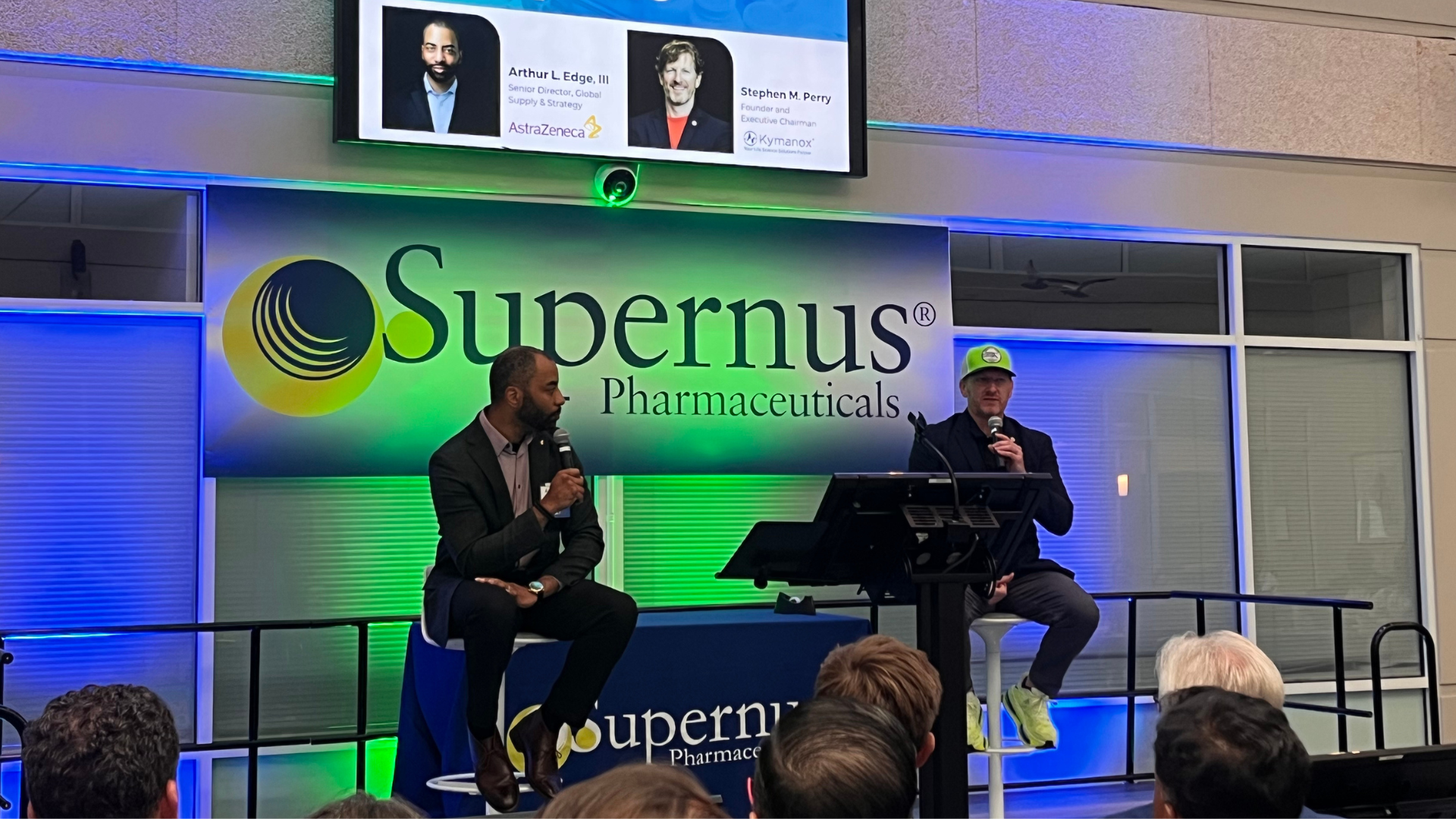
Next, Stephen M. Perry, Founder and Executive Chairman of Kymanox, led a conversation on what it takes to move a program from clinical to commercial manufacturing with Arthur L. Edge III, who oversees global supply and strategy for AstraZeneca’s Respiratory & Immunology portfolio.
Arthur drew a clear distinction between the two phases. Clinical manufacturing prioritizes speed and learning. Commercial manufacturing demands a robust, scalable process that can move from thousands of doses to millions. That is why tech transfer involves far more than the method itself: qualification, training, and a data package that can sustain commercial production.
On outsourcing, he noted that building a dedicated facility for a single product is rarely worth the risk. When selecting a contract manufacturer, companies should consider whether a partner can support both clinical and commercial supply, which can eliminate a future tech transfer and reduce retraining. He stressed, however, that outsourcing manufacturing does not outsource accountability. Companies need an internal team to oversee and support their partners, a cost that is often underestimated.
The discussion also covered the growing shift toward domestic manufacturing, driven by supply chain reliability and evolving U.S. policy, and the role of AI in anticipating supply disruptions before they occur. Throughout, Arthur emphasized the importance of keeping a human in the loop.
The Infrastructure Behind the Drug
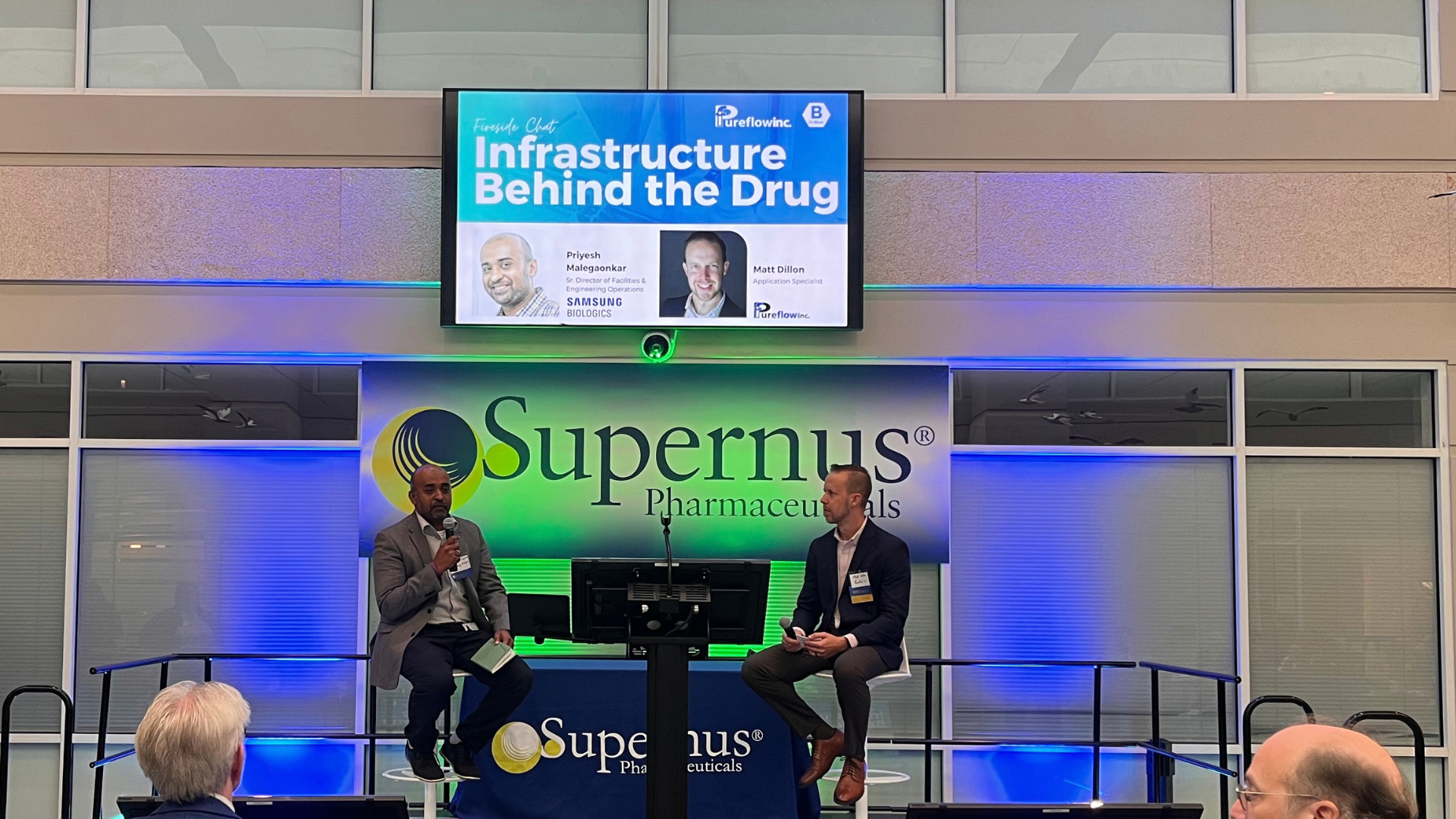
The final conversation turned to the systems that make commercial production possible, the utilities and facilities that rarely get attention until something goes wrong. Priyesh Malegaonkar joined from Samsung Biologics, where he leads facilities and engineering operations, alongside Matt Dillon, Application Specialist at PureFlow and Sustainability Committee Chair of the ISPE Chesapeake Bay Area Chapter.
Priyesh explained that designing for growth means planning around forecasts that will inevitably change. Facilities must account for future products, space, and utility capacity, which frequently becomes the constraint during expansion. He recommended documenting the reasoning behind long-term design decisions so future teams can build on it, and engaging site operations and quality early in the design process to avoid costly changes later.
He also shared an approach to developing talent: building expertise in operations first, then moving those team members into capital projects, where their operational knowledge informs every design decision.
Matt’s sustainability focus framed the final part of the discussion. Priyesh noted that water, gas, and electricity are growing constraints, and that sustainability and scale can sometimes pull in different directions. Planning for resource availability 5, 10, or even 15 years ahead, and rethinking how return on investment is measured, is becoming essential to sustainable growth.
What Ties It All Together
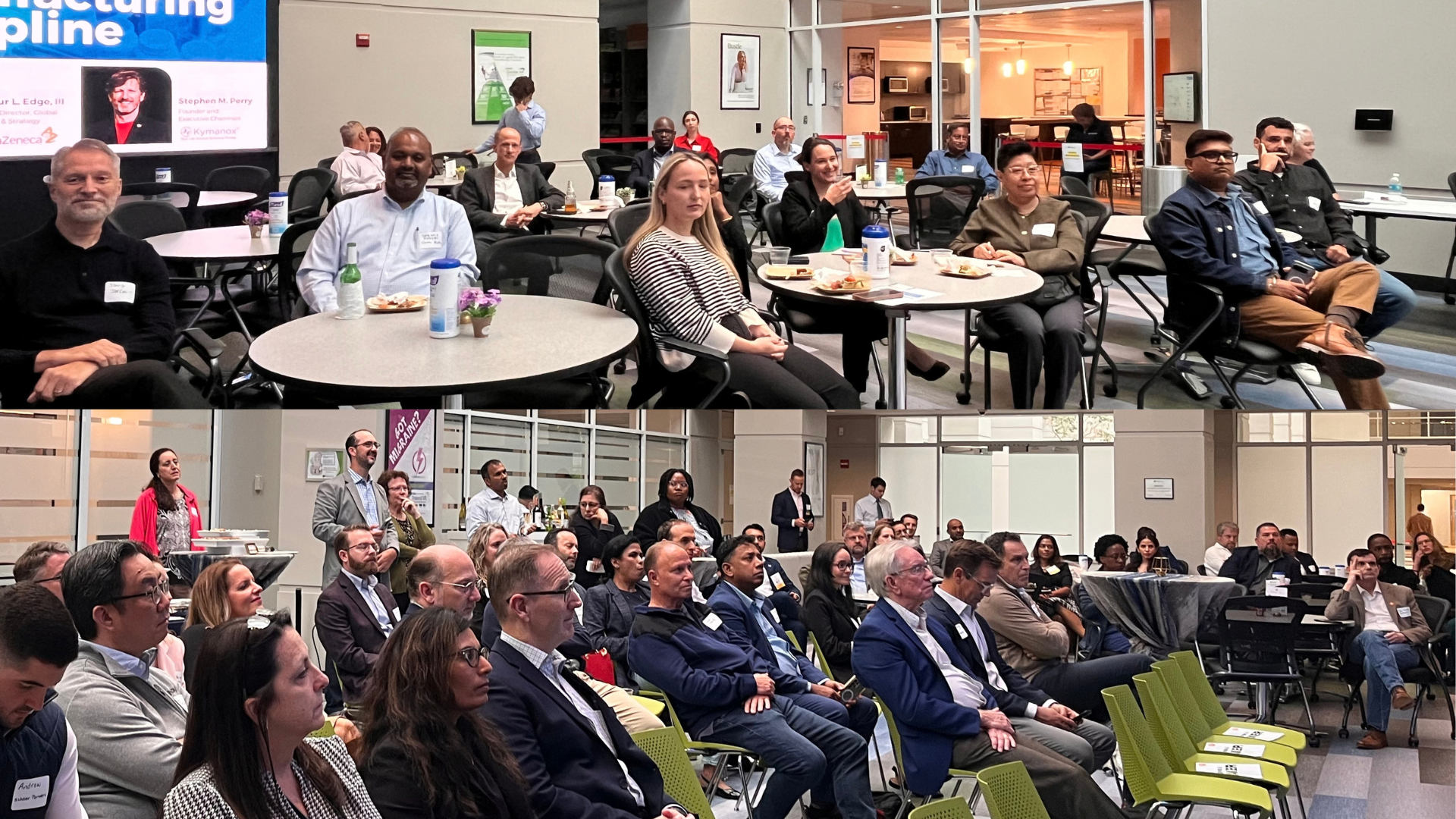
Across all three conversations, one idea kept coming back: commercial success is decided long before a product reaches the market, in the culture teams build, the partners they choose, and the infrastructure they plan for.
The evening ended with networking, as attendees and speakers continued the conversations from the stage, exchanging ideas and building connections across Maryland’s pharmaceutical community.
Thank you to Supernus Pharmaceuticals for hosting, and to everyone who joined the conversation. The evening was made possible by the TEDCO Equitech Growth Fund and our sponsors: Agilent, Conner Strong & Buckelew, CRB, Fulton Bank, Heffron Company, HJF, Kymanox, Pharmaron, PureFlow, Workforce Genetics, and Xcellon Biologics.
.