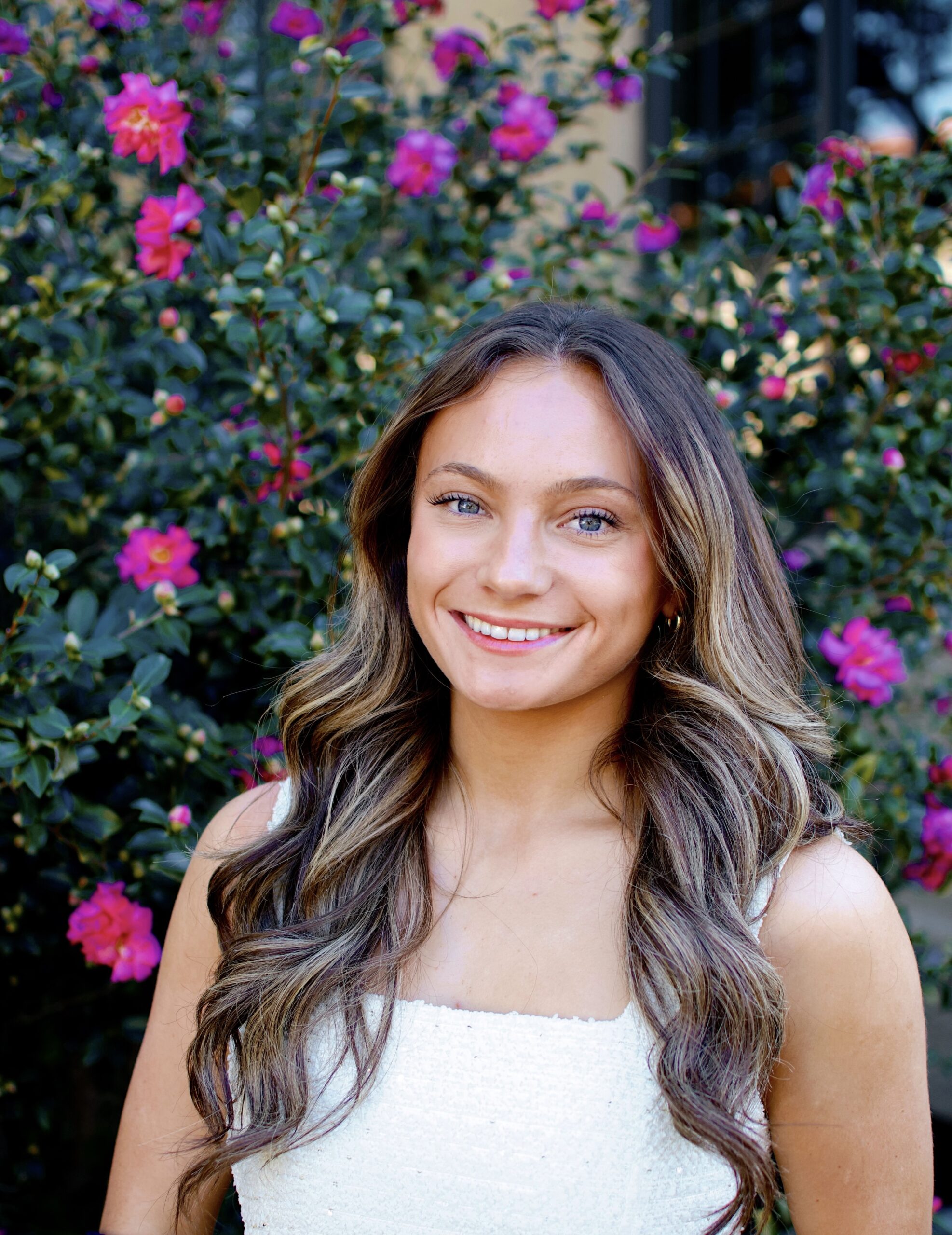
BioBuzz’s Buzzin’ Brood Student Spotlight series celebrates the next generation of life sciences talent — and the programs, institutions, and organizations investing in them.
Name: Lauren Madden
Hometown: Ellicott City, Maryland
Institution: Louisiana State University (Baton Rouge, Louisiana)
Role: Greater Philadelphia Region Ecosystem Development Fellow, BioBuzz Networks (Fall 2026)
Lauren Madden has recently graduated with a degree in biological engineering at Louisiana State University who thrives at the intersection of technical problem-solving and human impact. From designing biometric smart PPE to exploring the regulatory pathways of medical devices, she is building a career focused on taking complex ideas from concept to clinical reality. We sat down with Lauren to talk about her path into biological engineering, what’s exciting her right now, and where she sees herself headed next.
Some engineers want to build things; others want to understand how those things actually reach the people who need them. Lauren Madden wants to do both. Lauren thrives on the full lifecycle of innovation, from identifying a clinical need to testing a working prototype. She recently put this into practice during her senior capstone project, where she and her team designed and built a Biometric Smart PPE Monitor, taking a raw problem statement all the way to a functional device.
Beyond the lab and classroom — where she was active in the Biological Engineering Student Organization and Alpha Phi — Lauren is deeply curious about the connective tissue of the life sciences industry. She wants to know how biotech products are not only built, but how the ecosystems that support them grow and share their stories.
To explore that broader perspective, Lauren recently joined BioBuzz as the Greater Philadelphia Region Ecosystem Development Fellow. She steps into this role, which is made possible through TEDCO’s Equitech Growth Fund, to track market trends and connect with the leaders shaping the regional life sciences community.
We sat down with Lauren to talk about her path into biological engineering, what’s exciting her right now, and where she sees herself headed next.
How did you get here?
I started out at LSU studying Biological Engineering, which felt like the right fit because it brought together biology, medicine, and hands-on problem solving. I’ve always been interested in work that has a clear human impact, and biological engineering gave me a way to connect technical work with that bigger purpose.
One of the experiences that stayed with me most was my senior capstone project. My team and I designed, built, and tested a Biometric Smart PPE Monitor, then presented it at LSU’s Evening of Engineering Excellence. It was the first time I got to take an idea all the way from a problem statement to a working prototype, and it confirmed how much I enjoy that full engineering process: finding a real need, building a solution, and testing whether it actually works.
Looking beyond graduation, I wanted to see the industry from a different angle. I was curious not only about how biotech and life sciences products are built, but also how the broader ecosystem connects, grows, and shares its story. That curiosity led me to BioBuzz, where I now serve as the Greater Philadelphia Region Ecosystem Development Fellow. In this role, I track market news and talk with people who are helping shape the region’s life sciences community. It has given me a wider view of the industry I hope to keep building my career in.
What is currently blowing your mind right now?
I’ve been really interested in vascular Brain-Computer Interfaces, or BCIs. A BCI reads a person’s neural activity and translates it into a real-world command, like moving a cursor or sending a message. What makes the vascular approach so interesting to me is that it avoids the traditional craniotomy route.
Instead of implanting electrodes directly into the brain, the device is delivered through the venous system, using the body’s blood vessels to place a stent-like electrode array near the brain. Clinical studies have already shown ALS patients using endovascular BCIs for digital communication, which is incredible to me.
As an engineer, I’m drawn to problems like that: taking something that has traditionally been invasive and high risk, and finding a smarter, less invasive way to approach it. There are still engineering questions to solve, but that is part of what makes the field so compelling. It is exactly the kind of challenge that made me want to study biological engineering in the first place.
If you could explain yourself right now in only emojis, what would those be?
🧬 I’ve always been drawn to science and engineering, and that curiosity is still what drives me.
📚 I’m almost always in the middle of a book, usually with another one already lined up.
🏃♀️ 🤸♀️ I grew up doing competitive gymnastics, so staying active has always been part of how I keep myself grounded.
✈️ I love traveling and exploring new places.
🇮🇪 I was born in Ireland!
If you could travel into the future… what does your LinkedIn Headline say?
Medical Device Development | Bridging Engineering and Regulatory Affairs to Change How Care is Delivered
Ten years from now, I hope to be working in medical device development, especially where engineering and regulatory affairs overlap. Those have been the two areas of the industry I’ve been most drawn to since my college internships, and I like the idea of building a career that lets me understand both the technical side of a product and what it takes to bring it through the regulatory process.
To get there, I want to keep building on the foundation I have now, from hands-on engineering experience to a growing understanding of FDA and GMP frameworks, along with the broader industry perspective I’ve gained through BioBuzz. I also want to stay close to emerging technologies. I think some of the most exciting engineering happens when people find new ways to approach problems that have existed for a long time. In the next decade, I hope to work alongside people in engineering, regulatory, and clinical roles who are helping change how care is delivered.
What’s on your bucket list?
Running a Marathon is definitely on my bucket list! I’ve run a handful of half marathons, and I’ve come to really enjoy the discipline that training requires: seeing small progress week by week, staying consistent, and finally getting to the finish line after months of work. Completing a marathon is something I’d love to achieve in the future. It would be a major physical and mental challenge, but I think that’s exactly what makes it so rewarding to work toward.