As JPM Healthcare Week unfolded amid tighter capital and rising expectations for early-stage companies, Bessel’s Build for Impact™ Startup Showcase offered a different signal. Rather than centering on pitch decks or headline-grabbing announcements, the event emphasized something investors and strategic partners are increasingly prioritizing: execution discipline, real-world validation, and the ability to scale.
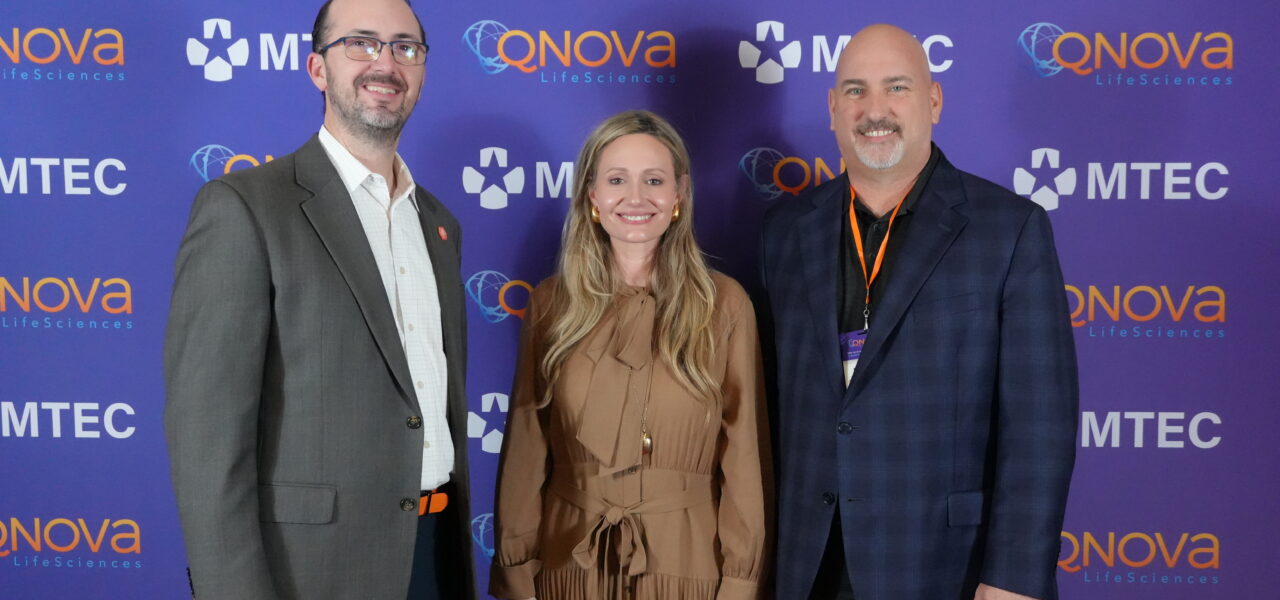
Hosted during the QNOVA Partnering Forum co-hosted by MTEC at the Hilton San Francisco Union Square, the showcase brought together nine medtech startups spanning AI diagnostics, surgical robotics, drug delivery, and orthopedic implants.
The format was intentionally informal and founder-forward, built around tabletop demonstrations and direct conversations instead of staged presentations. In a JPM environment where scrutiny has intensified and early-stage capital is more selective, the approach reflected a broader shift in how innovation is being evaluated—less on narrative, more on proof.
From Pitching to Proof
The structure of the showcase was intentional. In a market where investors are scrutinizing not just ideas but operational readiness, Bessel positioned the event as a working forum rather than a stage.
Founders engaged through tabletop demonstrations and candid discussions, allowing attendees to explore technical depth, clinical relevance, and commercial pathways without the constraints of slide decks or timed pitches. The approach aligned with a growing sentiment across JPM week: that traction, clarity, and execution discipline are now more persuasive than narrative alone.
The evening also featured a fireside conversation with PinPrint CEO Renee Ryan, focused on precision-driven care models and the outlook for healthcare innovation in 2026—reinforcing the event’s emphasis on scalability and real-world impact.
What “Breakthrough” Looks Like Now
Chris Danek, CEO of Bessel, framed the showcase around a specific definition of breakthrough innovation—one grounded not just in novelty, but in the ability to sustain and scale.
The companies selected for the showcase reflected that lens. Several had recently completed Bessel’s Build for Impact™ accelerator, a sprint-based program designed to help medtech teams sharpen strategy, improve execution, and prepare for scale. Others were alumni of partner programs or international initiatives, underscoring the increasingly global nature of early-stage medtech development.
Among the featured cohort companies:
CareChronicle (Rochester, MN), led by Justin Flechsig, is using AI-powered SMS and voice tools to close care gaps by helping patients navigate barriers to access.
HEARTio (Pittsburgh, PA), co-founded by Adam Butchy and Michael Leasure, is advancing non-invasive AI-based cardiac diagnostics aimed at predicting heart attack risk.
Vine Medical (Santa Barbara, CA), is developing soft surgical robotics using biomimetic technology, with applications ranging from airway management to neurovascular intervention and endoscopy.
David Haggerty, Co-founder and CEO of Vine Medical, noted the hands-on nature of the program, emphasizing the accessibility and practical support provided throughout the accelerator experience.
Additional companies highlighted pathways from pilot-stage validation to commercial readiness.
Among the Hatch Fairhope Powered by Bessel™ alumni, both Endeavor Orthopaedics and Percy were funded in part by Innovate Alabama.
Endeavor Orthopaedics (Tulsa, OK) is commercializing a surgeon-invented fixation system for trauma and sports medicine. Percy (Washington, DC) is applying contactless sensing and AI to help clinicians better understand the causes of sleep disruption.
International participation further reflected how innovation pipelines are becoming more interconnected. Companies from Germany, Sweden, and the Netherlands—supported through partnerships with Nexavita XB and the Health Holland Global Scale-up Program—brought solutions ranging from artificial lung technology to sterile catheter connectors and AI-driven virtual cell models for drug discovery.
PinPrint, which focuses on interstitial fluid sampling and drug delivery using 3D-printed microneedle arrays, rounded out the group with a platform aimed at both vaccines and therapeutics.
A Broader Signal During JPM Week
Beyond the individual companies, the Build for Impact showcase reflected a broader recalibration underway in medtech and health innovation.
As early-stage funding becomes more selective, programs that emphasize operational maturity, regulatory awareness, and scale-up readiness are gaining relevance. The showcase suggested that accelerators and service providers are being judged not by how many startups they touch, but by how effectively they help founders move through the hardest execution gaps.
That theme extended beyond the event itself. Concurrent with JPM week, Bessel announced the launch of its Breakthrough Impact Study, aimed at capturing real-world insights from medtech founders about what it actually takes to build, fund, and scale companies. The initiative reflects a growing appetite for peer-driven intelligence—less about aspirational playbooks, and more about lessons learned the hard way.
As JPM Healthcare Week continues to evolve, events like the Build for Impact showcase point to a shift in how innovation is surfaced and assessed. Less about spectacle, more about substance. Less about vision alone, more about proof.
For founders navigating an increasingly demanding landscape, the message was clear: impact is not declared—it is built.