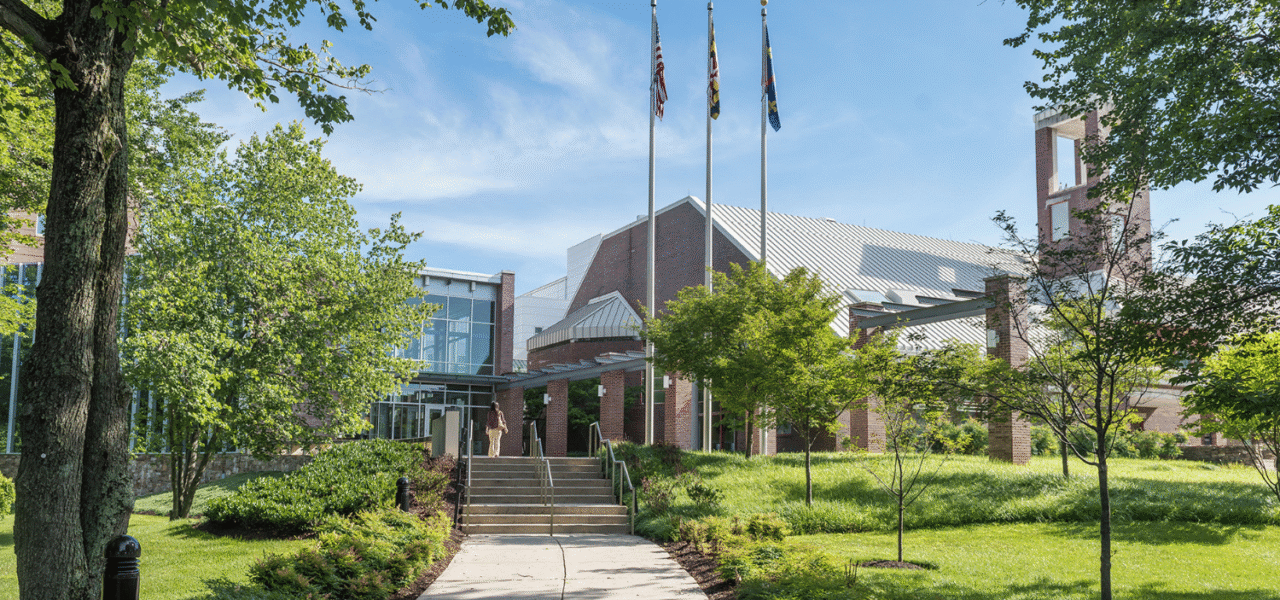
Photo credit: A. James Clark School of Engineering
The University of Maryland just landed one of the more interesting federal awards we’ve seen come through the region in a while, and we wanted to give it its own moment.
NSF has awarded $17.3 million to establish the Collaborative for the Realization of Autonomous Biomanufacturing, or CRAB Lab, at the University of Maryland. It’s one of just 20 Programmable Cloud Laboratory nodes NSF is funding nationwide, part of a nationwide push (roughly $380 million across all 20 teams) to build remotely accessible, AI-run labs that researchers anywhere in the country can log into and use. Congrats to everyone involved. This is a big deal for Maryland’s standing in biomanufacturing, and it’s worth walking through why.
What CRAB Lab Actually Does
Here’s the problem CRAB Lab is going after: the measurements bioprocessing engineers currently rely on to track a batch, things like molecular assays, are useful but limited. They’re often too slow to feed into real-time process control, and on their own they only tell part of the story about what’s happening inside a bioreactor.
CRAB Lab’s answer is to add a second stream of data. The team is bringing in high-velocity, high-volume electronic measurements developed at the Robert E. Fischell Institute for Biomedical Devices, in partnership with NIST and the FDA through the Center of Excellence in Regulatory Science and Innovation (M-CERSI). Paired with the traditional molecular data, that gives AI models a much richer dataset to train on, one that can potentially surface new “biological vital signs,” meaning combinations of measurements that correlate with product quality, titer, or other attributes that are normally hard to measure directly. If it works the way the team expects, it should mean better process understanding and real, real-time control for biomanufacturers instead of after-the-fact analysis.
Home Base and Who’s Involved
The lab is housed primarily at the Institute for Bioscience and Biotechnology Research (IBBR), UMD’s joint institute with NIST, which already gives it a built-in connection to federal measurement science. From there, CRAB Lab plugs into a wider network: the NSF Phase 2+ IUCRC Advanced Mammalian Biomanufacturing Innovation Center (AMBIC) and its 30-plus biopharma industry partners, the National Institute for Innovation in Manufacturing Biopharmaceuticals (NIIMBL), a number of smaller regional biotech startups, and the DMV area’s two- and four-year academic institutions. On the federal side, NIST is a formal partner, and Ginkgo Bioworks, known for synthetic biology and fermentation automation, is bringing its automation expertise to the project as well.
Leading the effort is Fischell Institute Director William Bentley, with Gregory Payne, Martha Wang, Alan Zaoxing Liu, and Hussain Dahodwala co-leading alongside him.
The Part We Especially Like: CRAB Walk
One detail worth calling out on its own: CRAB Lab isn’t just building infrastructure for Maryland. It’s building a training pipeline for the whole country. The team is launching something called the CRAB Walk, a road-show program designed to teach biotechnologists how to work in the cloud, so people anywhere in the U.S. can learn the skills to log in and run advanced AI-enabled biomanufacturing experiments at the CRAB Lab remotely.
That workforce angle is close to our own mission here, since building the talent pipeline is exactly what gets an ecosystem like Maryland’s from “good research” to “good jobs.” A federally funded program that’s explicitly designed to train people outside the region, not just inside it, is the kind of multiplier effect that’s easy to undersell in a headline about award dollars.
Why This Belongs on Maryland’s Scorecard
Put together, this is IBBR, NIST, Ginkgo Bioworks, AMBIC, NIIMBL, and the region’s community colleges and universities all working off the same lab. That’s a meaningful vote of confidence in Maryland’s biomanufacturing infrastructure from a federal funder that had 20 slots nationwide to hand out and put one of them here.
We’ll be watching how CRAB Lab and the CRAB Walk develop, and we’re glad to see this land in our backyard. Congratulations to the whole team.