By Chris Frew
In a highly anticipated move for the rare disease community, and beyond, the U.S. Food and Drug Administration has approved Papzimeos (zopapogene imadenovec-drba) from Germantown, Maryland-based Precigen, Inc.—marking the first and only approved medical therapy for recurrent respiratory papillomatosis (RRP), a debilitating, surgery-dependent condition caused by persistent HPV infection.
See full press release from the FDA.
For the 1,000 U.S. adults diagnosed each year with RRP, today’s approval represents more than just a new treatment option—it’s a potential end to the cycle of invasive, repeated surgeries that have long been the standard of care. Papzimeos, a non-replicating adenoviral vector-based immunotherapy, is designed to target and eliminate cells infected with HPV types 6 and 11, the culprits behind the disease’s benign yet obstructive tumors in the larynx and airway.
“This approval has the potential to transform the treatment landscape for RRP and offer lasting relief for patients who previously faced repeated surgeries,” said Dr. Vijay Kumar, Acting Director of the FDA’s Office of Therapeutic Products.
A Decade in the Making—From GenVec Roots to Regulatory Green Light
The journey to Papzimeos’ approval began in Maryland nearly a decade ago. Precigen acquired Gaithersburg-based GenVec in 2017, bringing in its pioneering AdenoVerse platform technology. What began as a cancer immunotherapy program has now yielded a first-in-class product for a rare infectious disease—a testament to Maryland’s ecosystem of federal labs, biotech innovators, and advanced therapy manufacturing expertise.
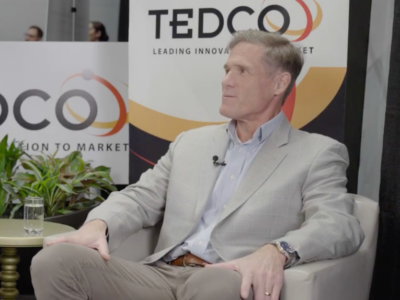
I can personally tell you that this should be a proud moment for Maryland’s life sciences industry. To see technology born at GenVec a decade ago that was later acquired by Precigen in 2017 and nurtured through their platform that is now delivering an FDA-approved immunotherapy in under 10 years—that’s the definition of translational success.
Clinical Impact Without a Randomized Trial
The FDA’s approval was based on a single-arm, open-label study in adults with severe RRP—those needing three or more surgeries annually. Four subcutaneous injections over 12 weeks, given after surgical tumor debulking, delivered striking results: 51.4% of patients (18 of 35) achieved a complete response, defined as going an entire year without needing another surgery. Many maintained their remission for two years or more.
“Randomized trials are not always needed to approve medical products and this approval is proof of that philosophy,” said Dr. Vinay Prasad, Director of the FDA’s Center for Biologics Evaluation and Research (CBER). “Our requirements for products given to tens of millions of healthy people will be different than products given to hundreds or thousands of patients with unique diseases.”
The safety profile was equally encouraging—no dose-limiting toxicities and no treatment-related serious adverse events. Most side effects were mild to moderate and manageable.
Priority Pathway for an Unmet Need
The approval was granted under Priority Review, with Orphan Drug and Breakthrough Therapy designations—accelerated pathways reserved for products addressing urgent unmet needs. RRP, while rare, carries high morbidity. Patients often undergo multiple surgeries per year to remove growths that impair breathing, damage the voice, and in severe cases, threaten the airway entirely.
“Until now, there was no therapy to break that surgical cycle,” Kumar noted. “Papzimeos offers patients a chance at durable control of their disease through immune-mediated clearance.”
Implications for Maryland’s Advanced Therapy Leadership
This win puts Maryland in the spotlight as a hub for gene and cell-based therapeutics. Precigen joins a growing roster of companies in the I-270 corridor delivering FDA-approved advanced therapies, from gene therapies for rare diseases to cutting-edge immuno-oncology drugs.
It also underscores the strategic advantage of Maryland’s biotech infrastructure—dense with federal research labs, GMP manufacturing sites, and venture-backed biotech firms that can shepherd technologies from bench to bedside.
For Precigen, Papzimeos is both a commercial milestone and a proof point for the AdenoVerse platform’s broader potential. For Maryland, it’s a reminder that the state’s biotech bets—acquiring and scaling innovation—can pay off in products that change lives.
As one local executive put it: “It’s a Maryland story through and through—federal science, local innovation, and a global regulatory impact.”