Last year’s HERstory Gala wasn’t just a gathering—it was a reflection of how leadership is evolving across the region’s life sciences ecosystem. More than 200 attendees came together in Bethesda for an evening that moved beyond celebration into something more substantive: a shared conversation about resilience, reinvention, and responsibility.
On stage, ecosystem leaders Kathie Callahan Brady and Tammi Thomas offered more than career retrospectives. They reinforced a growing truth across the industry—that the path is rarely linear, and that leadership today carries an implicit obligation to open doors for others. Their message landed clearly: mentorship isn’t optional, it’s infrastructure—and the next generation will be shaped by those willing to both seek guidance and actively give it.
This year, that conversation takes a step further—into the systems that shape what’s possible—and will be explored through perspectives from this year’s keynote speakers, Ellington West and Liz Powell, Esq., MPH.
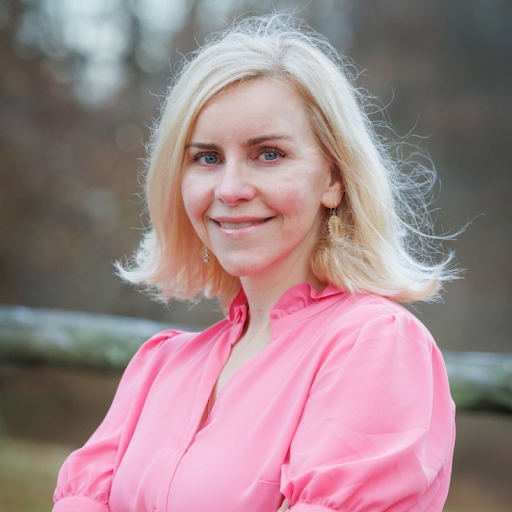
As Founder and CEO of G2G Consulting and a leader behind multiple national women’s health initiatives, Powell has built her career at the intersection of policy, advocacy, and healthcare—helping move ideas into action through legislation, funding, and coalition-building.
Her keynote brings a critical lens on how change actually happens—and who must be involved to make it sustainable. For those looking to be part of that conversation, registration for the 8th Annual HERstory Gala remains open.
Below, Powell shares the experiences that shaped her path, the moments that defined impact, and the advice she offers to the next generation of advocates ready to step into the arena.
1. You’ve spent nearly two decades driving policy, securing funding, and advocating for women’s health through initiatives like Women’s Health Advocates and the Breast Cancer Early Detection Coalition. What first inspired you to focus on health policy and advocacy for women?
My activism dates back to college where I started and ran organizations addressing HIV/AIDS, racism, sexual violence, and reproductive health access. I also worked in the Center for Women’s Studies and helped register students to vote. That’s how I discovered politics and policy. I went to Washington, D.C. to work on national issues to drive systemic change and was fortunate to work for Members of Congress who were like-minded and determined to make a difference. Congresswoman Juanita Millender-McDonald and Congressman Jim Langevin were both role models and changemakers, and I owe a lot to them.
2. Your work has resulted in millions of dollars in funding, legislative change, and CMS reimbursement. Can you share a story of a breakthrough moment when advocacy made a tangible impact on women’s health outcomes?
I have lots of stories over the years where I quietly worked on an amendment and was able to slip it into legislation to increase funding for the National Women’s Business Council and others where I mobilized thousands across the country to come to Capitol Hill and participate in Congressional Briefings and meetings or send letters to advocate for increased funding for the Office of Research on Women’s Health, ARPA-H and menopause research as well as the codification of the comprehensive women’s health definition far beyond reproductive health. The biggest breakthrough moments are when people come to participate in our Hill Days and see how important their voices are in educating and shaping the process. We have countless stories of brave women who took the leap and realized just how vital sharing their journey is to informing policymakers to make a difference. And once one becomes an advocate, you can’t turn back, you’re all in!
3. Your work unites medical professionals, policy experts, and community advocates to tackle critical gaps in women’s health. What do you see as the power of bringing these diverse voices together, and how does it drive real change?
Diversity of profession, experience, health journey, geography, ethnicity, age and the list goes on…is key to effective advocacy and policy change. There are so many in this ecosystem and we need all voices and experts contributing to the education and policy-shaping process to be truly effective. This is very compelling to Congress and the agencies because it shows coordination among advocates and provides valuable insights on how increased R&D funding means more innovation or STEM education programs build the workforce pipeline or coverage and reimbursement ensure access – all policy actions that drive real change.
4. The HERstory Gala celebrates women making a difference in life sciences and healthcare. Why is it important for advocates like you to participate in events like this, and how do they help amplify women’s voices in policy and health innovation?
I am honored to be invited and appreciate how important amplifying our voices is to strengthening our life sciences ecosystem and patient care overall. We want the best and brightest to soar as it ensures we can advance the best science and discovery, research and innovation, and healthcare that is accessible for all. It also makes us globally competitive and strengthens our economy. Because this field traditionally has not included many women and people of color, focused approaches to attract, welcome and help advance these populations is a win-win for all. It ensures we have all voices at the table and helps ensure that all the best and brightest can get on this career pathway. These voices need to be in the board rooms, investor circles, executive teams and policymaking positions, and we at Women’s Health Advocates are doing all we can to play our part in accomplishing this, but most especially in government.
5. What advice would you give to early-career professionals, students, or community advocates who want to make meaningful change in women’s health policy and advocacy?
Get involved in whatever way works for you. Join organizations who are shaping policy, such as Women’s Health Advocates, participate in Capitol Hill and Statehouse Days, send letters to your legislators about women’s health issues important to you, and ask questions when you are in the room of power such as “How have you accounted for sex differences in your research?” When we ask questions, we start to open people’s minds to new thinking, new designs, and new ways of doing things. This drives dialogue, education and change. Be the changemaker you want to be, and know every bit of action counts!
Learn more about the 8th Annual HERstory Gala and register to join here.