
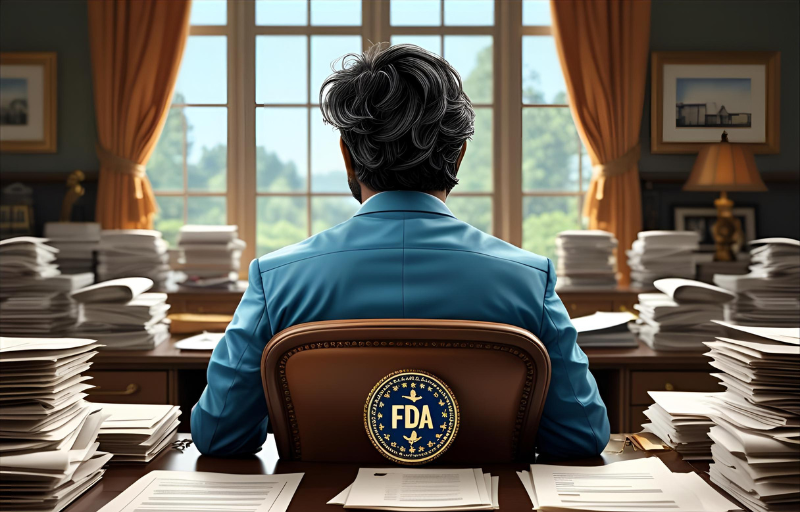
- Dr. Prasad resigns amid controversy and questions surrounding Serepta’s gene therapy
- FDA’s staffing challenge is raise questions over agency’s capability of ensuring quality and safety for complex gene therapies
- Concerns may spread to impact future outsourcing strategies with Gene therapy CDMOs
- Lessons learned from Emergent BioSolutions
September 20, 2025
Dr. Vinay Prasad, the FDA’s Chief Medical and Scientific Officer and head of the Center for Biologics Evaluation and Research (CBER), resigned abruptly on July 29—just one day after the agency permitted Sarepta Therapeutics to resume limited shipments of its controversial gene therapy, Elevidys. The resignation follows weeks of escalating scrutiny over CBER’s role in approving Elevidys under accelerated pathways, mounting safety concerns tied to patient deaths, and the FDA’s recent clampdown on Sarepta’s AAVrh74 gene therapy platform. While the agency has not publicly commented on Prasad’s departure, the timing raises questions about internal divisions and leadership accountability within the FDA’s biologics division amid the growing crisis.
The FDA’s June 5 Cell & Gene Therapy Roundtable gave much needed breath into the struggling advanced therapies industry when it was made clear that CBER would be under pressure to “challenge deeply held assumptions” and explore accelerated pathways to bring one-time treatments to patients faster (We Will Cure). Yet these very proposals collide head-on with the reality that CBER’s inspection and quality-review capacity is strained by deep staffing cuts and recent FDA leadership churn – most notably Dr. Prasad’s.
Since April 2025, HHS has eliminated roughly 3,500 FDA positions—nearly one in five employees—despite assurances that critical functions like product review and inspections would be spared (Reuters). Lost institutional knowledge and fewer in-field audits mean that potential cGMP deviations—such as inadequate cleaning validations or improperly calibrated equipment—may go undetected until customers report out-of-specification results or even more dangerous adverse events.
Dr. Prasad’s abrupt departure leaves a leadership void at CBER at a moment of heightened scrutiny over gene-therapy oversight combined with new pressures for accelerated approvals. Prasad had been a vocal advocate for stringent review of high-risk modalities, most notably weighing in on the Elevidys approval and subsequent shipment pause by Serepta and their CDMO, Catalent, who manufactures Elevidys from their Harmons, Maryland facility.
Heightened scrutiny and attention on cases like this have reverberating effects across the industry. For instance, since Serepta outsourced their commercial production to a CDMO, this may cause others in the space to second guess their outsourcing strategies in favor of maintaining more control over their production and quality systems.
Let’s explore the depth of these challenges further.
Lessons from Emergent: A Cautionary Tale
Emergent’s former Baltimore facility, tasked with fill–finish operations for both Johnson & Johnson and AstraZeneca vaccines, made headlines in 2021 when swimmers of vaccine components were inadvertently swapped—ultimately forcing the FDA to “pause” and quarantine more than 60 million doses manufactured before the error was caught (House Committee on Coronavirus Oversight). A subsequent Fierce Pharma report revealed that even Emergent’s smaller Camden site had been cited for particulate contamination and inadequate cleaning procedures—violations that “could lead to drug product contamination” if not remedied (Fierce Pharma). These incidents were clear reminders that a single CDMO can serve multiple clients, magnifying the downstream impact of any lapse in quality systems.
For gene therapy CDMOs, without the strengthening of cGMP surveillance and validation oversight, manufacturers risk creating blind spots in areas like viral-vector potency assays or cleaning validation. This case study should be
Lean Staffing Challenges for CDMOs
CDMOs typically operate on very tight budgets and compressed timelines compared to name-brand manufacturers. To preserve operating margins, many CDMOs staff their quality units and analytical labs at minimal headcounts. This “lean” approach means fewer hands to conduct batch record reviews, investigate deviations, or perform routine equipment validations or internal audits—and it slows root-cause investigations when out-of-specification (OOS) results emerge. Industry observers have warned that simultaneous “difficulties in hiring staff” and squeezed profitability are making it harder for CDMOs to maintain robust inspection and validation cadences and timely follow-up on quality issues (DCAT Value Chain Insights).
For instance, the result of poor or incomplete validation plans in gene-therapy CDMOs strike at the heart of their quality systems and jeopardize regulatory compliance. Without comprehensive lifecycle validation of critical components—ranging from viral-vector assays and sterile consumables to purification equipment —process deviations remain undetected until they manifest as out-of-specification batches or contamination events, triggering FDA Form 483 observations or clinical holds (altabrisagroup.com). In this high-stakes environment—where even trace amounts of replication-competent virus or residual host-cell DNA can have severe patient safety implications—skimping on validation not only lengthens root-cause investigations and delays corrective actions but also exposes sponsors and CDMOs to enforcement actions, import alerts, and irreparable reputational damage.
FDA’s Inspection and cGMP Enforcement
Under the Federal Food, Drug, and Cosmetic Act, cGMPs mandate that manufacturers—including CDMOs—maintain rigorous control over production facilities, equipment, personnel training, and batch records. The FDA’s Office of Regulatory Affairs (ORA) conducts routine and for-cause inspections to verify compliance. Historically, foreign and domestic drug facility inspections numbered in the thousands annually, but the pace has slowed markedly. According to (ProPublica), FDA inspectors “are reeling from deep cuts” that have hampered their ability to schedule and execute overseas inspections—critical for facilities serving global supply chains.
A Morgan Lewis analysis warns that recent layoffs “are raising concerns about the potential impact on drug and biologic manufacturing inspections,” noting that fewer on-site audits could mean longer intervals between inspections and delayed identification of systemic issues (Morgan Lewis). The FDA’s user-fee model under PDUFA helps fund review—yet inspection staffing remains budgeted separately, leaving it vulnerable to broader HHS workforce reductions.
Calibrating Oversight: Finding the Right Balance
Regulatory experts argue that purely headcount-based solutions won’t suffice. Instead, the FDA should adopt a risk-based inspection cadence that focuses on CDMOs’ client portfolios, historical compliance records, and product criticality.
Industry associations like PharmAlliance have proposed third-party certification programs, under which qualified auditors conduct cGMP assessments and share data with the FDA. Coupled with enhanced transparency—where CDMOs publicly report inspection outcomes and remediation timelines—this model could relieve some inspection burden while maintaining accountability.
Strengthening cGMP Culture at CDMOs
Beyond regulatory inspections, quality begins—and ends—with a CDMO’s internal culture. Top CDMOs apply robust training programs, empowered quality units, and clear escalation pathways for potential deviations are foundational. Biotech sponsors can reinforce these practices by conducting their own supplier audits, stipulating quality metrics in service agreements, and requiring real-time access to process data. Such collaborative partnerships create overlapping layers of oversight that help compensate when FDA resources are stretched thin.
CDMOs are indispensable to biopharma innovation and commercialization—but their very breadth of service amplifies the consequences of any quality lapse. The FDA’s traditional inspection framework, hamstrung by recent staffing upheavals and budgetary pressures, must evolve. By shifting to a risk-based, data-driven model—supported by third-party certifications and greater industry transparency—the agency can safeguard public health without overextending its workforce. The stakes are high: ensuring that every vial, tablet, and batch meets cGMP standards is not just a regulatory requirement, but the bedrock of trust between patients, companies, and the regulator.