Why Most Biotech Partnership Deals Fail Before They Start
As Day 2 of QNova’s plenary sessions closed, an unfiltered investor AMA offered founders a rare look inside how venture capitalists are managing risk, leverage, and non-dilutive funding in a defense-influenced life sciences market.
By the time Day 2 of QNova LifeSciences’ 12th Annual Partnering Forum reached its final plenary session, the shape of today’s life sciences market had come into focus.
Co-hosted by the Medical Technology Enterprise Consortium (MTEC) and held alongside JP Morgan Healthcare Week, the Forum convened founders, investors, and operators to examine how capital formation, non-dilutive funding, and execution expectations are evolving across the ecosystem.
Across earlier panels and presentations, a consistent message emerged: capital is returning, but with sharper selectivity; non-dilutive funding now carries strategic weight; and the ability to operate under real-world constraints matters far earlier than it once did. The closing session—an open Investor AMA featuring Sean Drake, Managing Partner at Stony Lonesome Group—did not challenge those conclusions. Instead, it sharpened them.
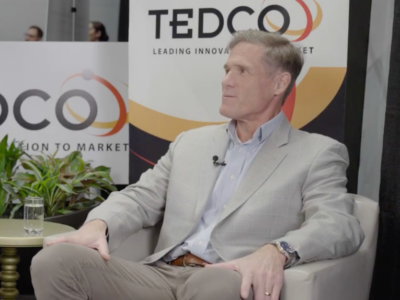
In an unscripted exchange with founders, Drake translated the Forum’s broader themes into investor logic, offering a clear view of how dual-use venture firms are underwriting risk, relevance, and readiness heading into 2026.
A Venture Model Designed for Complexity
Drake began by situating Stony Lonesome Group’s investment thesis within the broader dual-use landscape. The firm invests in companies with both commercial and defense applications, with approximately 60 percent of its portfolio focused on deep technologies such as AI, autonomy, robotics, cybersecurity, and advanced systems traditionally associated with defense markets.
What distinguishes the firm, however, is its willingness to extend that approach into medtech, health tech, and biotech—areas many defense-focused investors avoid due to regulatory complexity and longer development timelines. For Stoney Lonesome, healthcare innovation is not peripheral to national security priorities; it is increasingly central to them.
That positioning echoed earlier Forum discussions on dual-use translation, reinforcing the idea that defense relevance is no longer an abstract positioning exercise but a function of operational fit and deployment reality.
Venture Capital as Risk Management
When founders asked how venture firms are balancing follow-on investments with new deals, Drake framed venture capital not as narrative-driven speculation, but as disciplined risk management.
Stoney Lonesome invests across stages—from seed through late-stage and pre-IPO—and deliberately blends new investments with continued support for existing portfolio companies. This approach reflects a market where exits take longer, capital efficiency matters more, and firms must balance early-stage uncertainty against long-term conviction.
The implication for founders was consistent with messages heard earlier in the Forum: capital is still available, but it is increasingly directed toward teams that demonstrate realistic milestone planning, capital discipline, and the ability to progress through complexity without relying on optimism alone.
Non-Dilutive Funding as an Integrated Strategy
One of the most pointed exchanges during the AMA focused on non-dilutive funding, including SBIRs, and how venture investors truly view its role.
Drake emphasized that at Stoney Lonesome, non-dilutive capital is not treated as a contingency plan. It is a formal part of the firm’s investment strategy. To support this approach, the firm established Pathfinder Solutions Group, a sister organization designed to help portfolio companies navigate Department of Defense pathways, secure SBIR funding, and translate commercial technologies into defense-specific applications.
The value of non-dilutive funding, Drake noted, extends beyond runway extension. In defense-aligned markets, SBIRs provide early customer validation, sponsor engagement, and a clearer path toward follow-on contracts. That validation de-risks venture capital by grounding innovation in real procurement and deployment dynamics.
Importantly, SBIRs are not intended to fund speculative research. Their role is to adapt commercial off-the-shelf technologies into defense-ready solutions—bringing products closer to real-world use rather than keeping them in development limbo.
How Battlefield Reality Is Reshaping Healthcare Innovation
Drake also reinforced boundaries around what qualifies as meaningful dual-use healthcare innovation. Generic disease-area programs without defense-specific differentiation rarely meet the threshold. Instead, Stoney Lonesome focuses on areas where military needs diverge meaningfully from civilian healthcare.
These include battlefield medicine, prolonged casualty care, PTSD, suicide prevention, and medic-level intervention technologies. As earlier panels discussed, the traditional “golden hour” assumption—rapid evacuation to advanced care—is increasingly unrealistic in future conflict scenarios. In many cases, medics may need to sustain patients for 24 to 72 hours in austere environments.
That shift is driving investor interest toward technologies that enable care delivery closer to the point of injury, reinforcing themes surfaced throughout the Forum around resilience, preparedness, and deployment under constraint.
Founder Background Matters Less Than Readiness
Another recurring question concerned founder credentials. Is military experience required to succeed in defense-aligned investing?
Drake’s response aligned with earlier Forum perspectives: while veteran founders often bring valuable insight, military service is not a prerequisite. Stoney Lonesome regularly invests in commercial founders without defense backgrounds and supports them in navigating the unique requirements of government engagement, contracting, and procurement.
In those cases, the venture firm’s role extends beyond capital. It becomes an operational guide—helping companies translate innovation into systems governed by regulation, security, and long-cycle decision-making.
Flexibility in Capital Structure Reflects a Harder Market
As the AMA progressed, Drake addressed capital structures more directly. In today’s environment, rigidity can undermine both founders and investors.
Stoney Lonesome routinely uses SAFEs, convertible debt, secondaries, and selective founder liquidity to align incentives and preserve long-term focus. In some cases, enabling founders to take limited liquidity after years of building can strengthen commitment rather than weaken it—provided alignment remains intact.
The common thread across these approaches is discipline: protecting downside, maintaining motivation, and ensuring companies remain positioned to execute as conditions evolve.
Why It Matters
The closing Investor AMA did not stand apart from the rest of QNova’s plenary sessions—it reinforced them.
Across two days of discussion, a coherent picture emerged. Capital is still present, but disciplined. Non-dilutive funding is increasingly strategic, not supplemental. And dual-use innovation demands operational readiness far earlier than many founders expect.
Drake’s unscripted remarks offered founders a view of how those realities are being interpreted on the investor side—grounding the Forum’s broader themes in venture capital decision-making.
Taken together, the plenary sessions underscored an ecosystem recalibrating around realism rather than retreat. The path forward may be more demanding, but it is better defined. For companies prepared to align science, strategy, and execution early, the opportunity remains very much alive.