
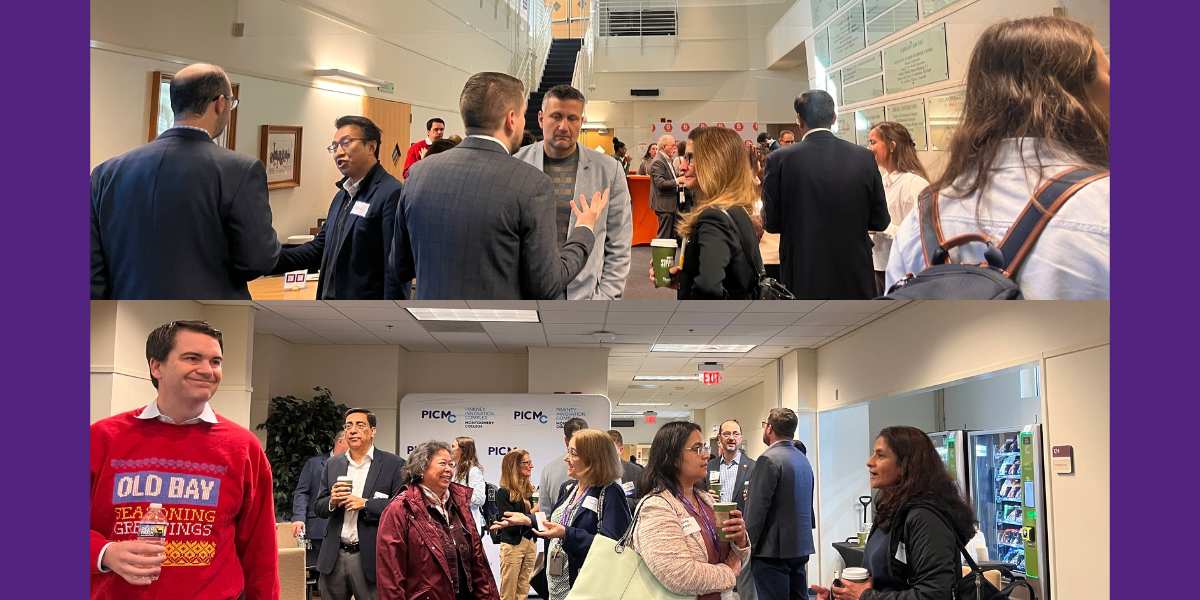
Leaders across life sciences, cybersecurity, quantum, and aerospace gathered at Montgomery College to discuss Maryland’s innovation landscape. Their perspectives offer insight into the opportunities, challenges, and priorities that will shape the state’s innovation economy heading into 2027.
Maryland has long been home to a strong network of research institutions, biotechnology companies, federal agencies, and emerging technology organizations. But as the innovation economy continues to evolve, maintaining that position requires more than scientific discovery. Investment, workforce development, infrastructure, and collaboration all play a role in determining how successfully innovation translates into economic growth.
That broader question was at the center of Community Connect #9: The State of the Innovation Ecosystem, held November 18 at Montgomery College’s Pinkney Innovation Complex for Science + Technology (PIC MC) in Germantown. The event series, organized by PIC MC and BioBuzz, brought together founders, investors, educators, students, and leaders from across Maryland’s innovation sectors to reflect on 2026 and discuss what lies ahead.
Dr. Charmaine Weston, Campus Dean for Germantown at Montgomery College, welcomed attendees by emphasizing why these gatherings matter. They help ensure that “our industry, our education, and our community are actually connecting and communicating,” she said.
With speakers representing life sciences, cybersecurity, quantum, and aerospace, the discussion offered a cross-sector perspective on the forces shaping Maryland’s economy. For the region’s life sciences community, it was also an opportunity to consider how biotechnology fits into the state’s broader innovation strategy.
Maryland’s Innovation Economy: Understanding the Bigger Picture
The event opened with a fireside chat between Thomas Luginbill, Executive Director of PIC MC, and Nick Henninger-Ayoub, CEcD, Director of Program Development at the Maryland Economic Development Corporation (MEDCO).
Henninger-Ayoub described MEDCO as a quasi-governmental organization that has spent about 42 years working behind the scenes on roughly 330 projects worth more than $9 billion. Since July 1, 2026, MEDCO has also run the Build Our Future Grant Program and the Regional Institution Strategic Enterprise (RISE) Zone Program. PIC MC sits in a RISE Zone, which helped make the campus’s large manufacturing facility possible.
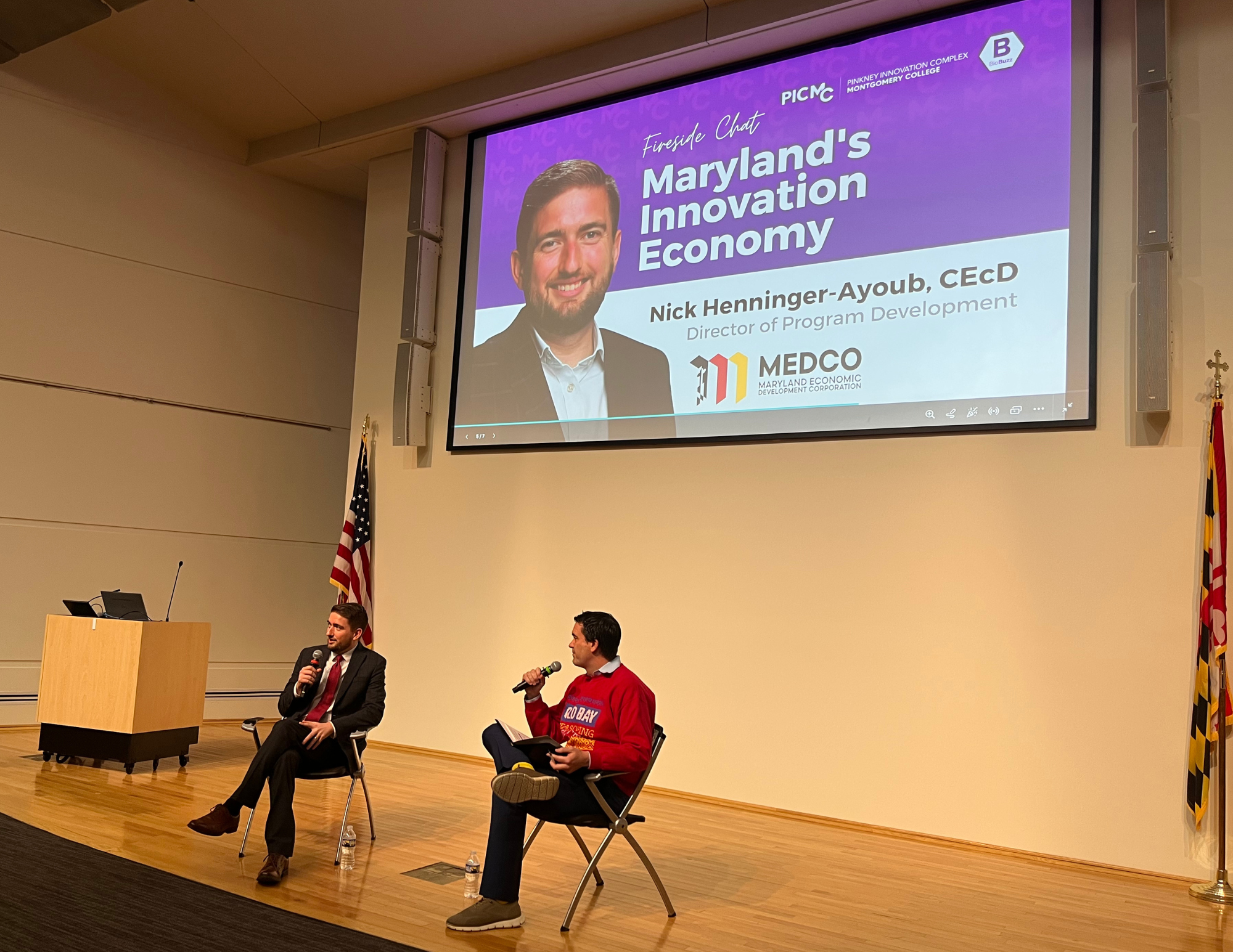
Henninger-Ayoub said businesses in a zone can benefit from an enhanced biotech investor tax credit (75% versus 33% statewide), priority for Build Our Future grants, a filing fee waiver, a MEDCO concierge, and a rental assistance fund that MEDCO is asking the legislature to fund. MEDCO’s goal is to grow from three zones in July to 20 by the end of this fiscal year, reaching
Maryland’s Lighthouse Sectors: Four Perspectives on Innovation
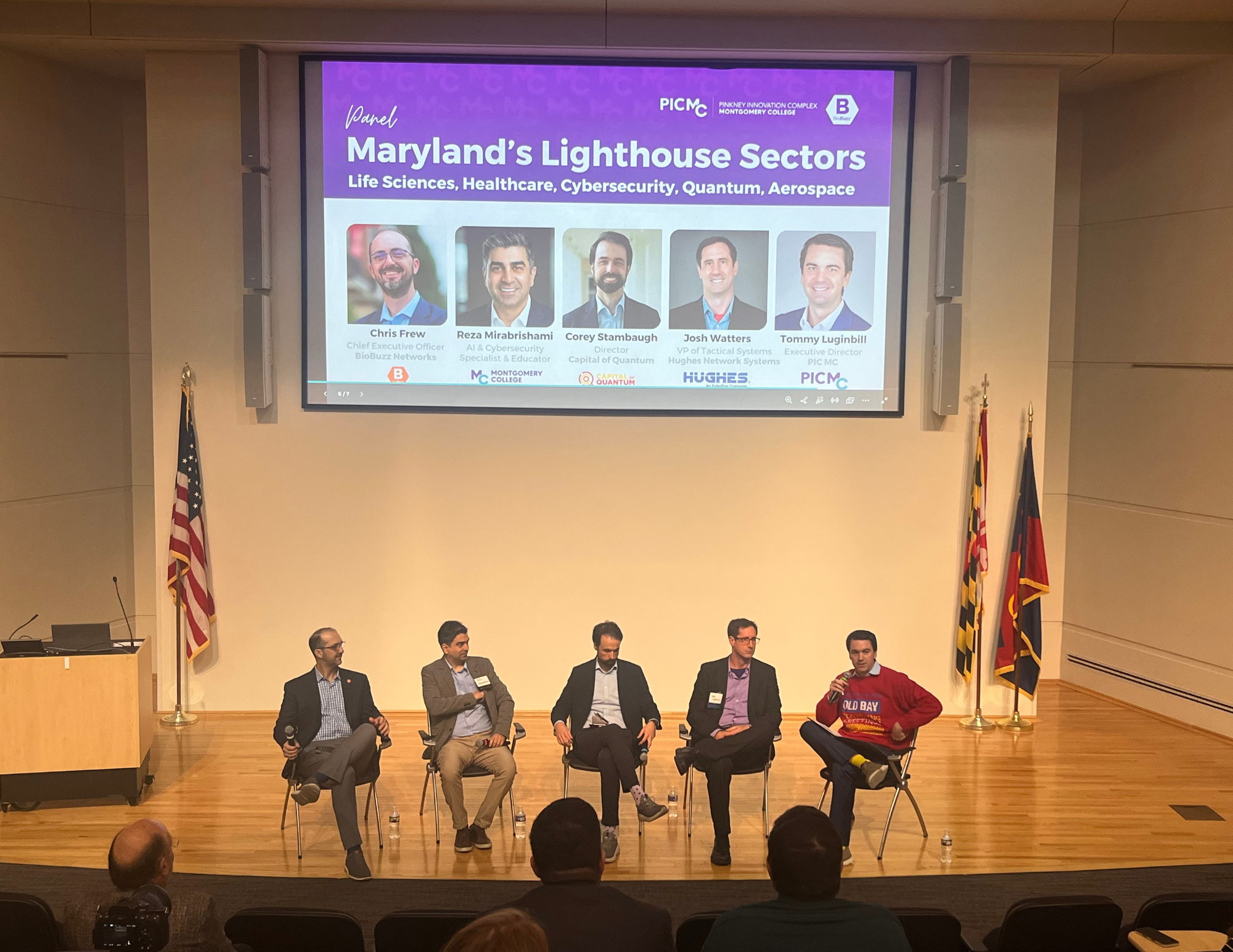
Maryland has identified a set of “lighthouse sectors,” the industries the state sees as foundational to its economic growth in the years ahead. The panel, “Beyond the Headlines: Maryland’s Lighthouse Sectors,” moderated by Luginbill, was built around them, with one leader representing each: Josh Watters, Vice President of Tactical Systems at Hughes Network Systems, for aerospace and defense; Reza Mirabrishami, CEO and Founder of Prime Mind Academy, for AI and cybersecurity; Corey Stambaugh, Director of the Capital of Quantum, for quantum; and Chris Frew, CEO of BioBuzz Networks, for life sciences.
Starting from where innovation in Maryland stands today, the conversation ranged across disruption, security, computing, and what it takes to turn research into companies.
Aerospace and defense. Watters, who spent more than 25 years in the field before joining Hughes, described how inexpensive drones now threaten aircraft worth hundreds of millions of dollars, opening markets to small companies that once could not compete. Warfare, he said, is becoming “less about technological superiority and more about economics,” as the ability to produce at scale and at low cost becomes decisive. He also pointed to the “valley of death” between prototype and product, where funding is scarce, as a challenge companies everywhere must solve.
AI and cybersecurity. Mirabrishami, who teaches cybersecurity and AI, said AI helps teams build and move faster, but the same tools can be intercepted and misused, so security must be built into systems like drones from the start. He noted that password guidance has grown from five-to-eight characters to 15 or more as AI and quantum computing raise the stakes, and described “acoustic hacking,” where attackers decode keystrokes from their sound on a video call. His call to action: each sector should find where it overlaps with the others and build alongside them.
Quantum. Stambaugh, a former NIST researcher, adjunct physics professor at Montgomery College, and chief of staff of NIST’s Physical Measurement Laboratory, traced how each leap in computing, from GPUs powering AI to quantum, opens harder problems to solve. A large enough quantum computer could break the encryption behind everyday transactions, and the state has partnered with DARPA on a Capital Quantum Benchmarking Hub at the University of Maryland to help evaluate companies’ plans. With decades of research at UMD, NIST, and federal labs, he said Maryland is “in a position to seize the moment,” and companies are already exploring quantum sensing for biosensing.
Life sciences. Frew said smaller, leaner teams are moving to market faster across every industry, changing what a startup looks like and how investors decide where to put their money. He sees Maryland’s breadth as an advantage, noting that the state has more lighthouse-sector assets than many others, and asked, “How can these four sectors move in parallel?” Working in silos, he said, means missing the opportunities that come when sectors learn from each other, so those connections need to be built intentionally. The region’s challenge, he said, is “a commercialization problem more so than an R&D problem”: turning world-class research into products and companies.
Building the Workforce and Infrastructure for What’s Next
A strong innovation economy depends on more than the companies and technologies it produces. It also depends on whether the region can develop and retain the people and infrastructure needed to support continued growth.
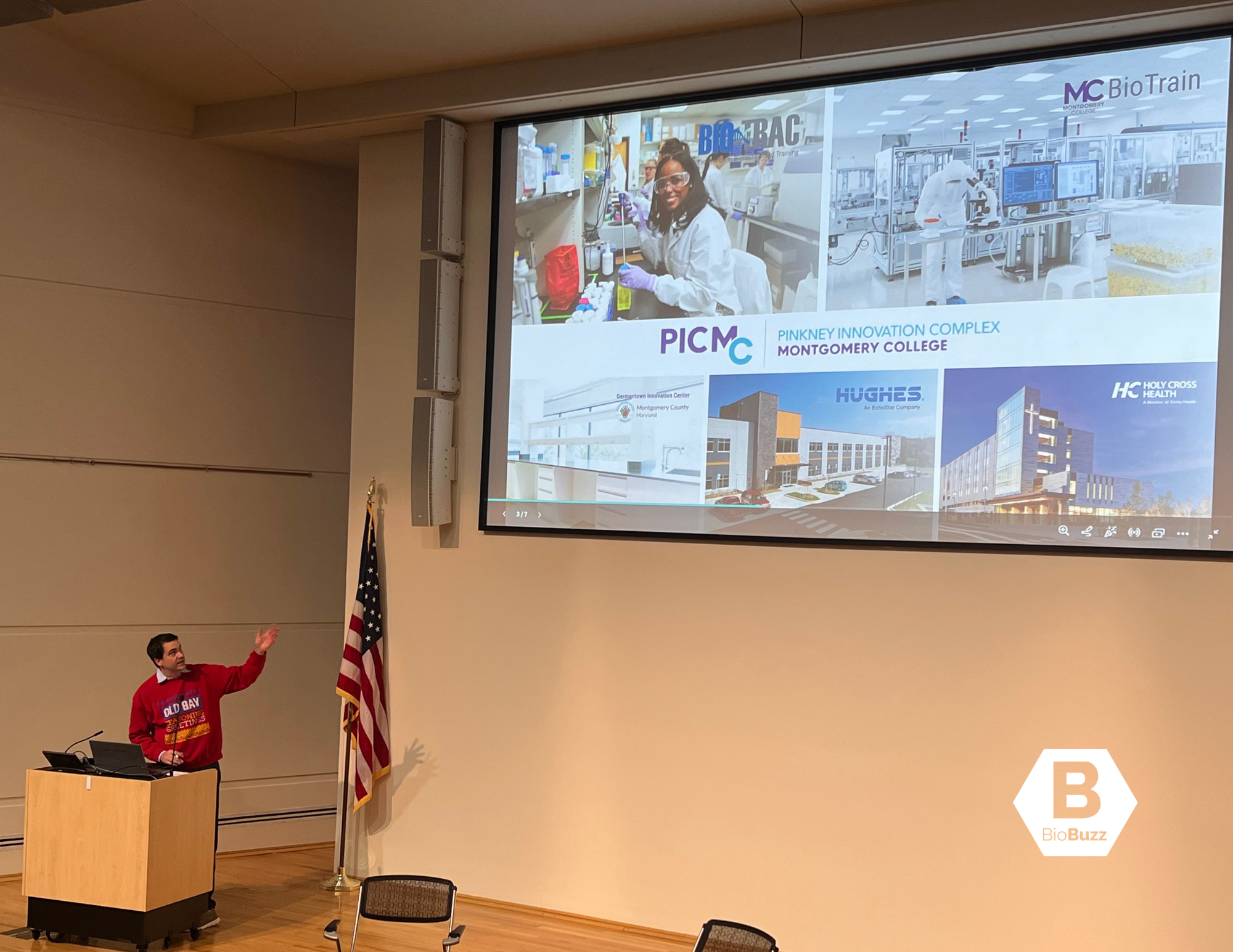
PIC MC offers an example of what that looks like in practice. The Germantown campus is home to Holy Cross Germantown Hospital, making Montgomery College the only community college in the country with a full-scale hospital on campus. It also hosts Hughes Network Systems’ 140,000-square-foot manufacturing facility, the first of its kind on a U.S. community college campus, and the Germantown Innovation Center, Montgomery County’s incubator for life sciences companies. Luginbill noted that PIC MC is also a member of the Association of University Research Parks, which is rare for a community college. BioBuzz has covered how innovation unfolds at PIC MC through earlier Community Connect events.
For the life sciences community, talent remains central. Frew, who is also CEO of the recruitment firm Workforce Genetics, has spent more than 20 years in the industry and helped place more than 2,500 people in jobs, most of them in Maryland. He highlighted BioBuzz’s AI accelerator for GMP, which he described as the first in the nation, designed to prepare the biomanufacturing workforce for an AI-driven future. As biotech companies navigate changing market conditions, access to skilled scientific, technical, and business talent will stay essential.
Looking Ahead to 2027
The conversations at Community Connect offered a reminder that maintaining a competitive innovation economy requires ongoing coordination between industry, education, government, and economic development organizations. Maryland has a diverse foundation across life sciences, healthcare, cybersecurity, quantum, and aerospace, along with established research institutions, emerging companies, industry leaders, and workforce development initiatives. As the state moves into 2027, the next challenge is ensuring that these strengths translate into sustainable opportunities for companies, researchers, entrepreneurs, and the workforce.
For the life sciences industry in particular, Maryland’s future will be shaped by its ability to support emerging biotechnology companies, attract investment, develop specialized talent, and create an environment where scientific discoveries can advance beyond the research stage. That progress is connected not only to scientific breakthroughs, but also to the economic conditions, infrastructure, and partnerships that make those breakthroughs possible.
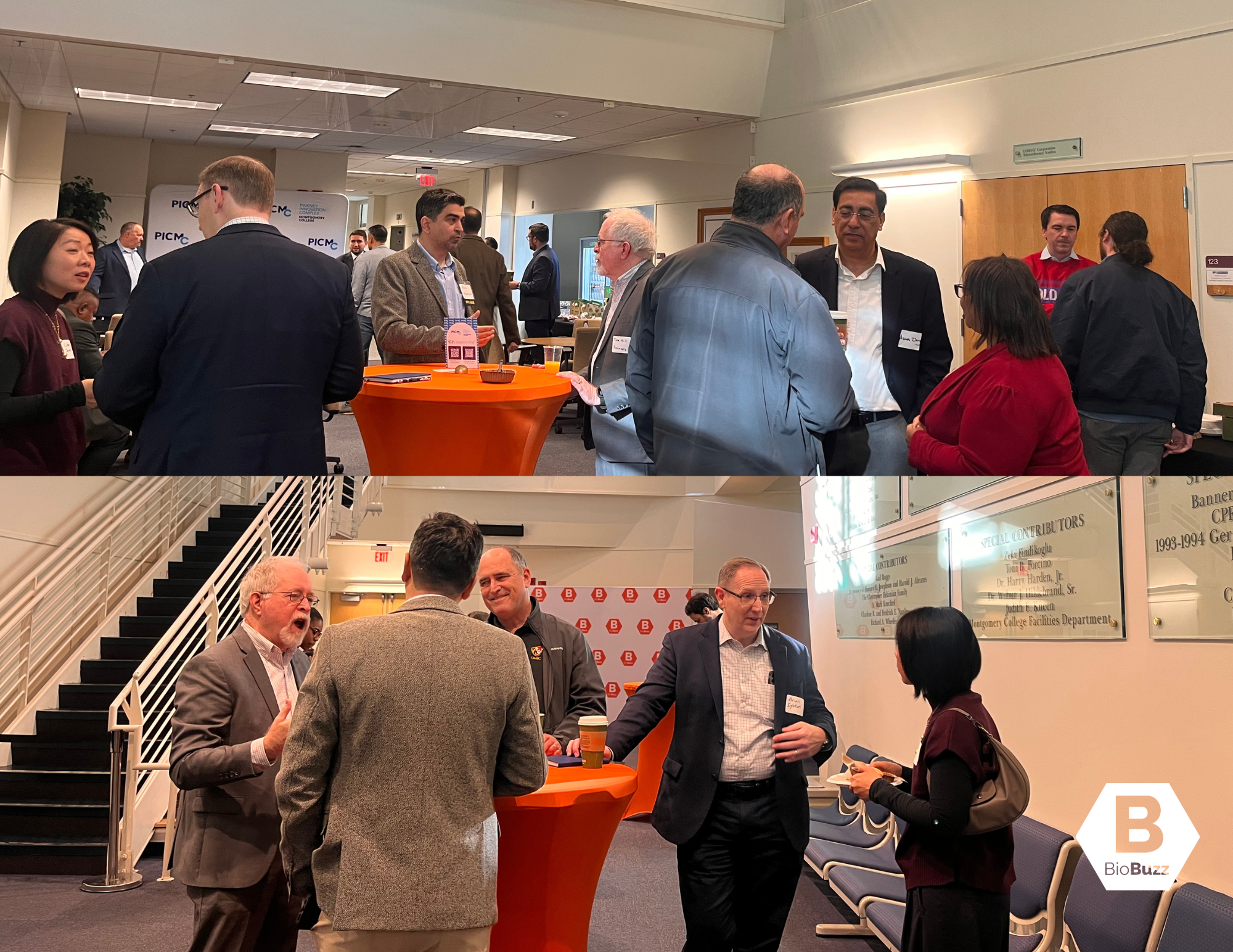
The Community Connect event highlighted that innovation is not driven by any single industry or organization. It is built through collaboration across sectors, institutions, and communities. As Maryland looks toward the year ahead, strengthening those connections may prove just as important as the technologies and discoveries themselves.
The conversation continues at Community Connect #10: Next Gen: The Technology and Talent Defining What’s Next, which brings the region’s leaders together with the talent they will be hiring.