
Merck and Moderna announced that the Phase 3 INTerpath-001 trial of intismeran autogene (also known as V940 or mRNA-4157) combined with Keytruda (pembrolizumab) met both of its key endpoints in patients with completely resected, high-risk melanoma. The trial hit statistically significant and clinically meaningful improvements in both recurrence-free survival and distant metastasis-free survival compared to Keytruda alone, the current standard adjuvant therapy. Moderna’s stock surged as much as 91% in premarket trading on the news, according to BioSpace’s reporting, with one analyst calling the readout unexpectedly early given it wasn’t due until closer to year-end.
What the Trial Actually Tested
INTerpath-001 is a randomized, double-blind, placebo- and active-comparator-controlled global trial that enrolled 1,137 patients with completely resected stage IIB through IV cutaneous melanoma who hadn’t yet received systemic therapy. Intismeran autogene is a personalized mRNA-based therapy designed around the specific mutational profile, sometimes described as a molecular “fingerprint,” of each patient’s own tumor, an approach meant to train the immune system to recognize and attack cancer cells unique to that individual. Professor Georgina Long, the trial’s principal investigator and Medical Director of Melanoma Institute Australia, described the result as a first for the field: “This is the first Phase 3 study to show that intismeran, a treatment designed based on the unique mutational ‘fingerprint’ of a patient’s own tumor, given in combination with pembrolizumab can reduce the risk of recurrence or death in patients with completely resected stage IIB-IV melanoma compared to KEYTRUDA alone.” Merck Research Laboratories President Dr. Dean Y. Li tied the result to the broader logic of treating cancer earlier: “By intervening earlier in the course of disease, when many cancers are considered most treatable, the goal of adjuvant therapy given after surgery is to increase the possibility of cure for more patients.” Moderna CEO Stéphane Bancel framed it as validation of a longstanding company thesis: “For many years, the idea of creating an mRNA treatment designed specifically for an individual patient’s cancer was aspirational. We are now helping turn that vision into a reality.”
An Important Caveat: No Hard Numbers Yet
This is a topline announcement, and it’s worth being precise about what has and hasn’t been disclosed. Merck and Moderna’s release confirms the Phase 3 trial met its endpoints, but it does not include hazard ratios or specific percentage risk reductions for this trial. The 49% reduction in risk of recurrence or death and 59% reduction in risk of distant metastasis or death that have circulated around this drug combination come from the earlier, smaller Phase 2b KEYNOTE-942 trial, not from INTerpath-001 itself. The companies say full INTerpath-001 data will be presented at an upcoming international medical meeting and shared with regulators as part of a filing discussion, so the actual magnitude of benefit in this larger, confirmatory trial isn’t public yet.
Why the Market Reaction Was So Large
The stakes behind this trial go well beyond one melanoma indication. Analysts have projected intismeran could eventually generate multi-billion dollar peak sales, a meaningful opportunity for both companies at a moment when each has its own pressure to diversify. Merck is facing the eventual loss of Keytruda’s patent exclusivity, and Moderna has spent the past couple of years working to offset declining COVID-19 vaccine revenue with new products. Analysts at RBC Capital Markets and William Blair both flagged the result as a positive surprise, with William Blair upgrading Moderna’s stock and pointing to “a clear line of sight to revenue diversification from the COVID business.” A related Phase 2 readout in renal cell carcinoma, which analysts think could itself be registrational, is expected as soon as later this year.
Merck’s Pennsylvania Roots
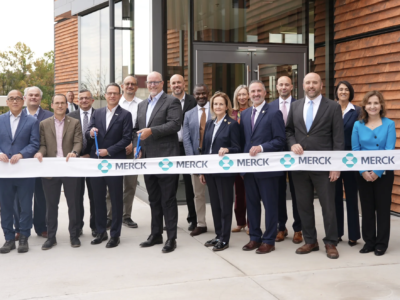
Merck’s corporate headquarters moved to Rahway, New Jersey, but the company’s U.S. Human Health Division is headquartered in Upper Gwynedd, Pennsylvania, and its West Point, Pennsylvania campus is Merck’s largest manufacturing facility in the United States, supporting core discovery, preclinical, and clinical work alongside vaccine and pharmaceutical manufacturing. The Greater Philadelphia region remains a substantial part of Merck’s actual research and manufacturing footprint even as the company’s headquarters address sits in New Jersey.