
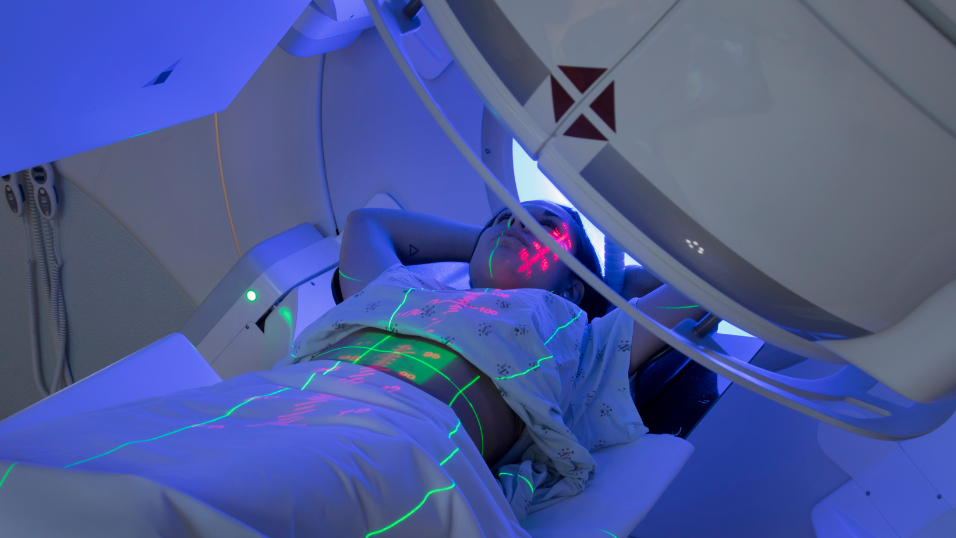
Penn Medicine announced on September 1, 2026 the launch of the first U.S. human clinical trial testing ConformalFLASH® proton therapy, a precision form of ultra-fast FLASH radiation that delivers a cancer-killing dose in less than one second per treatment. Principal investigator Alexander Lin, MD, the Morton M. Kligerman Professor of Radiation Oncology, said: “Patients with recurrent, unresectable head and neck cancer have limited treatment options, and the options they do have, like repeat radiation, are incredibly grueling, not only in terms of potentially life-altering side effects, but also in terms of time spent in medical facilities. We want to be able to offer a treatment with minimal toxicity that’s easy and convenient so that patients can spend more time with family and friends.”
Ten Patients, Five Sessions, in a Trial Years in the Making
The Phase I feasibility study (NCT07644585), based at the Roberts Proton Therapy Center within Penn Medicine’s Perelman Center for Advanced Medicine, part of the Abramson Cancer Center, will enroll 10 patients with recurrent, unresectable head and neck cancer who are not candidates for surgery and have already had prior radiation. Where conventional re-irradiation typically runs 25 to 35 daily sessions over five to six weeks, the FLASH protocol delivers treatment in five sessions over roughly 10 days.
The technology, sponsored and manufactured by Ion Beam Applications S.A. (IBA) under an FDA Investigational Device Exemption, combines high-energy proton beams with 3D conformal targeting. James Metz, MD, chair of Radiation Oncology, said: “By pairing the power of proton therapy with the precision control of conformal techniques, we’re able to evaluate the full potential of FLASH. Launching the clinical trial is an important milestone toward understanding the benefits and limitations of this investigational technology.” Constantinos Koumenis, PhD, described the shift in approach this represents: “The conventional wisdom of radiation therapy focused on ‘fractionation,’ or spreading out the total dose of radiation therapy into smaller doses given over long periods of time to kill tumor cells and spare healthy tissue.FLASH turns this idea on its head.”
A Global Leader in FLASH, from the Clinic to the Kennel
Penn Medicine, which it describes as a global leader in FLASH research, previously completed a FLASH proton therapy trial in pet dogs with head and neck cancer in collaboration with Penn’s School of Veterinary Medicine, using the same technology now being applied in the human trial. The university is also building its fourth proton therapy center at Penn Presbyterian Medical Center. Lin said the patient population was chosen for the potential quality-of-life benefit: “Regardless of the technological advances, what matters at the end of the day is how well the treatment is received by the patient—if the balance of the side effects versus outcomes are worth it to them. We’re hopeful that FLASH proton therapy could provide better alignment of the treatment with a patient or a family’s specific goals in the face of a very difficult diagnosis.”
A Philadelphia Institution Shaping the Next Generation of Radiation Therapy
Penn Medicine’s role here extends beyond hosting a single trial. As the only U.S. site testing the conformal version of FLASH proton therapy in human patients, Penn is helping shape how this technology moves from concept to clinic — building on years of foundational FLASH research at the Perelman School of Medicine and its earlier canine trials with the School of Veterinary Medicine, and now pairing that groundwork with IBA’s proton therapy hardware and treatment-planning ecosystem. With a fourth proton therapy center already under construction at Penn Presbyterian Medical Center, the university is positioning Philadelphia’s academic medical corridor as a testing ground not just for this trial, but for how radiation oncology is delivered more broadly in the years ahead.