From tariffs to talent, Stewart highlights how resilience, collaboration, and ecosystem connectivity will define the BioHealth Capital Region’s path forward—and why this year’s Bio Innovation Conference is a catalyst for growth.
The BioHealth Capital Region (Maryland, Washington, DC, Northern Virginia) has always been defined by its resilience and adaptability.
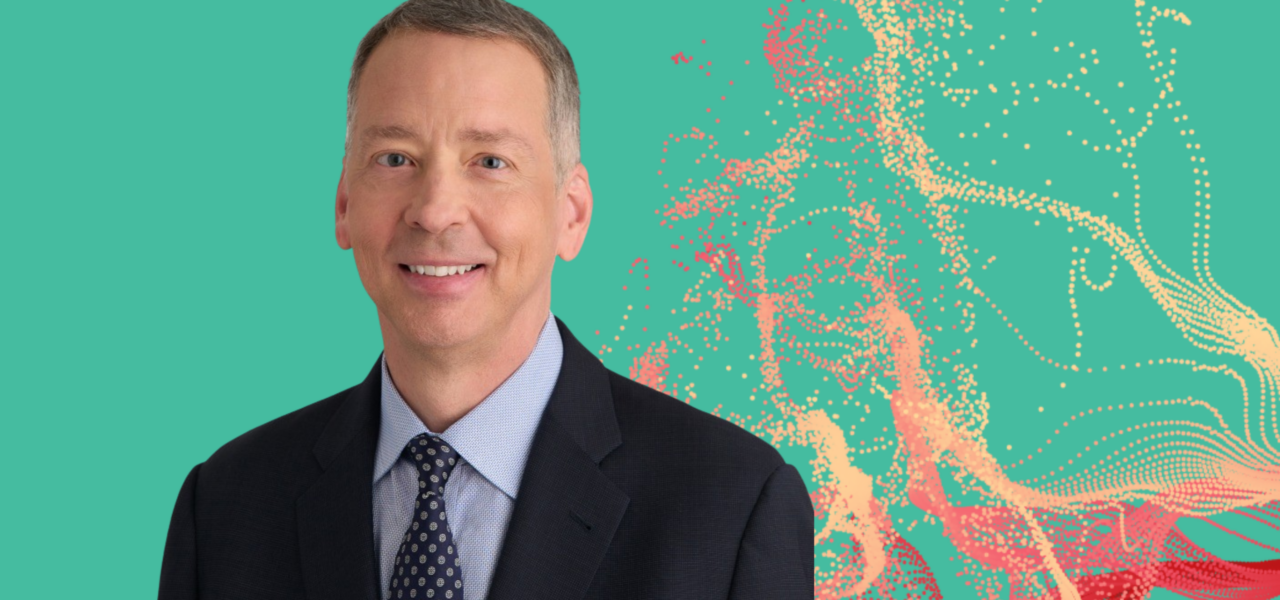
Few leaders embody that spirit more than Brad Stewart, Chairman of the Maryland Tech Council (MTC), and a seasoned life sciences executive and ecosystem builder whose career has spanned commercial growth, international expansion, and regional strategy.
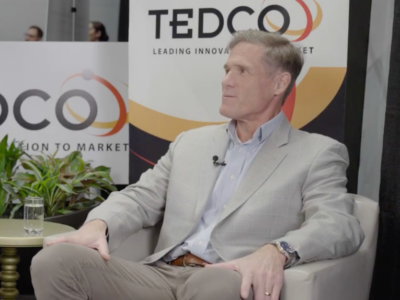
Ahead of the annual Bio Innovation Conference on September 4 in Bethesda, MD, Stewart sat down with BioBuzz’s CEO, Chris Frew, to share candid insights into the challenges shaping our industry today—and the opportunities that lie ahead.
Navigating a Shifting Global Landscape
Market uncertainty has become a defining feature of today’s life sciences industry. From evolving trade agreements and supply chain disruptions to shifting FDA policies and guidance as well as geopolitical tensions. We’re in a market where the entire landscape may shift overnight, and companies are learning that these types of market shake-ups aren’t the exception—they’re the new normal.
Stewart highlighted tariffs as a stark reminder of this volatility:
“There was just a 225% pharma tariff announced a few minutes ago,” he noted. “It’s a reminder that we’re all operating in a global context that’s constantly shifting.”
Equally important to industry stability and confidence is the FDA which is the single largest influence on the industry’s barometer for regulatory risk. With a revolving door of staff changes on top of a period of evolving regulatory and policy guidance, the current FDA climate has made it hard for investors and company executives to lay out a confident strategy for their companies.
That’s why this year’s fireside chat with FDA Commissioner Dr. Marty Makary is such a timely draw for the Bio Innovation Conference.
As Stewart emphasized, Makary is not only one of the nation’s most respected surgeon-scientists but also a leading voice in public health, now steering the FDA through one of its most turbulent periods. His perspective offers attendees a rare, unfiltered window into how the agency is balancing evolving science, public health imperatives, and the realities of global market pressures. For executives, investors, and scientists alike, the opportunity to hear directly from the Commissioner provides more than just regulatory updates—it delivers clarity at a moment when stability and foresight are in short supply.
But Stewart doesn’t see the shifting landscape as a reason for retreat. Instead, he argued that resilience depends on balancing global awareness with local strength. Regions like the BioHealth Capital Region, with its concentration of federal agencies, world-class academic institutions, and experienced service providers, are uniquely positioned to weather uncertainty by anchoring companies in reliable, connected ecosystems.
“The play isn’t to insulate yourself completely from global forces,” Stewart explained. “It’s to build enough strength and adaptability locally that you can respond quickly when those global shifts happen.”
That adaptability requires tighter collaboration between stakeholders—companies, policymakers, investors, and research institutions—to anticipate risks, share resources, and move faster together when challenges arise.
Building Stronger Ecosystems at Home
The BioHealth Capital Region has emerged as the nation’s #3 leading biotech hub, according to GEN’s Top 10 U.S. Biopharma Clusters 2025. Anchored by world-class research institutions, scaling biopharma companies, and a robust network of service providers. However, it is one of the most challenging funding climates the industry has seen and those pressures are having a big impact on local startups in the region.
Stewart underscored, the region’s continued growth will depend less on individual players and more on how effectively they’re woven together.
“We’ve got the ingredients here,” he said. “But the real differentiator will be how we link them together into a system that works seamlessly—for startups, for talent, and for investors.”
That connective tissue is about more than casual networking—it’s about infrastructure. For talent, it means clear career pathways supported by workforce development and training programs. For investors, it means confidence in a region that can consistently generate, scale, and sustain innovative companies. For startups, it means access to incubators, lab space, mentorship and access to capital.
Specifically for those startups, Stewart emphasized the important perspective they will gain from this year’s closing session by Adam J. Epstein, Understanding the Investor’s Perspective. Epstein, who has counseled countless public and private biopharma companies, brings a refreshingly candid lens on how investors evaluate risk, storytelling, and company value.
“I remember hearing Adam at JPMorgan and thinking, ‘Wow—this completely reframes how companies should think about communicating with investors,’” Stewart said. “It’s not about jamming 800 slides of mouse data into a deck. It’s about telling the story in a way that the other side actually hears and responds to.” Stewart noted that the conference intentionally scheduled Epstein as the final speaker of the day, knowing participants would walk out energized, with new frameworks to apply immediately to fundraising, partnerships, or even day-to-day leadership decisions.
In today’s challenging capital environment, that kind of candid insight, combined with a day of authentic ecosystem-building isn’t just a “nice-to-have”—it’s a competitive advantage. Regions that create smoother pathways for collaboration will be the ones where companies choose to launch, scale, and stay.
“If we align research, policy, capital, and talent, we don’t just compete with Boston or the Bay,” Stewart explained. “We set ourselves apart as a region that grows companies smarter and faster.”
Leadership in Times of Change
Of course, ecosystems are built by people as much as by institutions. Stewart noted that effective leadership is what turns opportunity into outcomes—especially in uncertain times.
“You can’t lead in this space without being transparent about the challenges and the opportunities,” he said. “People want to know where you’re going, but they also want to know you see the same obstacles they do.”
Having led through both growth and turbulence, Stewart stressed adaptability, clarity, and authenticity as core to successful leadership. For early-stage founders in particular, he advised staying grounded in fundamentals: building sustainable business models, cultivating the right networks, and holding firm to purpose even as the market shifts.
Looking Ahead
For Stewart, the future of biohealth isn’t just about weathering disruption—it’s about using it as a catalyst for growth. Whether navigating tariffs, scaling a startup, or strengthening regional networks, he sees challenges as a spark for reinvention and collaboration.
“We’ve been through challenges before, and every time, the ecosystem comes out stronger,” he said. “The question is how we take what’s in front of us now and turn it into opportunity.”
That spirit of collaboration will be on full display at this year’s Bio Innovation Conference. As Stewart emphasized, convenings like this are not just events—they are accelerators of growth:
- They connect startups with investors and partners.
- They highlight cutting-edge science and commercialization pathways.
- They showcase the strength and identity of the region itself.
With voices like Stewart’s framing the conversation, attendees can expect candid insights, actionable strategies, and new opportunities to plug into the BioHealth Capital Region’s momentum.
Progress happens when people come together. The Bio Innovation Conference does exactly that—offering the connections, conversations, and collaborations that will define the next chapter of the region’s biotech story.
As Stewart shared, the event is as much about investing in yourself as it is about investing in Maryland’s community.
✅ Join the conversation at the Bio Innovation Conference
Don’t miss the chance to hear more insights like these—and to connect with leaders, investors, and innovators shaping the future of life sciences.
📅 September 4, 2025
📍 Bethesda North Marriott Hotel & Conference Center
🔗 Register Now