Originally published by Alfredo Hanson in Tech Times. Read the original article.
KRX filing names US law as client rationale for first time, as cumulative backlog surpasses $22 billion
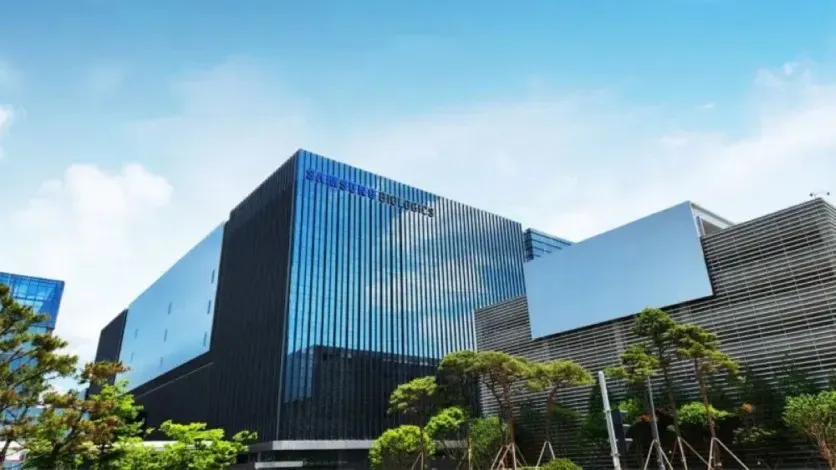
Samsung Biologics filed with South Korea’s Korea Exchange on Tuesday disclosing a KRW 434.3 billion ($323 million) biologics manufacturing contract with an undisclosed global pharmaceutical client, running from November 2, 2026 through December 31, 2031. What distinguishes the filing from earlier contract announcements is that the client’s decision to source with Samsung Biologics is explicitly linked — in the formal Korean regulatory record — to the US Biosecure Act, a federal law restricting biotech procurement by US government contractors from Chinese biotechnology companies. That is a first in public procurement data: for the first time, the market shift that industry analysts have been forecasting since the law’s passage has left a verifiable footprint in a mandatory securities disclosure.
The contract is Samsung Biologics’ ninth major win of 2026 and follows a separate KRW 30.3 billion (approximately $22.6 million) expansion of an existing US pharmaceutical contract disclosed less than 48 hours earlier. The two filings together represent KRW 464.6 billion (approximately $346 million) in new or expanded commitments within a two-day window, bringing Samsung Biologics’ cumulative contract backlog to approximately $22.3 billion — roughly 6.4 times the company’s FY2025 annual revenue of KRW 4,557 billion (approximately $3.39 billion).
KRX Filing Explicitly Names Biosecure Act: First Documented Instance in Procurement Data
Under South Korean securities law, listed companies must disclose material supply contracts — including client identity if the client consents, or indicating the client is undisclosed if it does not — through the Korea Exchange’s regulatory filing system. These are formal legal documents, not press releases, and their contents are subject to securities fraud liability. When such a filing contains a specific statutory citation as a reason for the contract award, it is not marketing language.
The Biosecure Act reference in Tuesday’s filing signals that the undisclosed pharmaceutical client — described only as a "global pharmaceutical company" — has begun transitioning CDMO relationships in anticipation of compliance requirements, and has documented Samsung Biologics’ geopolitical positioning as a material factor in that sourcing decision. This converts what had been an analyst-forecast market dynamic into a data point traceable to a specific contract, a specific date, and a specific legal trigger. The significance is not primarily financial; $323 million spread over five years represents a relatively small fraction of Samsung Biologics’ current KRW 29.9 trillion (approximately $22.3 billion) backlog. The significance is evidentiary: this is the transaction where forecast became record.
How the Biosecure Act Actually Works: Narrower in Law, Broader in Effect
The Biosecure Act — Biosecure Act signed December 2025 as Section 851 of the FY2026 National Defense Authorization Act — prohibits US federal contractors and federal grant recipients from procuring biotechnology equipment or services from designated "Biotechnology Companies of Concern" (BCOCs). The law’s formal scope is narrower than it is often described in industry coverage: Medicare and Medicaid payment agreements are explicitly excluded, meaning the prohibition applies specifically to entities with federal procurement contracts or grant instruments governed by the Federal Acquisition Regulation. Most major pharmaceutical companies have some federal contracting exposure through Department of Defense purchases, Veterans Administration formularies, or NIH research grants, so the practical compliance universe is large — but the law does not impose a blanket prohibition on all commercial pharmaceutical manufacturing relationships.
The enacted law also does not name specific companies, a departure from earlier 2024 drafts of the BIOSECURE Act that explicitly listed WuXi AppTec, WuXi Biologics, BGI Genomics, MGI Tech, and Complete Genomics. Instead, the enacted statute creates a designation process: the Office of Management and Budget is required to publish an initial list of designated BCOCs by December 2026, using the Section 1260H "Chinese military companies" list as an additional trigger that activates faster enforcement via the Biosecure Act BCOC list mechanism. WuXi AppTec was added to that Section 1260H list on June 8, 2026, as confirmed by the WuXi AppTec section 1260H listing, bringing near-immediate Biosecure Act restrictions within range for companies with WuXi AppTec manufacturing contracts. On August 7, 2026, a U.S. district court granted a preliminary injunction barring DoD from enforcing the WuXi AppTec designation — but the OMB retains an independent pathway to designate the company as a Biotechnology Company of Concern, and pharmaceutical companies’ compliance planning has continued regardless. WuXi Biologics, the CDMO arm, has not been separately designated as of available sources.
Existing contracts receive a five-year grandfathering period — but critically, that clock does not start until the FAR is revised following the OMB’s BCOC list publication, a process expected to extend into 2027, per the compliance timeline for existing contracts. That means US pharma companies are not facing a 2032 hard cutoff for existing WuXi relationships; they are facing a 5-year period that has not yet formally begun to run. The business logic for qualifying alternative CDMOs now — before the clock starts — is straightforward: biologics manufacturing process transfers take 12 to 24 months and require regulatory filings (see below). A company that waits for formal enforcement to begin faces the same transition timeline with less runway.
It is this anticipatory compliance dynamic — not formal enforcement, which has not yet triggered for WuXi Biologics specifically — that the Samsung Biologics KRX filing makes visible for the first time in public procurement data.
Biologics Manufacturing Is Not Like Printing: Why Switching CDMOs Takes 12 to 24 Months
The barrier that makes CDMO transitions technically and strategically significant is a fundamental property of biologics manufacturing that distinguishes it from small-molecule pharmaceutical chemistry.
Small-molecule drugs — aspirin, statins, most antibiotics — are chemically synthesized according to a fixed molecular recipe. A certified manufacturer in another country can in principle reproduce the synthesis if given the chemical structure and process parameters. Biologics — monoclonal antibodies, antibody-drug conjugates (ADCs), recombinant proteins, and cell and gene therapies — are produced inside living cells, typically Chinese Hamster Ovary (CHO) cell lines grown in stainless-steel bioreactors. The cell line is the product. The culture conditions, the purification sequence, the final formulation — every step affects the protein’s folding, glycosylation pattern, and ultimately its clinical efficacy and safety profile.
Regulatory agencies, including the FDA, treat the manufacturing process as inseparable from the biological drug itself. When a biologic moves from one manufacturing site to another, the sponsor company must demonstrate — through analytical comparability studies, process characterization, and in some cases bridging clinical data — that the drug produced at the new site is equivalent to the drug approved at the original site. In practice, this process typically requires 12 to 24 months of work and a formal regulatory filing (typically a supplemental Biologics License Application) before commercial production can shift. The logistical reality means that a pharma company beginning a Samsung Biologics relationship today is not simply executing a transactional vendor switch; it is investing in a years-long technical integration that will culminate in a regulatory-approved manufacturing transfer.
This is why Samsung Biologics’ accumulated regulatory credentials matter as a competitive fact, not just as a marketing claim. The company holds more than 464 manufacturing approvals from regulators across the United States, Europe, Asia-Pacific, and other jurisdictions — meaning 464 individual drug manufacturing processes have been validated through the same analytical comparability gauntlet that any new client’s products would need to traverse. Each approval represents a completed process transfer that Samsung has successfully executed and defended before a major drug agency. The 99% batch success rate signals that once a process is transferred, it runs reliably — a commercially critical distinction in an industry where a failed batch can cost millions of dollars and months of production time.
Nine Contracts, 845,000 Liters: What Samsung’s Manufacturing Scale Actually Means
Samsung Biologics’ 845,000 total liter capacity is the largest among dedicated biologics CDMOs globally, distributed across six facilities:
Plants 1 through 4 are located at Bio Campus I in Songdo, South Korea, and have been operational since the company’s commercial launch in 2013. Plant 5, also at Songdo but on the adjacent Bio Campus II site, added 180,000 liters of mammalian cell culture capacity when Plant 5 opened April 2025. The Rockville, Maryland facility — a 60,000-liter site acquired from GlaxoSmithKline in March 2026 — is Samsung Biologics’ first US manufacturing presence, supporting clinical and commercial biologics production, with capacity available for antibody-drug conjugates and other specialized modalities.
To contextualize the scale: a single large commercial bioreactor holds 10,000 to 25,000 liters of cell culture. Samsung’s 845,000-liter total footprint represents dozens of such bioreactors running simultaneously across multiple facilities and product programs. The company manufactures biologics for 17 of the world’s 20 largest pharmaceutical companies, which means its manufacturing schedule is effectively a proxy for the production pipeline of a significant fraction of the global biologic drug market.
The contract announced Tuesday is the ninth major win of 2026 — a pace that reflects both the Biosecure Act’s anticipatory compliance dynamic and the broader trend toward outsourcing biologics manufacturing as the complexity of next-generation therapeutics exceeds the capabilities of most in-house pharma facilities. ADCs, cell therapies, gene therapies, and mRNA products all require specialized equipment and expertise that most large pharma companies have not built in-house, making CDMOs with broad modality capabilities structurally advantageous regardless of the geopolitical context.
The Rights Offering, PolyPeptide, and What $2 Billion in Expansion Signals
Samsung Biologics announced a KRW 3 trillion rights offering on August 28, 2026, the largest capital raise in the company’s history. The offering has two allocations: KRW 2.71 trillion (approximately $2.02 billion) to fund the PolyPeptide Group acquisition announced, a Swiss synthetic peptide CDMO, and KRW 294.8 billion (approximately $219.5 million) for Bio Campus II expansion — specifically a planned Plant 6 that would add further large-scale mammalian cell culture capacity. Existing shareholders can subscribe to the rights offering on November 9–10, with public subscription opening November 12–13, and new shares targeting a KRX listing on November 30, 2026.
The PolyPeptide acquisition — in which Samsung Biologics secured an 87.88% PolyPeptide stake acquired through a tender offer that closed in October 2026 — adds peptide manufacturing to Samsung Biologics’ modality portfolio for the first time. Synthetic peptides use a fundamentally different chemistry (solid-phase peptide synthesis, or SPPS) from mammalian cell culture biologics, and are increasingly relevant as a drug class with the global GLP-1 agonist market’s explosive growth creating unprecedented demand for peptide manufacturing capacity. The acquisition transforms Samsung Biologics from a biologics-only CDMO into a broader biologics and peptide CDMO platform, which the company describes as positioning it among the global top-three CDMO target by both capacity and revenue within three years.
Third-quarter 2026 results, announced October 21, demonstrated that the company’s existing operations support the expansion capital raise: Samsung Biologics reported Samsung Biologics Q3 2026 results of KRW 1,490.3 billion (approximately $1.109 billion) in Q3 revenue, up 18.5% year over year. The company raised its full-year guidance raised to 20% revenue growth for the first time in company history, implying full-year revenue of approximately KRW 5,468.4 billion (approximately $4.07 billion). Hana Securities set a price target of KRW 1.95 million per share in an October 22 research note.
South Korea’s Tariff Status: What US Pharma Procurement Officers Need to Know
The tariff picture for Korean pharmaceutical manufacturers is more layered than a simple "exemption" characterization suggests.
On April 2, 2026, the US Commerce Department issued an executive order under the Section 232 pharmaceutical tariff framework, with South Korea’s patented drug products receiving a 15% rate under the existing Korea-US Free Trade Agreement framework. The 15% rate applies to patented pharmaceutical products — the category that includes most branded biologics — and was not an exemption. South Korean manufacturers absorbed a material cost increase relative to the pre-tariff baseline.
However, on September 24, 2026, the Commerce Department issued a separate determination with South Korea zero-tariff specialty designation for a defined list of specialty pharmaceutical categories. The zero-tariff categories include: antibody-drug conjugates, biosimilars, cell therapies, gene therapies, radiopharmaceuticals, and certain advanced biologics. For Samsung Biologics specifically, whose current contract mix skews heavily toward monoclonal antibody drugs and ADCs, the September 24 designation provides a meaningful tariff advantage — several of its highest-volume manufacturing categories now face zero US import duty compared with 15% for patented drugs manufactured in higher-tariff jurisdictions.
The practical effect for US pharma companies sourcing biologics manufacturing: for patented monoclonal antibody drugs, Korean CDMOs like Samsung carry a 15% tariff baseline (the same as the South Korea rate under KORUS). For ADCs, biosimilars, and cell/gene therapies, the September 24 designation means zero tariff, reinforcing the economics of Korean sourcing in exactly the highest-growth drug categories.
Can Korean CDMOs Replace WuXi? What the Gap Analysis Shows
The transition from Chinese CDMO relationships to Korean alternatives is real but structurally constrained in ways the headline CDMO capacity numbers do not fully capture.
Samsung Biologics and WuXi Biologics operate at comparable annual revenues (Samsung approximately $3.4 billion in FY2025; WuXi Biologics approximately $2.8 billion). But WuXi Biologics’ business model extends to early-stage drug development services and clinical-phase manufacturing — a broader service scope than Samsung Biologics’ current emphasis on commercial-scale production. The process of qualifying Samsung Biologics for drug programs that are currently in development at WuXi Biologics is not simply a matter of transferring a cell line; it involves transferring entire development workflows for products that do not yet have approved manufacturing processes.
Lotte Biologics, the other major Korean CDMO built from scratch in 2022 with explicit Biosecure Act positioning, has an approximately 35,000-liter facility operational in Syracuse, New York and is targeting 400,000 liters of capacity by 2030 per Lotte Biologics capacity expansion plans. Its US manufacturing site is a geographic advantage for clients who need domestic production — a distinction Samsung Biologics is partially addressing through the Rockville, Maryland biologics facility.
The combined Korean CDMO capacity picture — Samsung at 845,000 liters plus PolyPeptide peptide capability, Lotte ramping toward 400,000 liters, and several smaller Korean CDMOs — does not yet fully absorb the Chinese CDMO volume that the Biosecure Act could ultimately displace. But the direction of the capacity buildout, the pace of contract wins throughout 2026, and now the first explicit Biosecure Act citation in a formal Korean securities filing suggest that the transition is active, not theoretical, and that the question is no longer whether the shift is happening but how quickly Korean CDMO capacity can be built to service its anticipated demand.
Frequently Asked Questions
What specifically does the Biosecure Act prohibit, and does it cover all US pharmaceutical companies?
The Biosecure Act, enacted in December 2025 as part of the FY2026 National Defense Authorization Act, prohibits US federal contractors and federal grant recipients from procuring biotechnology equipment or services from designated "Biotechnology Companies of Concern." The law’s formal scope is narrower than it is often described: Medicare and Medicaid payment agreements are explicitly excluded, meaning the prohibition applies specifically to entities with federal procurement or grant relationships governed by the Federal Acquisition Regulation. However, most major US pharmaceutical companies have some FAR-covered federal contracting exposure through DoD purchases, VA formularies, or NIH grants — creating broad anticipatory compliance pressure even for companies whose Chinese CDMO volume is primarily commercial rather than government-funded. The law does not currently name specific companies; a formal designation list is due from the Office of Management and Budget by December 2026.
How long does it actually take to move biologic drug manufacturing from one CDMO to another?
A biologics manufacturing transfer typically requires 12 to 24 months and a formal regulatory filing — usually a supplemental Biologics License Application in the US — before commercial production can shift. This is because regulatory agencies treat the manufacturing process as inseparable from the biological drug itself: the cell line, bioreactor conditions, and purification steps all affect the drug’s clinical properties, and agencies require documented comparability studies before approving a site change. This timeline is why pharmaceutical companies are qualifying Korean CDMOs now, in advance of formal Biosecure Act enforcement, rather than waiting for the five-year grandfathering period — which has not yet formally begun — to expire.
Is Samsung Biologics’ biomanufacturing capacity large enough to absorb the volume that might shift from Chinese CDMOs?
Samsung Biologics at 845,000 liters is the world’s largest dedicated biologics CDMO by capacity, but the full Korean CDMO sector — Samsung, Lotte Biologics (targeting 400,000 liters by 2030), and several smaller players — does not yet have total capacity to absorb all of the Chinese CDMO volume that Biosecure Act enforcement could eventually displace. The capacity buildout is active: Samsung’s PolyPeptide acquisition adds peptide manufacturing to its portfolio, Plant 6 planning is underway at Bio Campus II, and Lotte Biologics is building US-domiciled capacity in New York. But the transition is likely to be a multi-year, phased shift rather than an immediate swap, with early movers — companies that have already begun process transfers — gaining a timing advantage over those that wait for formal enforcement.
What does the September 2026 US tariff designation mean for South Korean biologics manufacturers?
As of September 24, 2026, the US Commerce Department designated South Korea as a zero-tariff eligible jurisdiction for a defined category of specialty pharmaceuticals, including antibody-drug conjugates, biosimilars, cell therapies, and gene therapies. For patented conventional biologics (such as standard monoclonal antibody drugs), South Korean manufacturers face a 15% tariff under the existing Section 232 pharmaceutical tariff framework imposed in April 2026 — the same rate that applies under the Korea-US Free Trade Agreement for patented pharmaceuticals. For ADCs, biosimilars, and advanced biologics, the September designation means zero US tariff. Because Samsung Biologics’ contract mix skews heavily toward monoclonal antibodies and ADCs, the net tariff picture is mixed: a headwind for patented biologic categories, partially offset by the zero-tariff designation for its highest-growth manufacturing segments.
Source: Alfredo Hanson, Tech Times. Republished with credit to the original author. Read the original article.