
BIO is behind us. The second half of 2026 has officially begun. And the industry that shows up in San Francisco this January for JPM will look nothing like the one that checked out of the BIO Convention.
With BIO International behind us and the second half of the year now officially underway, the window between now and the J.P. Morgan Healthcare Conference 2027 is shorter than it feels. Six months sounds like a long runway. It isn’t. Not when you’re looking at a patent cliff that has stopped being a future problem, an AI transformation that is moving from hype to hard infrastructure, a domestic manufacturing reshoring wave that is creating workforce gaps most organizations aren’t ready for, and a capital market that is finally moving again — but moving in ways that will surprise anyone who isn’t paying close attention.
I’ve been watching JPM for more than a decade. What I can tell you heading into January 2027 is this: the industry that showed up in San Francisco this past January was fundamentally different from the one that shuffled in two years before it. The question now is whether that shift is a real inflection — or a head fake.
I think it’s real. And the next six months will prove it.
Where We’ve Been and What We Saw at JPM 2026
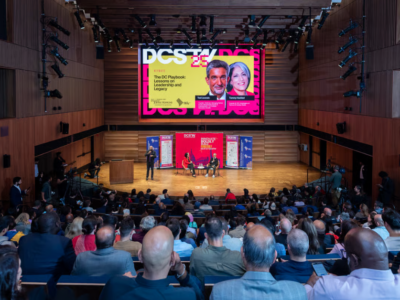
BioBuzz attended JPM Healthcare Week 2026 as a program partner for the QNova LifeSciences 12th Annual Partnering Forum – and it was, by any measure, a different energy than the years prior.
Back in November 2025, I sat down with Jim Sergi, President and Founder of QNova, ahead of the Forum. He told me QNova itself was planning for its largest, most global Forum yet: 1,500-plus companies, 30-plus countries, 700-plus investor meetings. It had, quietly and then unmistakably, become one of the premier partnering platforms of the week.
What makes QNova different is the intentionality. Sergi described it plainly: small companies showing up to JPM week can feel like “Bambi in headlights.” The QNova model is built to solve for that. More than half the meetings that happen at the Forum are serendipitous, not just algorithm-driven. The team functions as part concierge, part matchmaker — understanding what each attendee is actually looking for and connecting them accordingly.
Once we were on the ground in January, the story that emerged was one of cautious but genuine optimism. The biotech capital markets, which had been essentially frozen for much of 2024, were beginning to thaw. Dealmaking was picking up — not with the frenzy some expected, but with a disciplined purposefulness that felt more durable. Stifel’s Tim Lew, who kicked off Day One of the QNova Forum with a data-driven outlook on seed-stage investing, framed it precisely: capital was re-entering the ecosystem, but doing so selectively. The signal was also that tre was capital in the ecosystem to put to work and pharma was becoming more active. Post-JPM 2026 data confirmed it: M&A deal value in 2025 had more than doubled versus 2024, reaching $133 billion for the full year — the second-highest level in five years.
INTERESTED IN SPONSORING THE QNOVA LIFE SCIENCES PARTNERING FORM?
The through-line I took from that week: the starting gun for the next growth cycle had been fired. The companies that recognized it earliest would have a decisive advantage.
The second half of 2026 is where we find out who was listening.
The Four Forces Shaping the Next Six Months
Force 1: Capital Is Moving Again — But Not the Way You Remember
The narrative coming out of JPM 2026 was “cautious optimism.” That framing was accurate — and incomplete. The more important story wasn’t that capital was returning. It was that capital was restructuring.
Licensing and M&A have replaced the IPO as the dominant value-creation mechanism. Licensing deal values hit multi-year highs in 2025. M&A deal count reached its highest level since 2021. But here’s what the headline numbers obscure: capital is bifurcating. Late-stage, de-risked assets with regulatory clarity are attracting serious, competitive attention. Early-stage seed and Series A is still starved. That haves-and-have-nots dynamic is the real investment story of 2026 — with massive implications for founders, service providers, CDMOs, and regional ecosystems that built strategies around a different model.
The top 25 biopharmas are sitting on nearly $1.4 trillion in combined acquisition firepower. They have the cash, and they have an urgent reason to deploy it. That reason is Force 2.
Force 2: The Patent Cliff Has Stopped Being a Future Problem
For years, the industry talked about the patent cliff the way people talk about retirement: important, approaching, somehow still abstract. That abstraction is gone.
The top 20 drugs heading for expiration between now and 2029 represent more than $176 billion in combined 2024 sales. At the top 15 biopharmas, $275 billion in revenue is at risk from loss of exclusivity. Large pharma needs to replace that revenue at a pace internal R&D cannot sustain — and over 70% of all clinical-stage assets now originate from emerging biotech companies, the majority unpartnered. The conditions for deal-making are nearly perfect.
Companies that arrive at JPM 2027 without a clear answer to “what does your asset solve for a pharma facing LOE in 2028?” are going to have a hard week. The QNova Forum has always been where that conversation starts. This year, the stakes are higher than they’ve ever been.
Force 3: AI Is Graduating from Discovery Tool to Clinical Infrastructure
The interesting story isn’t whether companies are using AI — almost everyone is. It’s where AI is starting to matter, and whether organizations are building the governance to make it defensible.
In 2025, the FDA published draft guidance framing AI not as a black box but as a tool requiring validation proportional to risk. In December, it qualified its first AI-based drug development tool for liver biopsy assessment in MASH trials. These are inflection points. The shift I’m watching is AI moving from target identification into how trials are designed, patients stratified, endpoints read, and evidence defended. That’s not a data science add-on. That’s core infrastructure — with regulatory accountability attached.
At JPM 2027, AI will show up in two registers: the familiar aspirational narrative around foundation models and AI-native biotech, and the more operational conversation about auditable clinical applications and what AI means for workforce design inside CDMOs. That second conversation is the one BioBuzz will be paying closest attention to.
Force 4: Manufacturing Reshoring Is Creating a Workforce Gap Nobody Is Ready For
In the BioHealth Capital Region, this is already real. AstraZeneca committed $2 billion in Maryland expansion — biologics manufacturing in Frederick, clinical manufacturing in Gaithersburg. Eli Lilly is building a $5 billion API and drug product facility in Goochland County, Virginia. These aren’t future investments. They’re active workforce demand signals arriving now.
Nationally, biopharma giants have committed more than $480 billion toward domestic manufacturing and R&D. A dozen of the largest players have announced $350 billion in new US capacity by 2030. The jobs follow — but so does the acute demand for trained manufacturing talent: GMP technicians, process development scientists, validation engineers, QA specialists.
BCG said it plainly: as companies build larger US facilities, talent becomes the bottleneck. Companies that treat workforce as infrastructure — not a hiring afterthought — will have a material operational advantage. That’s the conversation I want to have at JPM 2027. A $2 billion facility announcement means nothing if you can’t staff it. At BioBuzz, connecting capital commitments to the human infrastructure behind them — through BioCatalyst and CareerBuild AI — is exactly the work we’re built for.
Get Ready for January: QNova Registration Is Now Open
The 13th Annual QNova LifeSciences Partnering Forum is happening January 11–14, 2027, at the Hilton San Francisco Union Square — with virtual partnering days to follow in February.
Registration is now open.
If you missed the 2026 Forum — where over 1,400 in-person participants from more than 600 companies across 25 countries showed up to do real work — now is the time to secure your seat for 2027. This is not a cocktail reception dressed up as a conference. It is the most productive 72 hours of JPM week, and the BioBuzz team will be there again as partners.
For founders who need to get in front of the right investors before the patent cliff M&A window narrows. For strategics and service providers looking to connect with the next wave of emerging biotech. For anyone who wants to walk out of San Francisco with something real — a relationship, a conversation that becomes a deal, a partnership that didn’t exist when you landed.
The QNova Forum has proven, year after year, that the best introductions are intentional ones. And with everything that is on the table going into 2027 — capital restructuring, patent cliffs accelerating, AI infrastructure taking shape, and a manufacturing reshoring wave creating workforce demands that most organizations are not yet ready for — showing up with a strategy matters more than ever.
Six months goes fast. The preparation window is now.
We will see you in San Francisco.