Maryland’s biotech ecosystem wasn’t built overnight. It emerged through decades of scientific discovery, federal investment, entrepreneurial risk-taking, and a growing network of institutions committed to translating research into real-world impact.
That was the central theme of BioBuzz’s latest Insights to Impact event, the Next Helix, held at the Pinkney Innovation Complex for Science and Technology at Montgomery College (PIC MC) in Germantown. Designed exclusively for life sciences leaders and ecosystem builders, the event brought together founders, investors, facility leaders, workforce advocates, and industry executives to examine the past, present, and future of Maryland’s biotechnology industry.
Located in the heart of the I-270 BioHealth Corridor, PIC MC provided an ideal backdrop for the conversation. The campus serves as a hub connecting education, industry, workforce development, and innovation while sitting among more than 350 bioscience companies and key federal institutions.
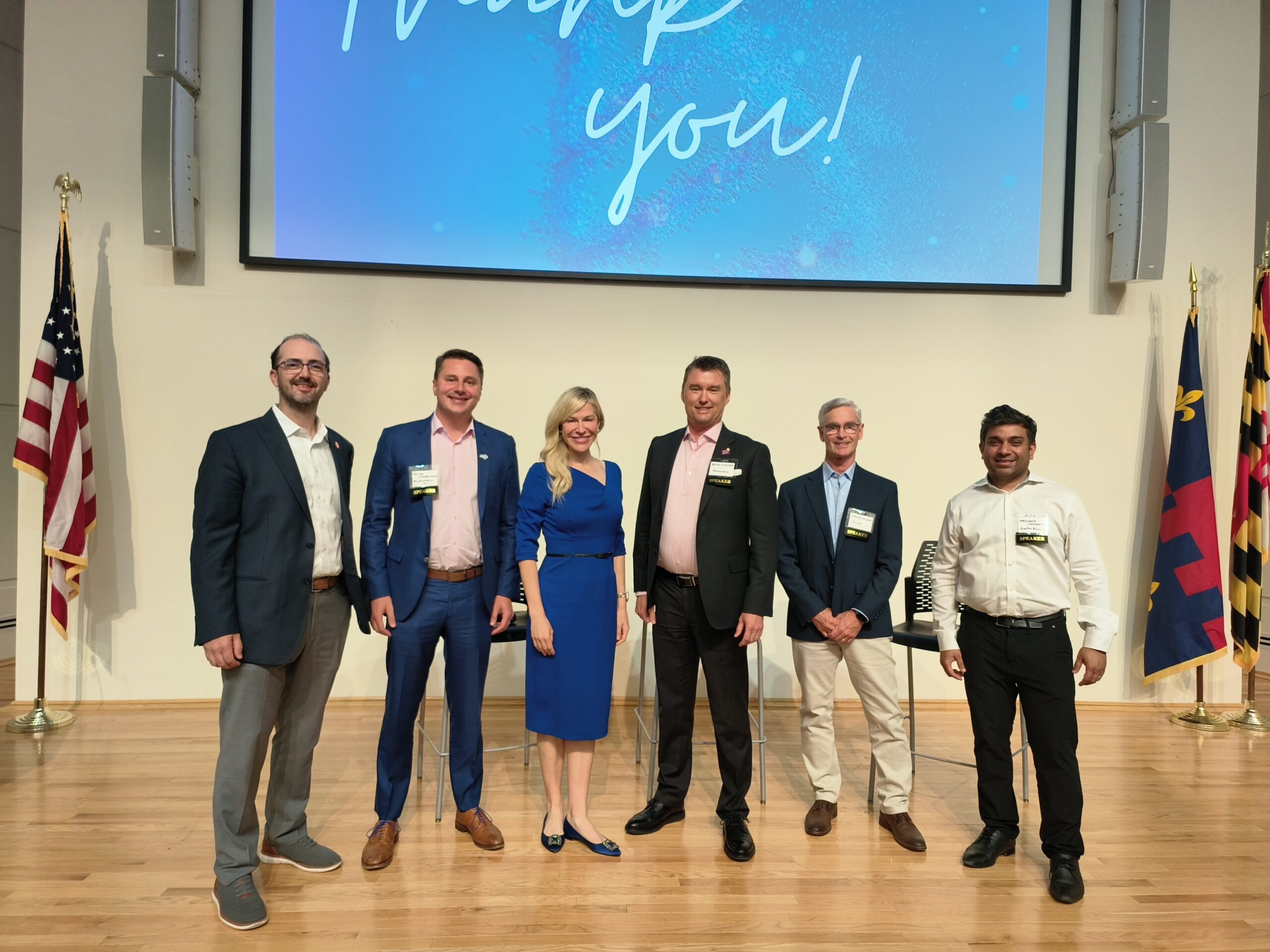
The evening featured two TED-style presentations followed by a leadership roundtable moderated by Michael Konstantopoulos, Maryland Office Leader at CRB, with panelists Brian Stamper, Manufacturing Excellence Lead, BioPharmaceutical Development at AstraZeneca, and Abhishake Chhibber, Co-Founder of Linden Lake Labs and Board Member of Xcellon Biologics.
Looking Back: The Four Generations of Maryland Biotech
The evening’s first keynote came from David Hilbert, Founder of Arcellx, and serial biotech entrepreneur with local roots stemming back to Human Genome Sciences (HGS). Hilbert’s career spans more than four decades of biotechnology innovation and includes successfully commercializing two products, with a third in late stage trials at Arcellx, that are now treating thousands of patients.
Hilbert traced Maryland’s biotech evolution through what he described as four major generations:
- Vaccines
- Protein therapeutics and monoclonal antibodies
- Genomics
- Cell and gene therapies
Each era, he explained, built upon advances that came before it, fueled by NIH research, emerging technologies, and entrepreneurs willing to commercialize scientific breakthroughs.
“It was that effort that really established Maryland as a key center of biotechnology,” Hilbert said while discussing the genomic revolution that helped shape the region’s identity.
Drawing from his experience helping develop multiple therapies that ultimately reached patients, Hilbert emphasized that innovation only becomes meaningful when paired with execution, collaboration, and commercialization.
What Comes Next?
While reflecting on the past, Hilbert also challenged attendees to think about the next frontier.
He identified two areas with tremendous potential for Maryland’s future:
Regenerative Medicine
Hilbert pointed to advances in mesenchymal stem cell (MSC) technologies and companies such as RoosterBio that are helping establish the scientific and manufacturing foundation needed to scale regenerative medicine. With access to additional support from resources like the Maryland Stem Cell Research Fund (MSCRF) managed by TEDCO and the incredible talent located here in the region, Hilbert sees MSCs as an opportunity to sector that Maryland can capitalize on.
RNA Biology
Beyond mRNA vaccines, Hilbert highlighted the enormous opportunity to better understand the broader RNA ecosystem that regulates cellular behavior. With companies like Cartesian Therapeutics in Frederick developing RNA cell therapies, and other local companies building around this modality as well, this could be an explosive opportunity for the region.
“There is a totally untapped but growing body of scientific information,” Hilbert said, suggesting that RNA biology could become one of the next major biotechnology waves.
Maryland’s Biggest Opportunity: Commercialization
The evening’s second keynote was delivered by Deborah Hemingway, PhD, Managing Partner of Ecphora Capital, who offered an investor’s perspective on Maryland’s future.
Hemingway began with a bold statement:
“Maryland is the most scientifically productive place on earth.”
She pointed to the state’s concentration of universities, hospitals, federal laboratories, research institutions, and scientific talent as evidence.
Yet despite those advantages, Maryland has historically struggled to capture the full economic value of its discoveries.
“We built extraordinary engines for innovation and invention, but we never built the engines to capitalize on that commercialization,” Hemingway explained.
According to Hemingway, the future of Maryland biotechnology will depend on strengthening the bridge between discovery and deployment.
Six Trends Shaping the Future
Hemingway identified six trends she believes are positioning Maryland for a new era of growth:
1. Artificial Intelligence
AI is dramatically reducing the cost, complexity, and time required to launch and scale companies.
“What formerly took 30,000 hours to do has been reduced to 30 or 300,” Hemingway said.
2. Faster Commercialization Pathways
Universities and research institutions are becoming increasingly focused on entrepreneurship, technology transfer, and startup formation.
3. More Repeat Founders
Experienced entrepreneurs who have built successful companies are now mentoring, investing in, and supporting the next generation.
4. Growing Startup Momentum
Success stories create a flywheel effect that attracts talent, investors, and new opportunities.
5. Smarter Capital
Specialized investors are becoming more engaged and providing strategic value beyond funding.
6. Regional Collaboration
Maryland, Washington, D.C., and Virginia are increasingly working together as a unified innovation corridor.
“The future belongs not to the region with the most research,” Hemingway concluded, “but to the region that can most effectively transform that research into products, into companies, and into better outcomes for humanity.”
Workforce: The Common Thread
Throughout the evening, one topic repeatedly surfaced as the foundation for future success: workforce development.
Opening remarks highlighted Montgomery College’s role in preparing students for careers in biotechnology, healthcare, cybersecurity, engineering, and advanced technology. The institution’s close integration with employers, hospitals, incubators, and workforce programs demonstrates how education and industry can work together to strengthen talent pipelines.
BioBuzz Founder Chris Frew also announced the launch of the organization’s new BioCatalyst Workforce Program, a state-supported initiative designed to connect emerging talent with Maryland’s life sciences ecosystem.
The Leadership Roundtable
The evening concluded with a leadership discussion moderated by Michael Konstantopoulos of CRB.
Panelists explored the challenges and opportunities facing Maryland’s biotech industry, including workforce shortages, infrastructure demands, startup growth, investment capital, AI adoption, and commercialization.
Stamper highlighted the importance of maintaining flexibility as technologies evolve.
“We have to remain agile and flexible and keep our eyes looking forward,” he said. “If we don’t continue to look for those opportunities, I can guarantee other people are going to do things in a better way.”
Chhibber focused on Maryland’s opportunity to build companies that remain and grow within the state.
“I imagine this ecosystem where a therapy is discovered here, developed here, manufactured here, and commercialized here,” he said.
When asked what would define Maryland’s next chapter, Chhibber’s answer was simple:
“Scaling up.”
The Road Ahead
If there was a single takeaway from the evening, it was that Maryland already possesses many of the ingredients necessary for long-term leadership in biotechnology.
The science is here.
The institutions are here.
The talent is here.
The capital is growing.
Now the challenge is turning those strengths into a repeatable engine for company creation, commercialization, and economic impact.
As speakers and attendees reflected on the region’s history while looking toward its future, one thing became clear: Maryland’s next era of biotech growth will be defined not only by discovery, but by the ability to transform those discoveries into companies, therapies, jobs, and lasting impact.