At the Women’s Health Nexus 2026 closing fireside, three leaders argued that AI’s stall in women’s health is not a demand problem. It is a problem of trust, training data and workflow, and women may be the ones who force the fix.
AI in medicine is usually discussed as a supply story: more models, more clearances, more capital. The FDA’s list of AI-enabled medical devices now tops 1,600 entries, and roughly three-quarters of them sit in radiology. Vipul Kella, MD, who moderated the evening fireside that closed Women’s Health Nexus 2026 in Bethesda, Md., on November 6, opened with the other side of that ledger. By his count, about half of those devices reached the market without clinical validation, only a handful have permanent billing codes, and much of the underlying data underrepresents women. Scale that up, he warned, and AI could deepen the inequities it promises to fix.
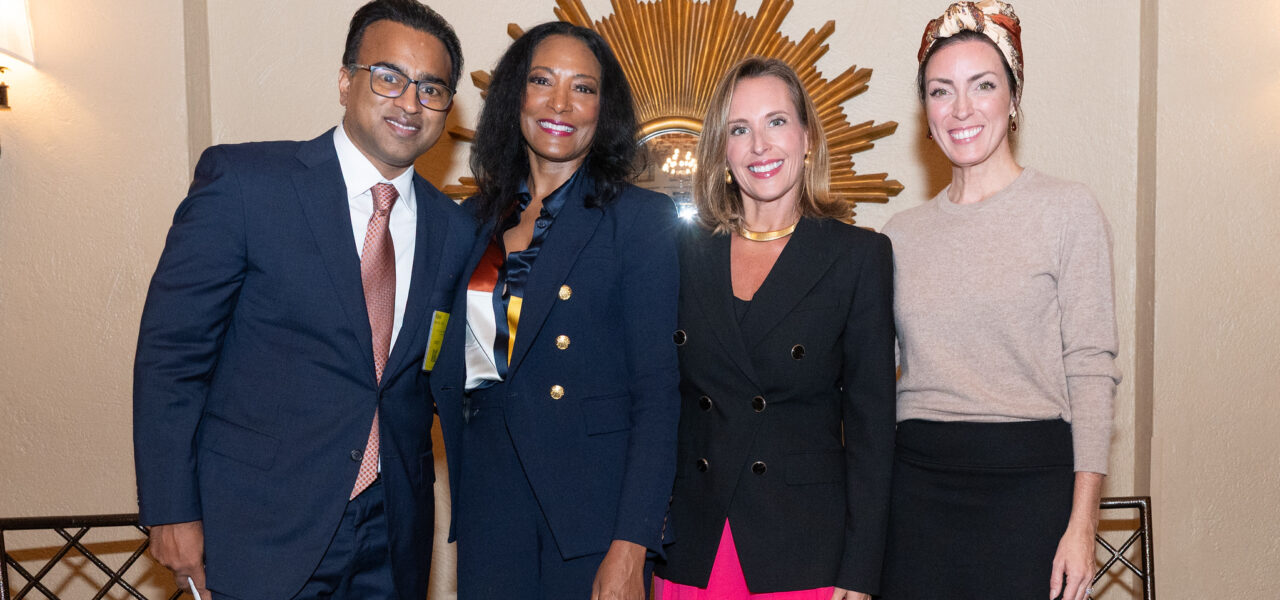
The conversation that followed, with Marissa Fayer, CEO of DeepLook Medical; Dr. Nicole F. Roberts, CEO of The Leigh Steinberg Foundation for Brain Health; and Dr. Jayne Morgan, a cardiologist and Vice President of Medical Affairs at Hello Heart, reframed the adoption gap. Demand for better tools is not what is missing. Women are already seeking them out. What is missing is the evidence, the data and the workflow integration that would let health systems trust those tools enough to use them.
Women are already going around the system
Morgan made the demand case most forcefully. Women’s health research funding, already small, has been cut close to zero in recent years, she said, and the field has long been reduced to reproduction and sexual function. As a result, women increasingly go outside the healthcare system altogether, paying more out of pocket for menopause care, telehealth and digital platforms because they cannot find what they need inside it.
She rejected the idea, raised by Kella, that much of women’s health innovation serves a luxury market. Women at midlife are often at the peak of their careers while managing children, homes and aging parents. She cited survey data showing that only 8% of women with one child report having an hour a day for self-care, falling to 4% with two children, while the number of children has no effect on men’s answers. A one-hour doctor’s appointment, she noted, can cost a woman four hours of her day. In her view, home and digital tools are the only realistic way to fit care into that margin, which is why women will adopt AI faster than anyone. “Our health is not a luxury,” she said.
Morgan’s own research on Hello Heart’s digital blood pressure program points the same way. A study she co-authored in the American Heart Association’s journal Circulation found that adults in lower-income areas were 11% more likely to enroll in the program than those in higher-income areas, with comparable engagement once enrolled. In a second study she led, published in the American Journal of Preventive Cardiology, women using the program saw greater blood pressure reductions than men, and women after menopause matched the improvements of premenopausal women despite starting from higher readings. When tools fit into women’s lives, she said, women use them.
Real versus well-funded
If demand is not the constraint, the question becomes which products deserve it. Kella asked Roberts how to tell a real health AI company from one with good press. Roberts, who has written about health innovation for Forbes for more than 15 years and fields constant pitches through her Brain Health Summit, said her test is simple: sign an NDA, then ask to see the data and interview the team. Companies that cite proprietary concerns and refuse usually reveal themselves. The winners over the next few years, she predicted, will be the companies that have been quietly collecting data and building proof points for years, not the ones launching in the next 30 to 60 days.
She also described why validation matters so much in women’s health. In a study presented to thousands of emergency physicians, her team showed identical cardiac case profiles while changing only the patient’s gender, race and ethnicity. Physicians diagnosed a problem significantly less often when the patient was a woman, and less often still when she was a woman of color. An AI model trained on decisions like those would carry the same bias forward.
The bottleneck is the hospital workflow
Fayer, a 25-year medtech executive, has taken DeepLook’s FDA-cleared DL Precise software, which helps radiologists find lesions hidden in dense breast tissue, into commercial use at Cleveland Clinic, Mayo Clinic, AdventHealth and Geisinger. She named health systems as the primary bottleneck. Many of the AI tools on the FDA’s list, she said, were never efficient or effective enough to fit into clinical workflow, and a tool that cannot be integrated is irrelevant regardless of how brilliant it is. Her advice was to get inside the system first, with a product that fits existing workflow, and then iterate with the physicians who adopt it.
That is also why AI has clustered in imaging, and within imaging, in breast. Mammography is the highest-volume annual imaging exam, radiologists have been willing to adopt technology, and health systems are looking for efficiency. The prediction a decade ago that radiologists would become unnecessary has not come true. Instead, Fayer argued, the best tools give radiologists their brainpower back by handling routine reads and letting them focus on the hard cases. She sees adoption beginning to move beyond breast imaging into other areas.
Kella flagged a tension in that model for investors. Human-in-the-loop products, where AI handles most cases and clinicians take the complex ones, are often valued as tech-enabled services rather than pure AI, and they rarely earn the same multiples. The model that clinicians trust most is not always the one venture capital rewards most.
Train on the people you intend to treat
On training data, Fayer was direct. Today’s datasets skew heavily toward white, male, urban, U.S. and European populations, with very little data from Africa, Asia or Latin America. The fix, she argued, is to deliberately overtrain on women and underrepresented populations. DeepLook builds this into its study design: rather than asking for 300 women, it specifies the share who must be Black, Asian, Hispanic or Ashkenazi Jewish, because each group is disproportionately affected by dense breast tissue. Doing it up front costs little, she said. Retrofitting a model later costs time, money and the trust of patients and physicians. As an investor and board member, she treats this as a diligence question.
She also pushed the audience to look beyond U.S. ZIP codes. Her work in Tanzania, Ghana and Mexico has shown populations adopting remote monitoring faster than the United States, which she called the real opportunity zone for AI. Roberts, whose career has spanned India, Nepal, Haiti, South Sudan and Congo, added that the same intervention can move a woman’s health much further, at a fraction of the cost, in places with less access. Investors should weigh what she called return on values alongside return on investment.
Remote monitoring offered a cautionary note. Kella described how Medicare reimbursement turned remote patient monitoring into a billing tool for some companies, prompting CMS to end third-party vendors’ ability to provide remote monitoring services as of January 1, 2029. Morgan urged the industry not to throw out validated tools with the bad actors. Many remote monitoring tools are genuinely useful for the women she serves, she said, and the task now is to separate what works from what does not.
A new Congress, and different questions
The fireside took place two days after the midterm elections, and the panelists read the results in different ways. Roberts noted that public health professionals won major races, including Dr. Amy Acton in the Ohio governor’s race, and Abdul El-Sayed in Michigan’s Senate race and pediatrician Annie Andrews in South Carolina’s. Clinicians, scientists and women in office tend to ask different questions about AI than lawmakers focused mainly on speed, she said, and those questions will shape oversight of HHS and CMS.
Fayer was more cautious. She welcomed the number of women and physicians elected, but noted that many winning candidates campaigned against AI and data center expansion. Large AI companies will absorb new restrictions, she warned, while startups that depend on access to compute could be squeezed. Morgan pointed to bipartisan movement on specific priorities, including the Women’s Heart Health Expansion Act, which would reauthorize and expand the CDC’s WISEWOMAN cardiovascular screening program, and menopause legislation she said is advancing in 25 states.
Infrastructure, not a niche
Fayer, author of Undervalued to Unavoidable, which argues that women’s health should be treated as economic infrastructure, offered the evening’s organizing idea. Women’s health should be a line item in every budget, for countries, companies, investors and households, just like roads, bridges, telecom or data centers. Women hold up economies and families, she argued, and countries that invest in their health will grow faster.
Morgan connected that idea to the clinical workforce. Across four years of medical school, three years of internal medicine residency and three years of cardiology fellowship, she said, she received no training on menopause. Most physicians have not either, which is why she is writing a book for patients, due in May 2027, and pushing to get menopause into medical education. A care model that depends on informed patients compensating for untrained clinicians is one more reason women are turning to digital tools.
What happens next
Asked for a theme for next year’s event, Morgan proposed one number. About one billion women worldwide will be in perimenopause or menopause, and bringing a single drug to market costs roughly $1 billion. Against that math, a $100 million commitment to women’s health amounts to a fraction of one new treatment.
The panel’s broader message for founders and investors was that the adoption gap in women’s health AI will not close because of more clearances or more capital alone. It will close as companies show validated outcomes in the women they intend to serve, fit into the workflows clinicians already use, and earn the trust of health systems. The demand is already there. The companies that meet it with evidence are positioned to define the category.