A team of minority business owners will be collaborating as prime contractors and strategic partners to launch a community redefining master planning operation centered around workforce development and community growth.
SW Bio Care, LLC is a joint venture representing the strategic partnership of my financial-holding company, Goffman Bougard, Inc., and Urbane, our commercial real estate development partner, has selected WBE Certified FIFTEEN Architecture & Engineering as the Master Planning/Engineering Contractor for SW Life Science Park on 61st Street & Lindbergh Blvd.
This is an historic moment representing a team of minority business owners collaborating as prime contractors and strategic partners to launch a community redefining master planning operation that will later include land acquisition, land remediation and construction.
Southwest Philadelphia, a neighborhood historically defined by its industrial roots and resilient communities, is on the verge of a transformative development. The proposed life sciences park, spearheaded by Goffman Bougard CEO, Tia Lyles‑Williams and Urbane CEO James Johnson Piett, aims not only to expand Philadelphia’s biotech ecosystem but also to prioritize workforce development, equity, and inclusion, providing residents direct access to careers in advanced therapies and biologics manufacturing.
A Vision for Skills, Science, and Community
In an interview with BioBuzz Tia Lyles‑Williams emphasizes that the park is about more than laboratories and startups. “Our goal is to create opportunities where they’ve historically been scarce,” she says. “Residents will gain skills, careers, and the ability to transform their families’ futures while contributing to cutting-edge science.”
The team selected a vacant property in Southwest Philadelphia for its strategic location, accessibility, and potential for neighborhood revitalization. The site’s proximity to major transit routes and community centers makes it ideal for integrating workforce training, research, and manufacturing in a single hub.
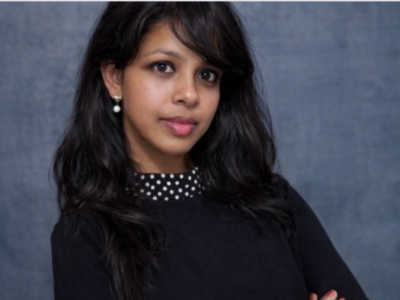
To bring this vision to life, the development team is collaborating with FIFTEEN Architecture & Engineering, under the leadership of Principal, Soha St. Juste. The firm is known for its innovative approach to science and technology spaces. The firm has experience designing biotech laboratories, advanced manufacturing facilities, and mixed-use innovation hubs, blending functionality with community-focused design. Their work emphasizes sustainable, adaptable spaces that can evolve alongside rapidly advancing technologies, making them a natural partner for a project that combines research, training, and community impact.
Workforce Development with Lasting Impact
Philadelphia is one of the nation’s poorest major cities, and Southwest Philadelphia has long been disconnected from opportunities in the life sciences. By integrating workforce training with advanced manufacturing of therapies, the park could provide residents with career pathways that lift families out of poverty, creating a ripple effect for generations.
The park is built around skill-based training programs that prepare residents for careers in cell and gene therapy manufacturing, biologics production, quality control, and laboratory operations. These are hands-on, high-demand roles—akin to the skilled manufacturing jobs that powered the Industrial Revolution—with the potential to create generational change within the community.
“This project provides a pathway out of poverty,” says Lyles‑Williams. “Families can gain stable, high-paying careers, technical expertise, and opportunities for long-term economic mobility.” Partnerships with local schools, community colleges, and nonprofit organizations will support apprenticeships, certifications, and mentorship programs, cultivating a pipeline of talent from Southwest Philadelphia into the life sciences sector.
Equity and inclusion are central to the park’s mission. The development team has committed to measurable outcomes, including local hiring targets, participation in workforce programs, and economic improvements for residents. By embedding these metrics into the project’s structure, the park aims to demonstrate that scientific innovation and social impact can grow hand in hand.
“This project is more than a development—it’s a tool for social and economic change,” says Lyles‑Williams. “We’re giving residents access to high-demand skills and meaningful careers, while fostering innovation that benefits the entire city.”
Features of the Life Sciences Park
The park is envisioned as a multi-purpose ecosystem, combining innovation, training, and community engagement:
- Advanced laboratory and manufacturing spaces for startups and established biotech firms focused on therapies and biologics.
- Shared incubator facilities that lower barriers for early-stage companies.
- Integrated workforce training centers that equip residents with practical, industry-ready skills.
- Community partnership programs ensuring local hiring, mentorship, and engagement opportunities.
Next Steps for the Project
The development is moving through planning and design phases, with FIFTEEN Architecture & Engineering finalizing layouts for labs, training spaces, and incubators. The next steps include:
- Securing funding from public and private investors to support construction and workforce programs.
- Working the City of Philadelphia to release the land for ownership under SW Bio Care, LLC.
- Launching community engagement initiatives to inform the community on SW Life Science Park – including upcoming opportunities for workforce training and corporate contract opportunities for entrepreneurs.
If realized, the Southwest Philadelphia life sciences park could serve as a blueprint for how cities can combine advanced scientific innovation with workforce training and community empowerment. By focusing on skill-building, generational opportunity, and equitable access to careers in biotechnology, the park offers a vision for a future where science, skills, and community growth are fully aligned.
“By equipping residents with skills, opportunity, and mentorship, we are creating a future where innovation and equity coexist,” says Lyles‑Williams. “This is more than a park—it’s a foundation for community transformation and lasting impact.”