Techfrederick’s 10-year milestone signals a shift from emergence to organization—at a moment when regional ecosystems matter more than ever.
From Fragmented Potential to Connected Ecosystem
Ecosystems don’t emerge overnight—and they rarely announce when they’ve crossed from “promising” to “proven.” More often, that shift is revealed in quieter ways: sustained collaboration, repeatable success, and the presence of infrastructure that no longer needs to explain itself.
Ten years ago, Frederick, Maryland sat in a familiar position for many secondary markets in the BioHealth Capital Region (BHCR): rich in scientific assets, proximate to major hubs like Montgomery County, but still working to define its own identity. The ingredients were there—federal labs, growing biotech companies, and a steady influx of talent—but the connective tissue was still forming.
That’s where techfrederick entered the picture—not as a headline-grabbing initiative, but as a community builder. Over the past decade, it has operated less like a traditional organization and more like an ecosystem catalyst, bringing together technologists, entrepreneurs, educators, and employers across industries.
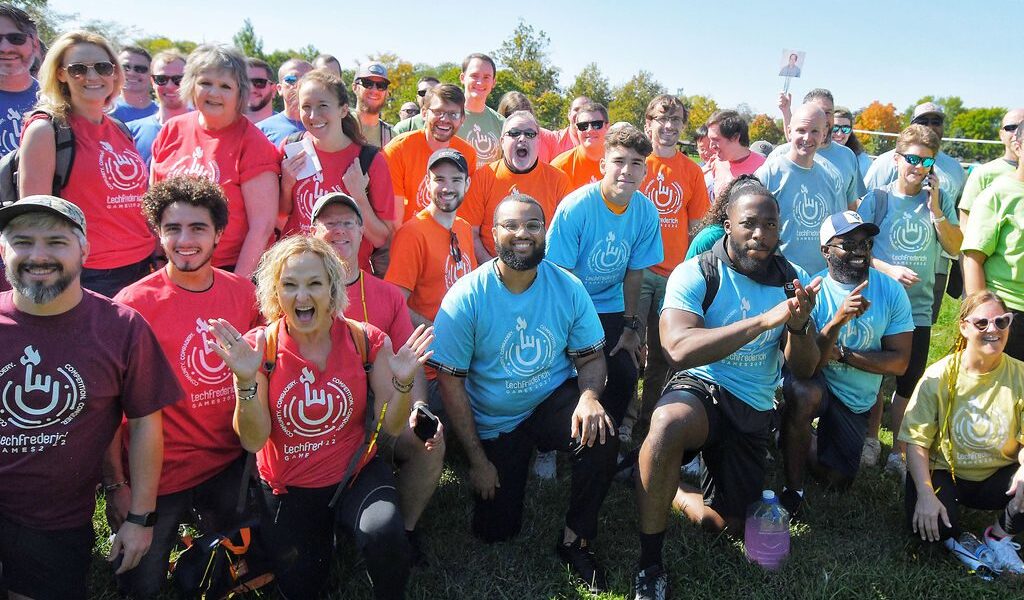
Now, as the organization marks its 10th anniversary with a May 12 gathering, the event itself is less the story—and more the signal.
A Milestone That Reflects More Than Longevity
Anniversaries are easy to frame as celebrations. But in ecosystems, they function more as checkpoints—moments to assess whether early momentum has translated into durable infrastructure.
For Frederick, this milestone suggests something more meaningful: the ecosystem is no longer emerging. It’s organized.
“Techfrederick’s 10th anniversary is a testament to the strength and growth of Frederick’s tech ecosystem,” said Douglas Bane, Founder and CEO of I-270 Innovation Labs and a member of the techfrederick Board of Directors. “We’re proud to host this milestone at I-270 Tech Labs as we reintroduce our platform to support biotech and technology teams looking to move fast and scale. Together, we’re building the foundation for Frederick to become a true innovation hub.”
That framing—“foundation”—is telling. It reflects a shift from early-stage ecosystem building to something more structured and intentional. Not just activity, but alignment.
What’s Changed: Growth, Density, and Identity
Over the past decade, Frederick has evolved from a collection of individual successes into a more cohesive innovation community.
That evolution can be seen across several dimensions.
Company Growth and Startup Activity
Frederick has steadily increased its base of biotech and technology companies, supported by both organic growth and regional spillover from the broader BHCR. Companies are no longer just locating in Frederick—they’re scaling there.
Collaboration as a Default, Not an Exception
What was once a series of isolated networks has become a more integrated ecosystem. Organizations like techfrederick have helped normalize collaboration across sectors, from biotech to IT to advanced manufacturing.
Stronger Regional Positioning
Frederick is increasingly viewed not as a peripheral node, but as a complementary hub within the BHCR. As BioBuzz has previously explored in its coverage of workforce growth in the region, the city’s ability to attract both companies and talent is becoming a defining strength.
Workforce Evolution
Perhaps most importantly, the workforce dynamic has shifted. More professionals are choosing to live and work locally, reducing reliance on commuting into larger hubs and reinforcing Frederick’s internal economic engine.
Mary Ford-Naill, Manager of Economic Development for the City of Frederick, sees this as one of the most significant outcomes of the past decade.
“Celebrating techfrederick’s 10th anniversary feels especially meaningful because we’ve seen firsthand how their work has helped our businesses grow, expand, and build the talent they need to thrive,” she said. “What I love most is that their impact reaches far beyond traditional tech companies — technology now touches every industry in Frederick, and techfrederick has been a driving force in preparing our entire workforce for that reality. This milestone is a testament to the collaboration, creativity, and resilience that define our Frederick community and tech ecosystem.”
That last point is critical. The ecosystem isn’t just growing—it’s diffusing across industries.
Infrastructure Catching Up to Ambition
If the first phase of Frederick’s growth was about community, the next phase is about infrastructure.
Spaces like I-270 Innovation Labs—soon to be reintroduced as I-270 Tech Labs—reflect a broader trend seen across emerging hubs: the need for ready-to-scale environments that match the speed of modern biotech and technology companies.
The rebrand itself is a signal of intent. As Bane noted, the shift is designed to better reflect the facility’s role in supporting both biotech and technology companies with move-in-ready lab and office space, while strengthening its connection to BaneBio.
It’s a subtle but important evolution—one that aligns with a broader pattern across the industry. As BioBuzz has reported in other regions, including major infrastructure investments across Maryland, physical space is no longer just a requirement—it’s a competitive differentiator.
Frederick is now entering that phase, where infrastructure begins to catch up with—and enable—ecosystem ambition.
Why This Moment Matters Now
This 10-year milestone arrives at a time when the rules of innovation geography are shifting.
The post-pandemic era has accelerated the rise of secondary and emerging hubs. Talent is more distributed. Companies are more flexible in where they locate. And ecosystems that can offer connectivity, affordability, and quality of life are gaining ground.
Frederick sits squarely in that opportunity window.
But with that opportunity comes a new set of expectations.
For founders, the question is no longer whether Frederick can support early-stage companies—but whether it can support scale.
For talent, the shift raises a different question: can Frederick provide not just jobs, but career pathways across companies and sectors?
For investors and partners, the signal is one of validation—but also of timing. Ecosystems at this stage often represent the most attractive balance of growth potential and reduced risk.
In that sense, Frederick’s current position mirrors what other now-established hubs experienced a decade ago: a transition from potential to proof.
The Next Phase Will Be Intentional
As Frederick marks a decade of techfrederick, the question is no longer whether an innovation ecosystem exists—it clearly does. The more consequential question is how deliberately it chooses to mature from here.
The ingredients that once defined its early momentum—collaboration, talent flow, and emerging infrastructure—are now becoming expectations rather than advantages. That shift raises the stakes for coordination across workforce development, capital access, and physical buildout at a moment when competition between mid-tier life sciences hubs is intensifying nationwide.
Frederick’s opportunity is not to replicate larger markets, but to define what a more connected, right-sized innovation ecosystem looks like inside a rapidly decentralizing industry.
The next decade will test less whether Frederick can grow—and more whether it can grow in sync.