
Why Most Biotech Partnership Deals Fail Before They Start
In a risk-averse, buyer-driven market, biotech partnering has become less about timing luck and more about strategic discipline. Drawing on more than 15 years of global deal-making experience, Liberi Group’s Bram de Jong breaks down the most common mistakes that quietly derail partnerships—and how companies can avoid them before leverage is lost.
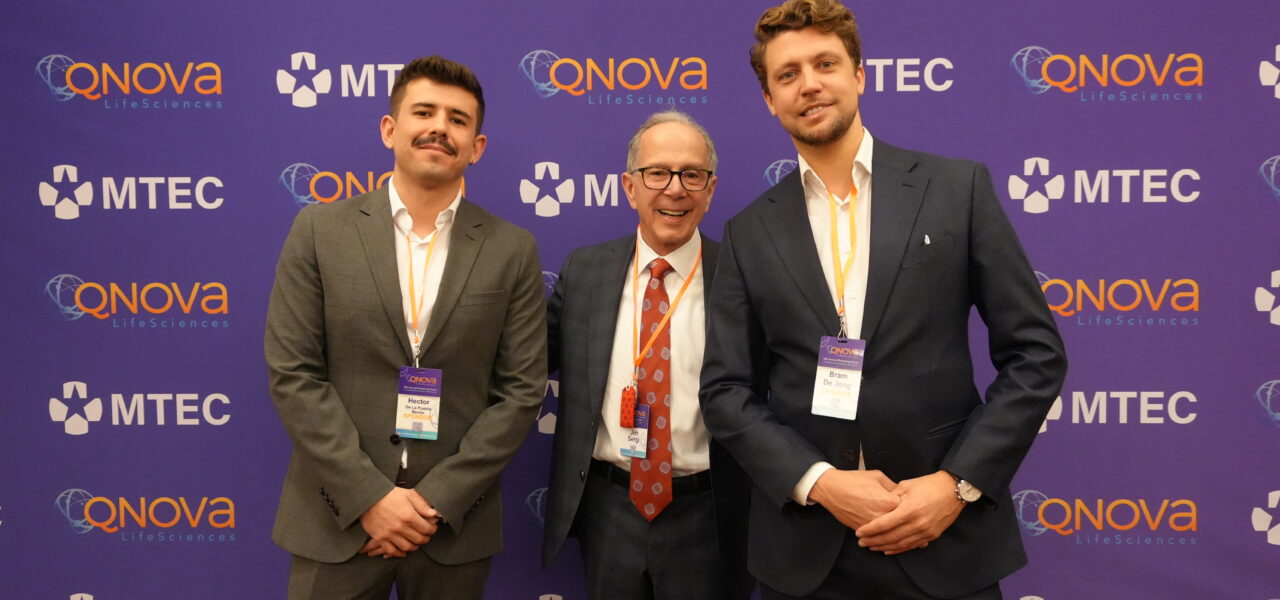
At a time when biotech companies are navigating tighter capital markets, risk-averse pharma partners, and fewer shots on goal, partnering has become less forgiving—and more strategic—than ever. That reality was front and center at QNova’s 12th Annual Partnering Forum co-hosted by MTEC at the JP Morgan Healthcare Week, where Bram de Jong, Director of Business Development at the Liberi Group, unpacked the most common mistakes biotech companies make when pursuing pharma partnerships—and why many deals fall apart long before a term sheet ever appears.
Drawing on more than 15 years of advising biotech companies on global partnering strategies, de Jong’s message was clear: in today’s buyer-driven market, execution matters as much as innovation.
A Tougher Market Raises the Stakes
The backdrop to de Jong’s talk was a biotech ecosystem still feeling the aftershocks of a difficult funding environment. While capital continues to flow into the sector, it has become increasingly concentrated—fewer deals, larger checks, and a widening gap between early-stage and late-stage assets.
For companies sitting in the middle—often around IND or Phase 1—this has created a particularly challenging squeeze. Pharma interest has not disappeared, but risk tolerance has declined. The result is a buyer’s market in which large pharmaceutical companies have greater leverage to dictate terms, timelines, and scope.
In that environment, de Jong argued, even small missteps in partnering strategy can have outsized consequences.
Mistake No. 1: Starting the Partnering Conversation Too Late
The most common, and most damaging, mistake Liberi Group sees is companies waiting until they need a deal to start engaging pharma.
Many biotechs begin outreach only when cash is running low or a clear inflection point is approaching. By then, leverage is already gone. Successful partnerships, de Jong noted, are rarely the result of a single meeting or a sudden data release. More often, they are the culmination of years of relationship-building.
Companies with tangible early data—often as early as in vivo or animal results—can and should begin conversations well ahead of formal partnering. While those early discussions may not yield immediate offers, they allow founders to gather feedback, refine development plans, and understand what potential partners actually value.
Just as importantly, early engagement helps companies identify and align a short list of realistic partners. When a true partnering moment arrives, that groundwork enables multiple parties to move into diligence at the same time—creating competitive tension and improving negotiating power.
Mistake No. 2: Underestimating the Importance of IP Strategy
Intellectual property remains one of the fastest ways for a promising deal to collapse.
De Jong emphasized that many partnerships stall not because the science is weak, but because the IP story is incomplete. Composition of matter patents, in particular, remain a gating requirement for many pharma companies. When those patents are absent or nearing expiration, companies must be prepared with a clear, credible strategy to extend protection or mitigate risk.
Patent lifetime, freedom to operate, and long-term defensibility are not academic concerns—they directly shape commercial viability. When those issues are not addressed early and transparently, pharma partners often walk away.
Mistake No. 3: Treating Commercial Strategy as Someone Else’s Problem
Another frequent miscalculation is assuming that commercialization will be “handled later” by a future partner.
According to de Jong, pharma companies are increasingly skeptical of assets that appear designed only to reach the next clinical milestone. Development plans that ignore long-term manufacturing, pricing, reimbursement, and scale raise red flags—especially when current CMC strategies may not translate to commercial production.
Premium pricing, for example, must be defensible not just clinically, but economically. FDA approval alone does not guarantee a viable commercial product. Biotechs that fail to show how their science becomes a sustainable business often struggle to advance partnering discussions.
Mistake No. 4: Mixing Rare and Broad Indications Under One Strategy
One of the more nuanced pitfalls de Jong highlighted involves assets positioned across both rare and non-rare indications.
On paper, the strategy seems logical: pursue a rare disease first, generate value quickly, then expand into a larger market. In practice, it rarely works. Pricing dynamics, off-label concerns, and risk management priorities make pharma companies reluctant to license an asset for a rare indication while leaving broader indications unclaimed.
In most cases, potential partners will demand rights to the full compound, effectively blocking the original expansion strategy. While creative arguments exist to separate the two paths, de Jong noted that pharma companies rarely accept them.
Mistake No. 5: Overselling—or Not Being Realistic Enough
Early-stage fundraising often rewards optimism. Pharma partnering does not.
Once companies enter discussions with strategic partners or later-stage investors, inflated market sizes, overly aggressive projections, or loosely supported claims are quickly identified. Overselling does not inspire confidence—it signals immaturity and short-term thinking.
Realistic positioning, grounded assumptions, and a clear understanding of risks are far more effective in building credibility with experienced partners.
Pitching Still Matters and So Does Knowing Your Audience
Even when the fundamentals are right, execution during partnering meetings can make or break momentum.
De Jong cautioned against assuming that the CEO or chief scientist is always the best person to lead a pitch. What matters most is clarity—someone who can concisely explain what the company does, why it matters, and how it is differentiated.
Equally important is being prepared to answer difficult questions. Incomplete answers signal unreadiness and can cost companies a second meeting. Finally, tailoring the pitch to the audience—scientist versus business lead, pharma versus investor, short-term versus long-term capital—is essential. A single, one-size-fits-all deck rarely works.
Why It Matters
As biotech companies face longer timelines, fewer financing options, and tougher negotiating environments, partnering is no longer just a transactional milestone—it is a strategic discipline.
The mistakes de Jong outlined are rarely about science alone. They are about timing, preparation, realism, and alignment. In a market where leverage has shifted decisively toward buyers, avoiding these pitfalls can be the difference between a stalled asset and a sustainable partnership.
De Jong hinted that future discussions will dig deeper into how pharma evaluates opportunities internally—and what signals truly drive interest. For biotech leaders navigating today’s constrained environment, those insights may be just as critical as the science itself.
In the meantime, the message from QNova’s Forum was unmistakable: the best partnerships are built long before the deal and the cost of getting it wrong has never been higher.