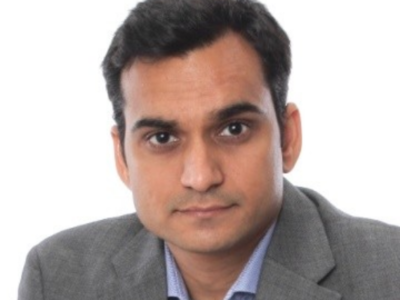

In conversation with Heffron’s Matt McGrath on the people and projects enabling innovation to scale
In life sciences, the spotlight often falls on discovery—on the science, the therapeutics, the breakthroughs. But behind every lab, cleanroom, and manufacturing suite is a different kind of expertise: the people responsible for building the environments where innovation can actually happen.
For Matt McGrath, Senior Project Manager at Heffron, that realization has been shaped over two decades in construction management—spanning global projects, government facilities, and complex healthcare environments. His recent move to Heffron marks not just a career transition, but a shift in how that experience is being applied.
Because in a region like Maryland—where the I-270 corridor, federal labs, and emerging innovation hubs intersect—the infrastructure isn’t just supporting the ecosystem. It’s actively shaping it.
Below, McGrath shares his path into the industry, what drew him to Heffron, and how he sees his role in helping build what comes next.
1. You’ve spent much of your career in construction management across diverse environments. What led you to join Heffron at this point in your career?
Matt McGrath: I’ve been in the construction management world for about 20 years, working across a wide range of projects—from commercial fit-outs to large government facilities. Over that time, I got to know the Heffron team, probably close to 10 years now.
Even when we weren’t working directly together, they were always people I trusted—if I had a question or needed insight, they were the ones I’d call. So when the opportunity came up, it just felt like the right timing for both sides.
It’s been great to join a team where those relationships already exist—not just professionally, but personally as well.
2. What has stood out to you about Heffron’s culture, especially coming from larger organizations?
Matt McGrath: I’ve worked at some larger companies, and they offer a lot—great benefits, structure, all of that. But what you don’t always get is that family-oriented culture.
That’s something Heffron really has. There’s a strong emphasis on relationships and partnerships, and that’s how they grow the business.
For me personally, that aligns with how I’ve always approached my career. I’d rather have a smaller number of strong, meaningful relationships than a lot of surface-level ones. And here, that mindset is shared across the team.
From day one, I’ve never felt like I was on an island. Everyone checks in, offers help, and genuinely wants to see each other succeed.
3. You’ve worked across higher education, healthcare, and government projects. How has the Maryland ecosystem—particularly the I-270 corridor—evolved in your view?
Matt McGrath: It’s been really interesting to watch. Earlier in my career, I was more focused on higher education and healthcare, and I didn’t fully realize how much activity was happening along the I-270 corridor.
Over time, you start to see how interconnected everything is—and how the ecosystem is influenced by broader forces, including political and funding dynamics.
What’s encouraging is how the region continues to evolve. People aren’t just letting challenges define the trajectory—they’re actively working to reinvent and strengthen the ecosystem.
You see that in projects like the redevelopment of older buildings into shared life sciences spaces—especially in places like South Baltimore. Turning existing infrastructure into collaborative innovation hubs is a powerful signal of where things are heading.
It’s a bit of a melting pot here, and that diversity—across industries, institutions, and expertise—is what makes it so dynamic.
4. You mentioned bringing a different perspective into a highly technical field. What does that look like in practice?
Matt McGrath: My background isn’t purely mechanical—I come from the general contractor side and have also spent time on the owner side, including a few years at the Applied Physics Lab in Laurel.
That gives me a broader view of how projects come together. I can look at a challenge and think about how the mechanical team sees it, but also how the owner or GC might be approaching it.
That perspective helps bridge gaps. It’s not just about executing a specific scope—it’s about understanding the full lifecycle of a project and making sure all the pieces align.
At the same time, I’m continuing to learn more about the mechanical side, which allows me to become more specialized while still bringing that broader lens.
5. What are your priorities in this first year at Hefron—both in terms of growth and impact?
Matt McGrath: A big focus for me is business development and marketing, which is something I didn’t initially realize I’d enjoy as much as I do.
I’m working to expand relationships in the healthcare space and continue growing Heffron’s presence in life sciences. A lot of that comes down to leveraging connections I’ve built over the years and turning those into new opportunities.
One area that’s particularly meaningful to me is the Applied Physics Lab. Having worked there on the owner’s side, I’d love to bring Heffron into that environment and contribute to the kind of impactful work they’re doing.
At the same time, I’m currently working with Constellation Energy on several large-scale upgrades to government buildings—focused on improving energy efficiency through mechanical system modernization.
It’s about a $70 million portfolio of projects, and it’s a great example of how infrastructure work can have both operational and environmental impact.
6. Looking ahead, how do you see your role contributing to the broader life sciences ecosystem in Maryland?
Matt McGrath: I think what we do is often behind the scenes, but it’s foundational.
We’re helping build the environments where research happens, where therapies are developed, where innovation scales. That’s especially true in life sciences, where the infrastructure has to be precise and adaptable.
For me, it’s about continuing to build strong relationships and contributing to projects that move the ecosystem forward.
There’s a lot happening in this region, and it’s exciting to be part of that—helping shape not just individual projects, but the broader landscape of innovation.
Closing
As Maryland’s life sciences ecosystem continues to evolve, the conversation often centers on science, startups, and capital.
But as McGrath’s journey underscores, there’s another layer that’s just as critical: the people and companies building the physical and operational foundation that makes innovation possible.
Because in the end, progress doesn’t just happen in the lab.
It’s built—piece by piece—by those designing the systems that allow it to thrive.