NC State University announced on September 9, 2026 that researchers received a $3.3 million grant from the National Institutes of Health to study the molecular mechanisms that prepare the uterus for embryo implantation. Principal investigator Xiaoqiu “Churchill” Wang, Associate Professor in NC State’s Department of Animal Science, said: “Successful pregnancy requires both a healthy embryo and a uterus that is biologically prepared to support implantation at precisely the right time. We want to understand the fundamental mechanisms that coordinate this process and what happens when that coordination is disrupted.”
Targeting the Epigenetic Switches Behind Implantation
The research centers on the epigenetic regulation of endometrial development during early pregnancy — the molecular signals that control when and how the uterine lining becomes receptive to an embryo. Wang’s team is working to decode the regulatory network governing that process, with an eye toward conditions where the timing breaks down: “Decoding this regulatory network will help identify normal molecular targets for improving implantation outcomes and treating recurrent implantation failure, recurrent pregnancy loss, endometriosis and endometrial cancer.” The grant doesn’t specify a grant number or funding period, and the release doesn’t detail the specific experimental approach or timeline for results.
A Collaboration Spanning Animal Science, Bioinformatics, and Human Medicine
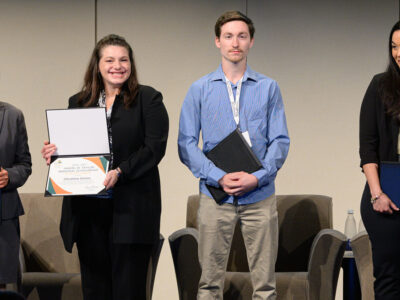
The project brings together Wang’s lab with Xinxia Peng, Professor of Computational Biology and Bioinformatics in NC State’s College of Veterinary Medicine, along with researchers at Duke University School of Medicine, pairing reproductive biology expertise with computational analysis and clinical research. Wang framed the collaboration as central to the project’s design: “This collaboration allows us to bring together different areas of expertise to address fundamental questions about reproduction. It also reflects the interdisciplinary nature of reproductive biology and the connections among animal science, biomedical research and human health.” The award follows Wang’s recent Early Career Achievement Award from the American Society of Animal Science Foundation and builds on earlier NIH-funded work in the lab.