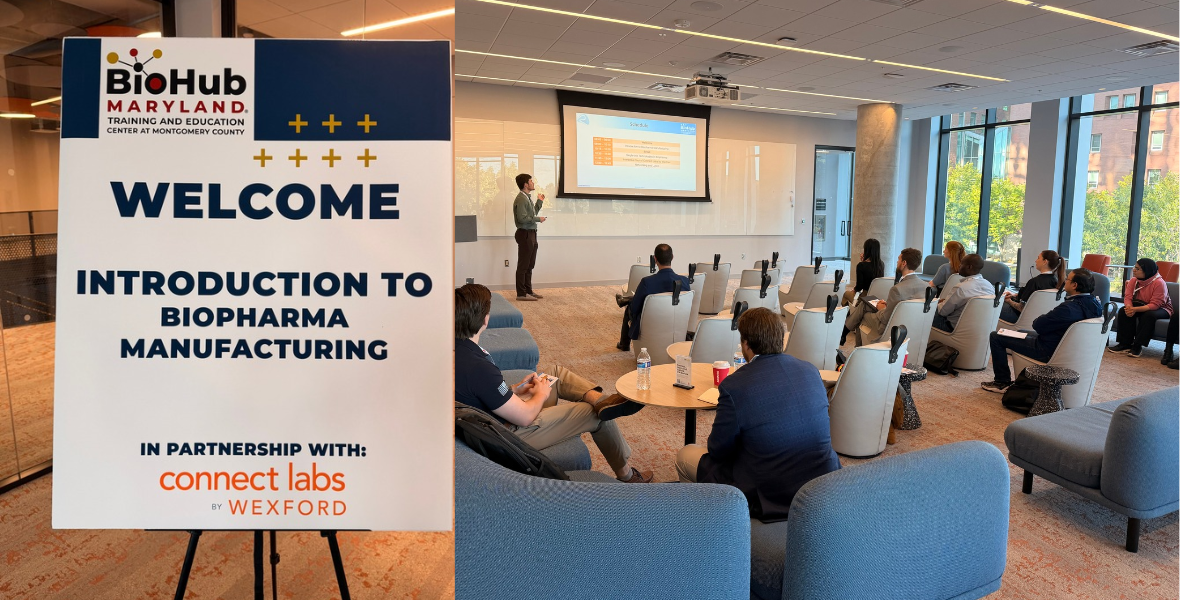
The Introduction to the Biopharmaceutical Manufacturing event hosted by BioHub Maryland, Powered by the Maryland Tech Council, that took place on October 13th, 2026, at the 4MLK Building in Baltimore, Maryland
For students interested in the life sciences, understanding what a career in the industry looks like can be difficult from the classroom alone. Meeting professionals, visiting laboratories, and learning about different career paths can effectively show how scientific knowledge translates into real-world application.
The Intro to Biopharmaceutical Manufacturing event, organized by BioHub Maryland, gave attendees an opportunity to explore the industry through professional presentations and a tour of Connect Labs by Wexford. As a BioBuzz intern, I had the opportunity to attend the event and learn more about an area of the life sciences industry that I was eager to explore further.
Event Overview
The event began with lectures by Cory Harrington, a BioProcess Training Specialist at BioHub Maryland, who discussed the science behind pharmaceutical manufacturing, including production efficiency and reliability. The presentation explored key aspects of pharmaceutical manufacturing and the considerations involved in producing medicines safely and reliably. Harrington emphasized the importance of manufacturing consistency, explaining that “variability in processes can lead to various side effects in patients.” His point illustrated that maintaining reliable manufacturing processes is about more than meeting production standards; it also helps protect patient safety.
After the presentation, attendees toured Connect Labs by Wexford to see a professional laboratory environment up close. Connect Labs by Wexford gives growing life sciences companies access to lab space, shared equipment, and other resources they need to carry out their research and develop new ideas. Walking through the facility, we saw the equipment firsthand and learned how companies use these resources to develop diagnostic tools and advance new treatments. Seeing the laboratory in person put the earlier discussions into perspective and gave a clearer sense of what working in the industry can look like. For students more familiar with laboratory work through their coursework, visiting a professional facility offers a deeper perspective on how scientific knowledge is applied outside of academia.
The program concluded with a networking lunch, where attendees could connect, learn about each other’s areas of focus, and, for those of us still beginning our careers, get advice from more experienced professionals. For example, during lunch, I spoke with a researcher whose work involves cooling plasma and exploring its potential applications in areas such as cancer treatment. The conversation introduced me to a research area I might not have otherwise encountered and showed me how varied the life sciences can be.
For students still exploring their interests, conversations like these offer a chance to ask questions, learn from others’ experiences, and discover opportunities in fields they may not have considered before.
Why Does This Matter for Students?
The life sciences industry offers many career paths, but students may not know exactly where to start. Opportunities range from laboratory research and product development to manufacturing and quality control, with each area playing a different role in bringing scientific discoveries and products to the people who need them. While coursework provides a foundation in the sciences, seeing how that knowledge is used in professional settings can help students identify where their interests might lead them.
Events like the Intro to Biopharmaceutical Manufacturing class, produced by BioHub Maryland, let students see these areas firsthand. Hearing from industry professionals offers insight into work beyond the classroom, while visiting a laboratory provides a closer look at the environments where that work takes place. Students interested in chemistry, biology, or engineering can begin to see how their studies apply to different roles across the industry, while those outside the hard sciences can explore opportunities in areas such as business, communications, and public policy that also help drive the life sciences forward.
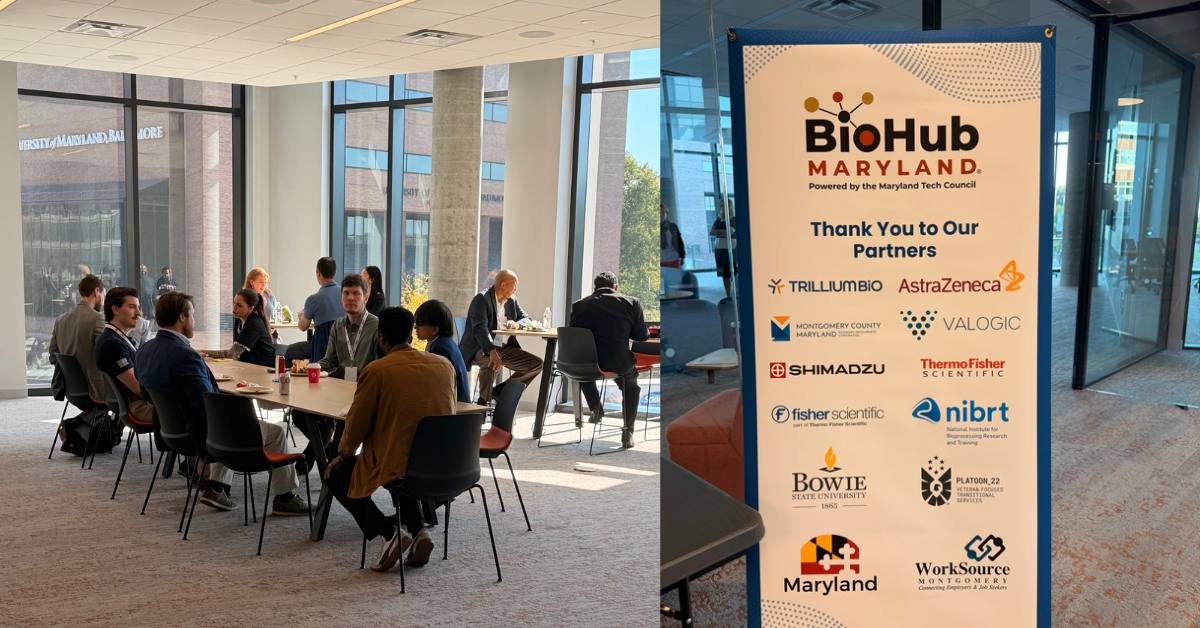
Just as importantly, BioHub Maryland events offer opportunities to learn directly from people with field experience. Asking questions and hearing about different career journeys can help students better understand the steps involved in entering the industry. During a conversation at the networking lunch, one piece of advice stood out to me: “Don’t limit yourself to engineering internships or jobs just because you’re studying engineering. The experience you gain from other opportunities can still be valuable, even if it doesn’t directly align with your major.” Advice like this can encourage students to stay open-minded, explore different paths, and consider opportunities they might not otherwise pursue.
Connecting Students with Maryland’s Life Sciences Community
For students in Maryland, events like this offer a chance to get to know the region’s life sciences community. Visiting facilities, meeting professionals, and learning about local organizations can help students discover opportunities close to home early in their career journeys.
BioBuzz helps students and early-career professionals explore these opportunities through industry news, networking events, career resources, and connections with experienced life sciences professionals. Through collaborations with associations such as the Maryland Tech Council (MTC) and initiatives like BioHub Maryland, BioBuzz helps bring students closer to the people and organizations shaping Maryland’s life sciences sector.
For students still figuring out where they fit in the field, getting involved in the local life sciences community can be a valuable starting point. Whether through attending events, learning about different areas of the industry, or speaking with professionals, there are many ways to begin exploring what a future in the life sciences might look like.