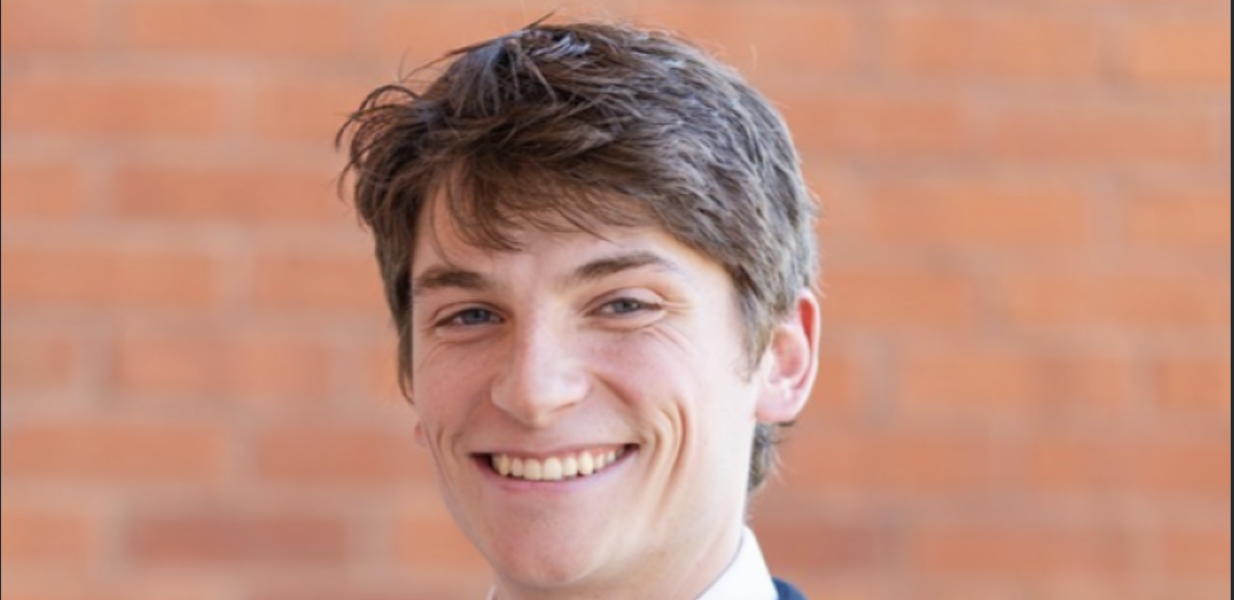
BioBuzz’s Buzzin’ Brood Student Spotlight series celebrates the future of life sciences talent — and the programs, institutions, and organizations investing in them.
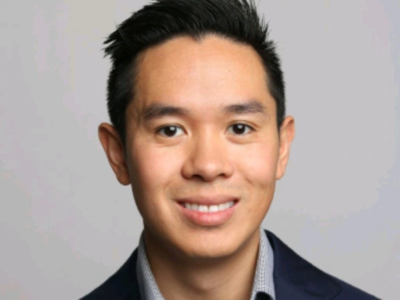
Name: Justin Gibson
Hometown: Spartanburg, South Carolina
Institution: Clemson University
Degree: PhD, Bioengineering
Class: 2027
Role: Graduate Research Assistant and Operational Laboratory Manager, Cottle Lab
Clubs/Activities: Graduate Student Body President, Clemson University Graduate Student Government
For Justin Gibson, science has always been about getting to the edge of what’s known and then asking what comes next. That curiosity led him to found the Biological Research Club at Dorman High School, and later to Clemson University, where he decided he wanted to do more than study biology. He wanted to turn it into therapies that change patients’ lives.
Now a PhD student in Bioengineering in Clemson’s Cottle Lab, Justin works full-time as a Graduate Research Assistant on ex vivo gene editing and hepatocyte transplantation across preclinical models. His research ranges from testing editing and engraftment dynamics to defining how much corrected liver tissue is needed to treat animal models of familial hypercholesterolemia. He also studies what it takes to bring these therapies to patients, including scalable manufacturing, patient impact, and economic feasibility, and serves as the lab’s Operational Laboratory Manager.
Outside the lab, Justin is this year’s Graduate Student Body President, leading Clemson’s 110-representative Graduate Student Government. After graduation, he plans to move into an industry Scientist I or Clinical Scientist role, helping move preclinical programs toward IND applications.
We sat down with Justin to learn more about his path into bioengineering, what’s exciting him right now, and where he hopes to go next.
How did you get here?
Ever since I was a kid, I’ve had a deep curiosity for the natural world. I learned early on that if you keep asking “why?” enough times, you’ll eventually hit the wall between what is known and what isn’t. That realization made biology an obvious path for me, pushing me to take the initiative and found the Biological Research Club during my time at Dorman High School. But it wasn’t until I got to Clemson that I realized the extent to which asking the right questions gives us the power to actively shape the future. It was during this time that I realized I didn’t just want to study biology; I wanted to translate those findings into technologies that could directly impact human lives.
What is currently blowing your mind right now?
What is blowing my mind right now is the sheer pace of innovation in genetic engineering and delivery mechanisms. Specifically, the Doudna lab recently published work on Viral Interference Programmable Repeats, or VIPRs, which is fascinating. Alongside that, we are seeing incredible leaps in spatiotemporal control over CRISPR editing and the very real emergence of N-of-1 precision therapies.
What excites me most about these developments is the combination of both the technical elegance and its broader implications. We are on the way to attaining such a precise level of control over biological processes that, given enough time and determination, almost anything seems possible.
If you could explain yourself right now in only emojis…
🧬🏛🌪
If I had to sum up my current day-to-day, it is a blend of science, institutional leadership, and some good-natured chaos.
The DNA (🧬) is my doctoral research, the parliamentary building (🏛) is my role as a leader and representative, and the tornado (🌪) captures the notion of balancing both. It is a whirlwind of a schedule, but learning to navigate that pressure and bridge different disciplines is exactly the kind of challenge I believe it takes to reach my aspirations.
If you could travel into the future… what does your LinkedIn headline say?
Director of Research, Cell & Gene Therapy | Translating Preclinical Platforms to the Clinic
In ten years, I want to be leading a research division in the Boston biotech hub, directing the development of next-generation cell and gene therapies. I am deeply interested in the translational space, bridging the gap between fundamental molecular biology at the benchtop and the ideas of bioprocessing economics and clinical viability.
Right now, my immediate goal post-graduation is to transition into an industry Scientist I or Clinical Scientist role where I can contribute to moving preclinical models toward IND applications. Ultimately, I want to connect with industry leaders, principal scientists, and project managers who share a pragmatic, translation-focused scientific philosophy. I am eager to learn from people who are currently navigating the commercial and clinical bottlenecks of gene therapy, so I can continue building the cross-functional leadership skills necessary to eventually direct those efforts myself.
What is your favorite quote and why?
It’s difficult to decide what my number one favorite quote is, so I’ll pick two.
“In any moment of decision, the best thing you can do is the right thing, the next best thing is the wrong thing, and the worst thing you can do is nothing.” – Theodore Roosevelt
I love this quote because it champions momentum. In both academic research and executive leadership, it’s incredibly easy to get paralyzed by the fear of making the wrong call. This is a constant reminder that taking decisive action, even if it requires course correction later, is always better than inaction.
The second quote comes from an innovator who contributes to the CURF STRIDE ART Academy right here in Clemson. He said, “Failure isn’t an option, it’s an expectation.”
This has become somewhat of a constant reminder for me. In biomedical research, if you aren’t failing, you probably aren’t pushing the boundaries hard enough. We are taught to view failure as a setback, but in optimizing gene editing therapies or managing a large student organization, failure is just data. It is an expected, necessary step in the iteration process that tells you exactly what to fix for the next round.