What the 2026 deal wave reveals about resistance, platforms, and the bottleneck nobody priced in
Gilead Sciences agreed in April to pay up to $5 billion for a German biotech with no approved product.
Novartis paid more than $1 billion for a company whose lead asset is not a drug but a toxin.
Johnson & Johnson bought a platform that does not kill cancer cells at all — it dismantles a protein inside them.
Three deals, three acquirers, one quarter. And in none of them was the primary asset a medicine.
The antibody-drug conjugate market was worth roughly $15 to $16 billion in 2025, and Evaluate projects it will reach $57 billion by 2032. Close to 1,500 ADC programs are in Phase 2 or Phase 3 trials worldwide. More than a dozen are approved. By any conventional measure, this is a modality that has arrived.
Which is precisely why the buying has changed.
The industry is no longer shopping for ADCs. It is shopping for the ability to build them — and for one capability above all others: the capability to keep building them once the first generation stops working.
The Problem Everyone Is Paying to Solve
The first generation of antibody-drug conjugates worked. That is the entire problem.
The construct is elegant. A targeting antibody. A cytotoxic payload. A chemical linker holding the two together — delivering chemotherapy to a tumor and, ideally, nowhere else. Enhertu and Padcev changed standard of care in their indications. Trastuzumab deruxtecan alone did nearly $5 billion in sales last year.
Then tumors adapt.
Patients who responded stop responding. Antigen expression drops. Payload resistance emerges. And the field arrives at an uncomfortable realization: a single toxin, delivered to a single antigen, has a ceiling — and most of the industry’s ADC pipeline is stacked underneath it, using the same narrow menu of payloads against the same short list of targets.
Every significant transaction of 2026 is an attempt to break that ceiling. Each one attacks it from a different direction, and reading them together is the closest thing the sector has to a stated strategy.
Buy better chemistry. Gilead’s acquisition of Tubulis, announced April 7, was structured at $3.15 billion upfront plus up to $1.85 billion in milestones. Gilead acquired two clinical assets in the process — but the durable purchase was Tubutecan, the company’s proprietary linker-payload technology, engineered to hold the payload in circulation and release it at the tumor. Tubulis will run as a dedicated ADC research organization inside Gilead, with Munich as the hub. It was Gilead’s third acquisition in roughly six weeks.
Buy a payload nobody else has. Nearly every ADC in development leans on the same handful of toxins: microtubule inhibitors, topoisomerase-1 inhibitors, DNA-damaging agents. Myricx Bio, which Novartis agreed to acquire in a deal reported at approximately $1.1 billion upfront, is built around an N-myristoyltransferase inhibitor payload — a mechanism that is not on the menu. Novartis did not buy a target. It bought a new way to kill a cell.
Buy the modality after this one. Johnson & Johnson’s acquisition of Firefly Bio brings in degrader-antibody conjugates — antibodies that deliver a protein degrader rather than a poison, destroying an intracellular target instead of poisoning the cell. It is a bet that the conjugate concept outlives the cytotoxin.
Buy the format, then point it somewhere new. UCB’s $2.2 billion acquisition of Candid Therapeutics took a bispecific T-cell engager and aimed it away from cancer entirely — at autoimmune disease, where the aim is to eliminate malfunctioning B cells and drive conditions into remission.
Four deals. Four different answers. One shared logic: acquire the capability, not the compound.
It is the same logic that produced Pfizer’s $43 billion purchase of Seagen in 2023 and AbbVie’s $10.1 billion acquisition of ImmunoGen the year after. Both delivered marketed drugs. Both were really about conjugation chemistry.
The Trade, in Miniature
The pattern holds all the way down the market — including at the earliest stage, where the price tags are two orders of magnitude smaller and the logic is identical.
In April, Eli Lilly agreed to acquire CrossBridge Bio, a Houston company founded in 2023 out of UTHealth Houston, for up to $300 million in total consideration. Its lead program, CBB-120, targets TROP2 — one of the most crowded antigens in oncology.
The antigen was never the point.
CBB-120 carries two payloads: a topoisomerase-1 inhibitor and an ATR inhibitor, conjugated to the same antibody. Two mechanistically distinct attacks, delivered together, designed to close the escape routes a tumor uses to survive a single-payload ADC.
A dual-payload answer to resistance — the same trade Gilead, Novartis, and J&J were each making, in their own currencies, inside the same eight weeks.
CrossBridge had not filed an IND.
(The company’s seed round included participation from Linden Lake Labs, a Rockville-based venture studio whose partners worked inside the business. BioBuzz covered that transaction in April: Maryland-Based Life Sciences Firm Scores Early Exit as Eli Lilly and Company Acquires CrossBridge Bio for Up to $300M.)
An unapproved dual-payload construct, from a company with no clinical data, sold for real money. Not because of what it had proven — but because of what it could do that the previous generation could not.
The Bottleneck Nobody Priced In
Here is where the deal logic runs into a wall.
Every transaction above eventually resolves into the same question, and it is not a scientific one.
Who is going to make this?
Conjugating a potent cytotoxin to an antibody at commercial grade is substantially harder than manufacturing a conventional monoclonal antibody. It demands specialized containment and high-potency handling. It carries an analytical burden — drug-to-antibody ratio distribution, aggregation, payload stability, linker integrity — with no equivalent in standard biologics. Bispecific and dual-payload constructs make all of it harder. Site-specific conjugation harder still.
And there are not many facilities in the United States that can do it.
North America accounted for an estimated 42 to 45 percent of the global ADC contract manufacturing market in 2025. Industry executives now describe domestic conjugation capacity as a genuinely scarce resource — at precisely the moment that on-shoring pressure is driving demand for it sharply upward.
The science has outrun the factory floor.
“The science behind ADC conjugation has advanced significantly. Today, one of the biggest challenges is achieving consistent, scalable manufacturing under GMP conditions,” shared Yuk Chiu, Co-Founder & COO, Xcellon Biologics.“What works well at small scale doesn’t always translate directly to commercial production, especially with more complex constructs such as dual-payload ADCs. Success depends not only on process design but also on having the right manufacturing expertise and infrastructure.”
That gap is the most underpriced fact in the sector. Pharma has spent the year buying platforms on the assumption that the capacity to run them will be there. For the large acquirers, it largely will — Gilead is buying Tubulis’s manufacturing along with its chemistry. For everyone else, it is an open question.
Which is why the most consequential ADC activity in the Mid-Atlantic this year may not be a molecule at all.
The Regional Answer
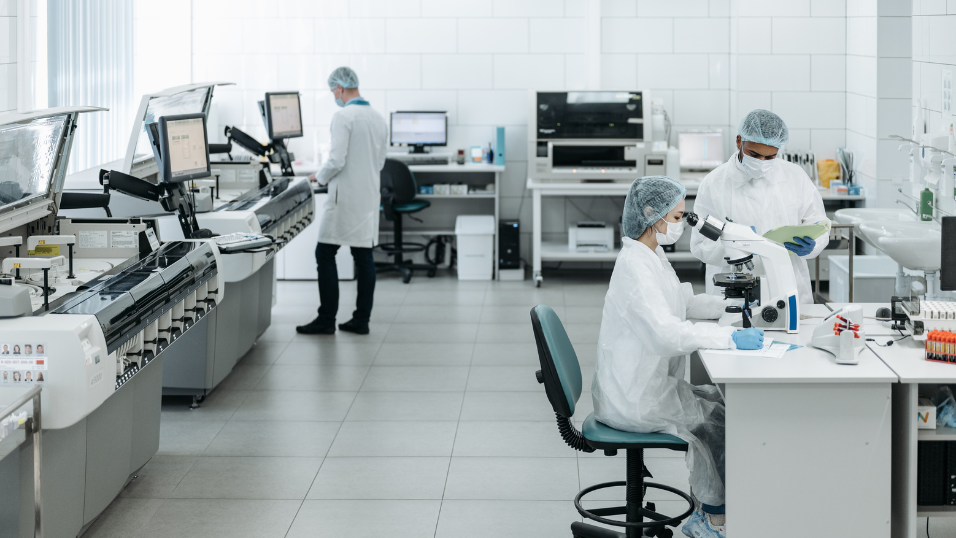
In Rockville, a contract research, development and manufacturing organization (CRDMO) is being built around exactly the modalities the deal wave is chasing.
Xcellon Biologics is a CRDMO focused on complex biologics — antibody-drug conjugates, bioconjugates, bispecific antibodies, and T-cell engagers. It runs more than 7,000 square feet of lab space in Montgomery County, minutes from FDA, NIH, and USP. GMP manufacturing is scheduled to come online in late 2026 or early Q1 2027, supported in part by a TEDCO Equitech Growth Fund infrastructure grant. It is backed by Linden Lake Labs.
Its bench is the field’s own pedigree, reassembled: career histories running through Lonza, Abzena, Amgen, MedImmune, AstraZeneca, BioNTech, Seattle Genetics, and Immunomedics. Co-founder and COO Yuk Chun Chiu is joined by senior advisors Morris Rosenberg, PhD and Sanjeevani Ghone, PhD, MBA. Collectively the organization reports more than 40 years of bioconjugate experience, 20-plus INDs filed, and eight products launched.
In June it launched XSpec™, an online configurator that asks a developer to specify a bioconjugation program before development begins — conjugation chemistry, linker architecture, payload class, target drug-to-antibody ratio, batch scale, analytical package.
Among the options it asks users to select: dual-payload and bioorthogonal strategies.
The chemistry Lilly just paid up to $300 million to acquire is a configurable field in a Rockville CDMO’s intake form. That is not a coincidence. It is what the market looks like when the science becomes standard and the capacity to execute it does not.
What Happens Next
The easy read on 2026 is that antibody-drug conjugates got expensive.
The more useful read is that pharma has stopped paying for molecules and started paying for the means of production — linker chemistry, payload classes, conjugation platforms, and the increasingly rare technical capacity to turn any of it into a dosable drug.
That shift has a consequence the deal headlines do not capture.
If the constraint is no longer discovery but capacity, then the regions that win the next decade of oncology will not be the ones that originate the most companies. Companies get acquired, and they leave.
They will be the ones that can create the expertise and infrastructure to make what the rest of the industry invents — and that comes down to a supply of people who can run a site-specific conjugation, characterize a DAR distribution, and handle a cytotoxic payload under GMP.
“Manufacturing capability is about much more than facility space. It requires experienced scientists and operators who understand conjugation chemistry, process control, analytical characterization, and handling highly potent compounds under GMP,” shared Chiu. “That expertise takes years to develop, and it remains one of the industry’s most important constraints.”
Those people are scarce. Nationally scarce.
Every billion-dollar platform acquisition of 2026 was, at bottom, a bet that someone, somewhere, will be able to staff the room where the molecule actually gets made.
Nobody has priced that bet yet.