As AI undoubtedly seeps into every aspect of our lives, hiring processes and career exploration is one of the most impacted sectors, what does it take to stand out in biotech & life science recruiting?
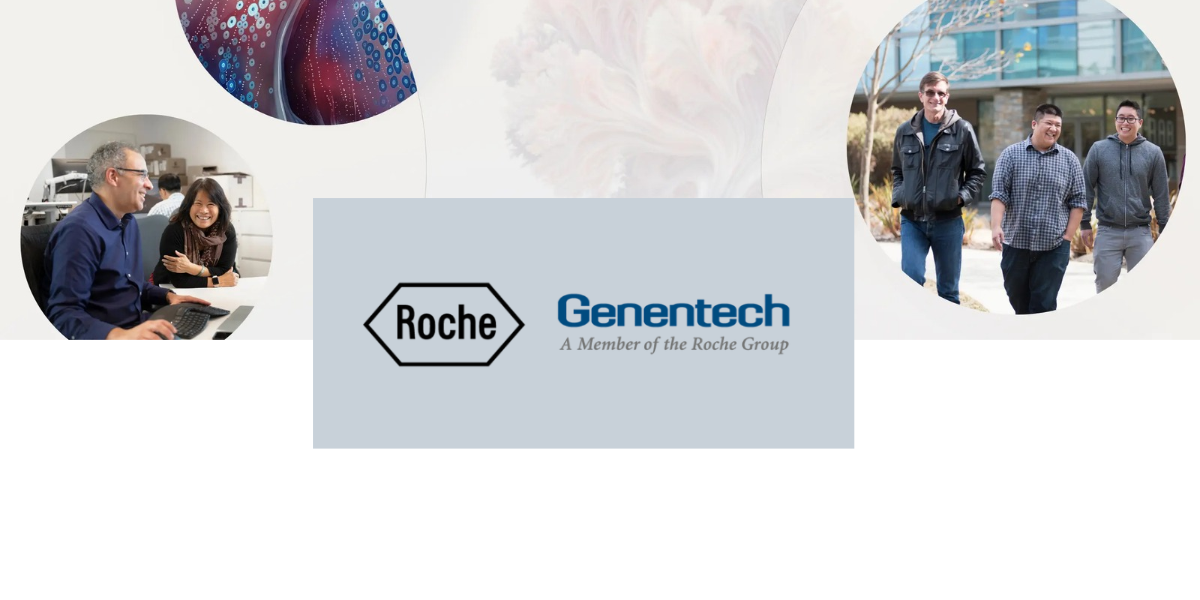
With most major companies switching their hiring process to be AI automated—from resume scanners to online AI interviews—it can be difficult to break into the daunting world of biotech. For students interested in breaking into life sciences and biotech, breaking through the ‘AI wall’ is a challenge, especially when scanners specifically look for relevant experience. I joined a day-long virtual career exploration event hosted by Roche/Genentech where managers and recruiters share their perspective about early career hiring.
Here are some key takeaways:
I. A Resume May Get Your Foot in the Door, But Experience Tells the Story
Having a perfectly tailored resume is becoming easier and easier with AI tools that can take a job description and edit an application/resume accordingly. However, having the perfect resume does not make someone the perfect candidate. During the event, Shannon Noonan—Principle Staffing Consultant and Talent Acquisition & Strategy @ Genentech—and Jennifer Moore—Senior Principle Technical Manager @ Genentech—discussed their perspectives about the modern day hiring process. They emphasized that recruiters look for experiences and relevant work that is specific to their project, not just the most impressive resume or most experiences. So, rejection doesn’t mean a candidate isn’t “good enough,” it just means the hiring manager is looking for skills that apply to their specific projects. Instead of submitting the same resume to every position, taking the time to understand what the role entails and tailoring your resume accordingly can be extremely beneficial. However, if a manager is hiring for a biotech marketing position, those with technical skills or lab experience will not be best suited for the role. Another point that they emphasized was being able to effectively communicate every role on your resume.
II. Interviews Aren’t Performances; They Should be Interactive Conversations
Preparing for an interview can often feel like memorizing a script for every possible question. But, interviews shouldn’t feel rehearsed, according to Genentech hiring managers. In the age of AI, interviews are the opportunity to showcase personality, lived experiences, and unique perspectives. The interview isn’t just to talk about your skills and brag about your experience, it should be the time to create a real connection with the interviewer—this is what makes an interviewer stand out from the other candidates. While a candidate may be perfect on paper, an ability to effectively communicate authentically will be more impressive to recruiters. Another point that they emphasized was to not take rejection personally. Even the most impressive candidates will face rejection because they lack specific skills or experience for a particular project.
In order to increase your chances, research the role thoroughly, including responsibilities, managers, department, etc. Then, understand how your resume and experiences can fit the job description, even if it’s a long shot. An impressive interviewee can apply their experiences to a variety of jobs and roles and should be able to effectively communicate how they can apply their skills and knowledge to the role.
A key takeaway: don’t sound like a robot. Be yourself and showcase the best version of yourself. Convince the recruiter why you are qualified for the position.
III. AI Literacy is Important, But Don’t Lose the Human Skills
With Artificial Intelligence proliferating in all aspects of life, how much should students and early career professionals be expected to know and understand when it comes to utilizing AI? Is AI optimization something that is expected no matter the role? Jenn from Genentech says knowing “how to augment and use AI so that we can understand large amounts of data or optimize/simplify every day tasks” is an important skill to have. However, “you need to understand what to do with that information.” What does that mean?
AI may be able to automate everyday tasks, but it cannot replace soft skills like communication, empathy, leadership, and collaboration, which are all essential skills in any role. Additionally, humans still need to be able to recognize mistakes, interpret results, and apply them to real life situations.
Working in an industry that has real effects on population health, innovation, and medicine, professionals need to have human understanding and experience.
Ultimately, anyone can break into biotech and life sciences because of the vast opportunities there are, from marketing, regulatory affairs to clinical and wet lab research. You don’t need every qualification to be a good fit. Being able to position yourself as a good fit for the role is a great way to stand out. Those who are interested in learning more or who are ready to take the plunge, visit Roche Careers or Genentech Internships. There are incredible opportunities in many other companies looking to grow, reach different markets, or regions.
Ready to Take the Next Step? Find Your Internship on BioBuzz
If you’re looking for internships, fellowships or early career roles beyond Roche and Genentech, the BioBuzz Job Board has you covered. Filter by Employment type (Internship or Fellowship) and Experience level (Entry Level), and you’ll find nearly 300 open roles for students and recent graduates. These include opportunities at companies like AstraZeneca, Amgen, Bristol Myers Squibb, Merck, Sanofi and Medtronic, as well as the 2027 NIH Summer Internship Program (SIP) . The roles go well beyond the lab, from discovery research and data science to medical affairs, drug safety, engineering and even AI. You can narrow your search further by Location, Functional area and Workplace (on-site, remote or hybrid). Many summer 2027 positions are already posted, so start exploring early and check back often as new roles are added.