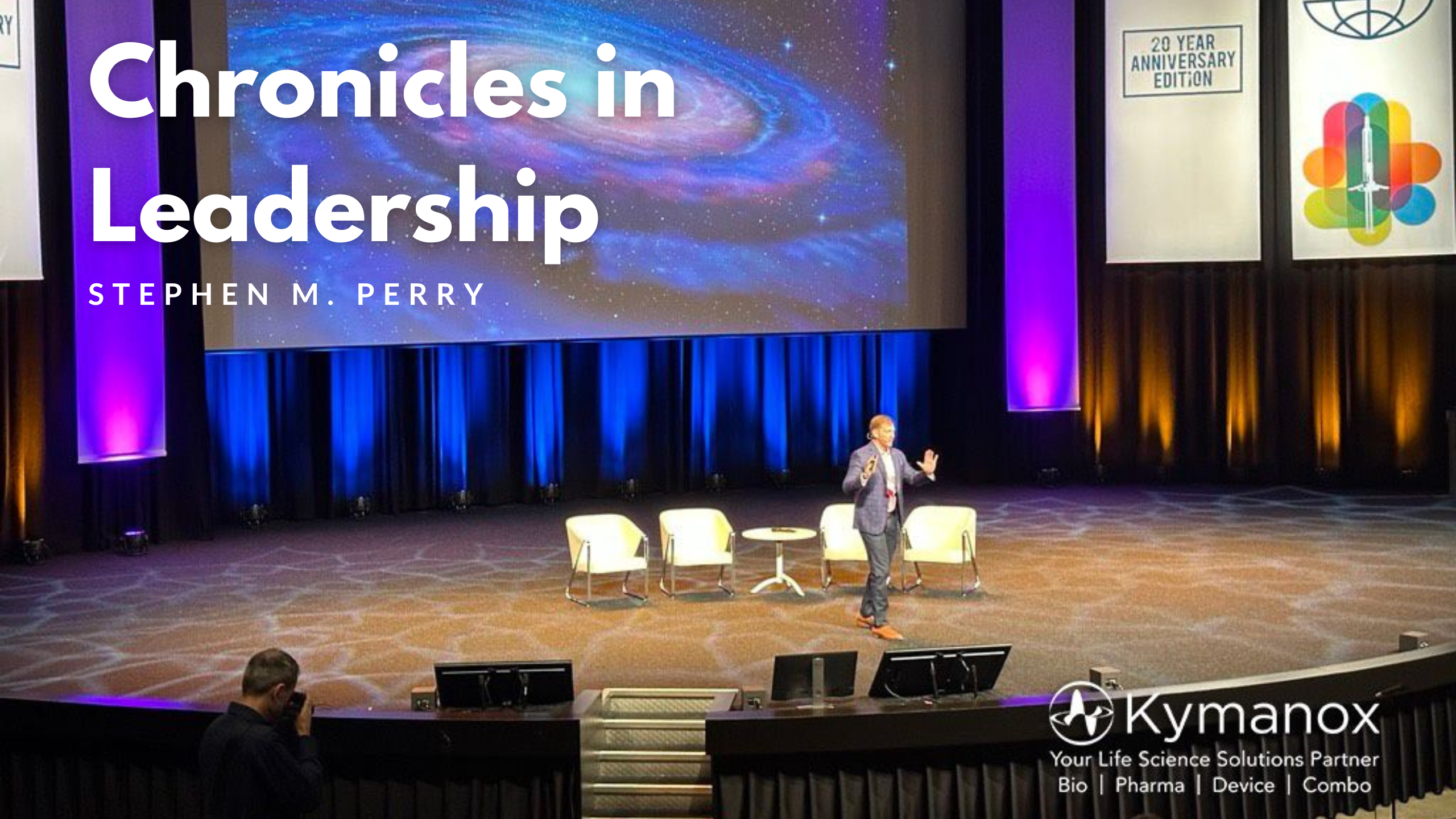
Chronicles in Leadership: Stephen M. Perry, CEO of Kymanox
Kymanox CEO and Founder, Stephen M. Perry, has built a leading global life sciences services company through a philosophy of leadership that emphasizes personal growth.
| This article is part of our Chronicles in Leadership series, our newest People & Places Feature. Learn from the ups, downs, and all arounds of some of the most accomplished and innovative life science leaders in the region… and beyond. |
Facing the unknown with a racing heart and taking that leap of faith is what it feels like to step up from being a manager to becoming a leader. It’s more than swapping out your title—it’s about evolving.
Leadership isn’t simply handed over from one person to another; it requires continuous internal growth and adaptation, which is certainly the case for Stephen M. Perry, CEO and Founder of Kymanox. He evolved his leadership style in tune with personal development and industry changes over the course of his career.
BioBuzz sat down with Perry to discuss his leadership journey–exploring topics such as how empathy can be used to generate trust and influence, managing wellness effectively, adopting lifestyle changes for improved leadership skills, and leading a global team through hyper-growth.
Kymanox: Delivering Ideal Knowledge Transfer
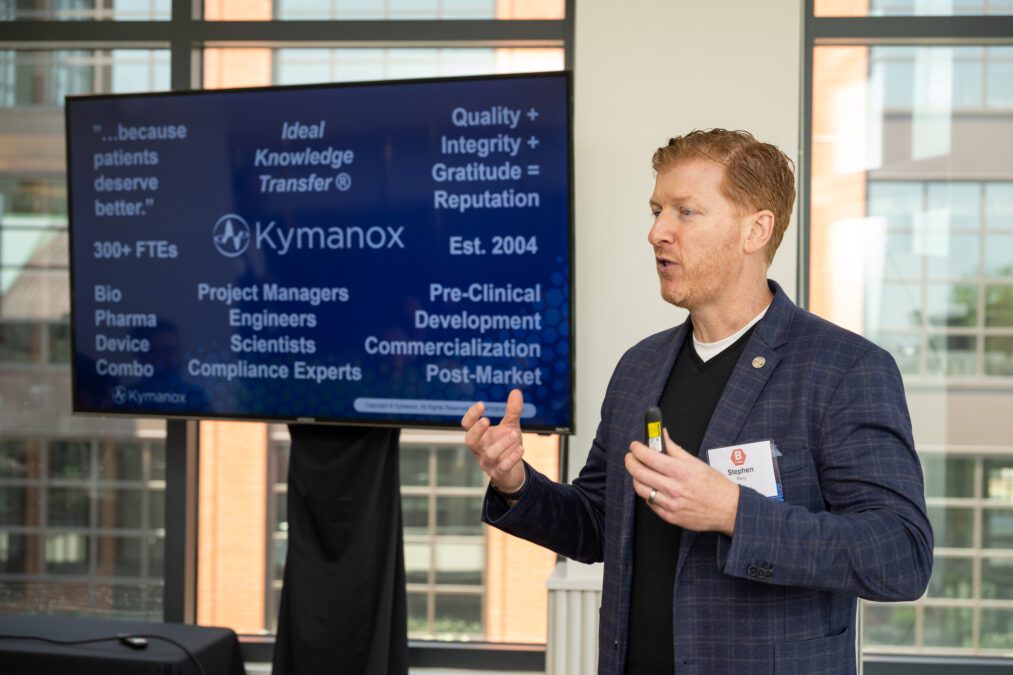
Perry founded Kymanox in 2004 to advance a groundbreaking concept – to provide a comprehensive and continuous solution for modern biotech and medtech product development and commercialization all in one place. Unlike most professional service firms that specialize in only one phase or sector, Kymanox built a firm that possesses the expertise to guide innovators through every stage of scientific and engineering development, regulatory review and approval, and post-market support.
The name Kymanox – which means Ideal Knowledge Transfer™ – originated from this early concept that Perry envisioned.
Over the nearly two decades since its founding, Perry has grown a diversified and global professional services company focused on the Pharmaceutical, Biotechnology, Medical Device, and Combination Product industries. Perry now leads a team of 300 employees worldwide who are involved in developing and commercializing some of the most innovative and complex products for leading life science companies.
Their success includes supporting the FDA and EMA approvals for multiple first-in-class products. The team supports projects in the fastest-growing industry markets, such as cell and gene therapy, combination products, and next generation biologics to treat obesity.
This team that Perry has built includes renowned industry experts in almost every category that can be found under the roof of a strong mid-size to large biotech company – this is the secret weapon that truly differentiates Kymanox from other professional service providers. Their 360 degrees of expertise and their track record has earned Kymanox a reputation as the “Speed,” “Save-the-Program”, and “Cost Savings” experts in the market.
As a business leader, Perry has successfully attracted growth capital from WestView Capital Partners and has expanded the unique Kymanox platform with the acquisition of four different companies; including Philadelphia-based NEUMA, Germany-based Anteris Medical, Switzerland-based Anteris Helvetia, and Cincinnati-based Agilis Consulting Group.
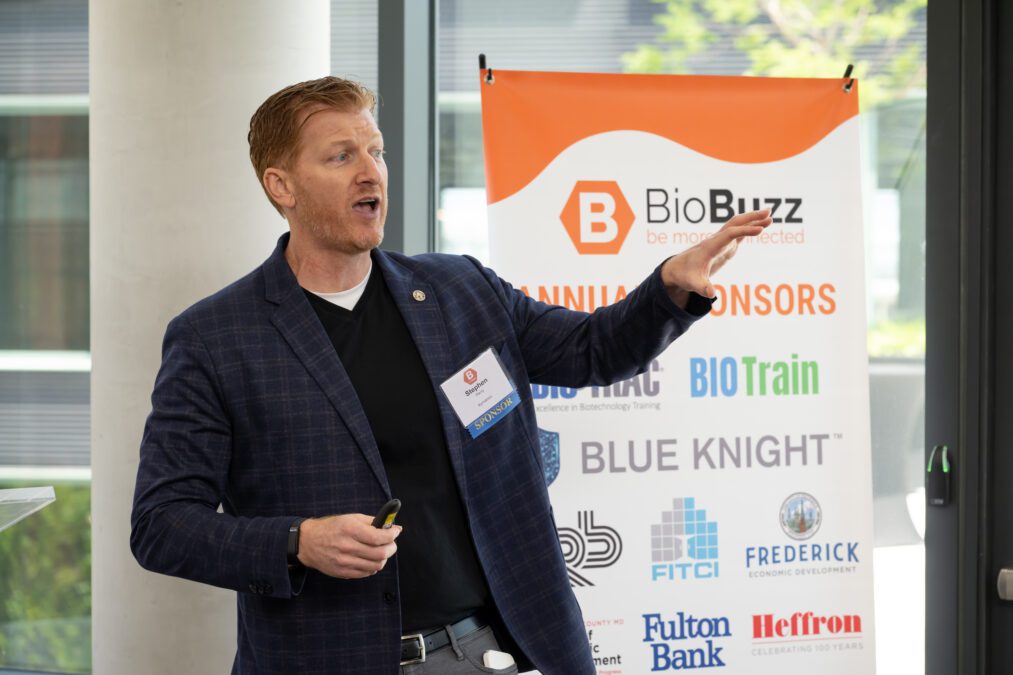
Stephen is a regular keynote presenter on both industry and leadership topics, and Kymanox has been repeatedly recognized as one of the top private life science companies in the world-renowned Research Triangle Park (RTP) hub located in North Carolina USA.
Evolution from Project Manager to CEO
Leadership journeys are different for every person; with diverse experiences, unexpected twists, and vital lessons, the journey makes us who we are and informs the way we lead. This evolution rings true for Perry, who began his career as a chemical and bioprocess engineer, then found his way into project management before becoming the founder and CEO of Kymanox. His journey was not about a title change but about the ‘ideal knowledge transfer’ that happened through his growth in leadership styles.
“I think project management is really the easiest and best way for sharpening your tools for leadership and getting into management in general,” Perry shared. “I wouldn’t be the leader I am today if I hadn’t gotten an opportunity to lead various biotech programs as a technical project manager. By having to both lead technically and manage a project team that does not report to you functionally in the organization, you must learn very quickly to get things done using mostly influence and communication, or else you will fail at this juncture.” Perry was successful and parlayed that success into starting Kymanox.
The Role of Empathy in Leadership
Perry strongly believes that empathy plays a pivotal role in effective leadership. When an environment is fostered where everyone feels heard and understood, people are more willing to give their best effort at work. A leader should be able to put themselves into other people’s shoes – this understanding builds trust within the team, which then boosts productivity and performance.
Perry argues that it’s more than understanding your team members’ perspectives, it is also valuing their emotions and experiences and finding common ground, or a “base commonality,” as he puts it.
“You might be in a position where you have twenty people contributing on a large program where you, as the project manager, are responsible for their execution,” Perry observed. “If you can’t find commonalities with the people on the team, and what I call ‘the base commonality,’ you really can’t speak to them in a way that will make them listen – both to you and to each other. So, I would always make it a point to find some common interests that were outside of the project.” For example, Perry’s love for the outdoors was a theme that connected him to his team on a personal level, providing fodder for non-work conversation and team building experiences in nature.
Understanding Workplace Motivation Factors
In addition to empathy and commonality, Perry emphasizes the need to understand what motivates employees at work. Recognizing these drivers can significantly enhance both productivity and satisfaction among team members – as well as improve retention.
Each person has unique motivators ranging from monetary incentives, to career progression, to opportunities for personal growth, to recognition by peers and management. By identifying these factors, leaders can create strategies tailored to individual needs, with the net result of enhancing overall workforce engagement.
The insights Perry shared into his professional journey show how staying in tune with employees’ motivational triggers can contribute to development as a leader – in his case, from managing projects all the way to steering an entire organization as a CEO.
Personal Growth as a Key Component of Leadership
Perry strongly believes in personal growth as the foundation for continuous personal and professional improvement and effective leadership. He believes that having the capacity to learn and adjust is critical for people in charge who want to succeed in today’s rapidly evolving biotech field.
This belief doesn’t stem from ego or self-importance but rather from understanding that being at one’s best allows that person to give more and help others to be their best too. In essence, it’s like securing your oxygen mask before helping others with their mask during an airplane emergency – we can only offer optimal assistance when our own critical needs are met first.
“I would love for this interview to kind of pull back the curtain a little bit and look at how the top executives in life sciences actually behave. Many of them have very intense personal wellness routines. They’ve also defined clear boundaries that are well-policed, and those boundaries are to protect their mind, their body, and their soul.”
To highlight his commitment towards this principle, Perry makes learning, wellness, and self-improvement a priority – a message he is eager to share with other leaders and people around him.
The Mind, Body, and Spirit of Leadership
Whole-person wellness is an important part of Perry’s leadership philosophy – it’s the foundation that he talks about often. He wants to elevate wellness in the larger dialogue around business leadership and success. Employees are not just workers, they are people who have lives that far extend beyond the context of work.
This philosophy was such an important part of our discussion that we captured Perry’s message in its entirety:
“The foundation of wellness and health – the mind, body, and spirit – is sleep. You have to be able to sleep. If you can’t sleep, you can’t really do anything else. So, if you don’t know where to start, start by sleeping. The foundation of my excellence is sleep. I know that may sound boring, but it is fundamentally true, and we’re starting to get some amazing science coming out that shows that sleep can have an impact in improving just about anything.”
Beyond the foundation of good sleep, Perry emphasized two other critical factors that make up the trinity of proper wellness: movement and nutrition.
“You have to have movement. And I think the important part is the intentionality of the movement. Going outside to take a 20-minute walk on a nature path, that’s intentional movement. It serves your mind, and also, I would argue, serves your soul quite well. Also, if you don’t move much, ironically, you will not sleep well. So, the more you move, the better you will sleep.”
“The third part of the foundation is you are what you eat. You’ve got to be eating nutritious whole foods, and those should be mostly foods where you can pronounce all the ingredients, and ideally they’re things that you’re plucking from your garden. That should be a big part of your diet. And, of course, I think we humans are omnivores. I think a balanced diet is always the best diet.”
“A lot of leaders don’t talk about sleep – they don’t talk about movement, and they don’t talk about nutrition, but that’s absolutely where you start. And, if you have those things, now you have the makings of a great future leader. Without these three foundational items, I would say there’s quite a bit of liability with that for people investing in such a leader.”
Editing and Filtering for Productivity
What feeds the body and brain is important, and it is also important to know what to filter out.
Perry views self-doubt differently than most people might expect. Instead of seeing it as something negative or detrimental, he perceives it as a superpower when managed effectively. Simply put, Perry views self-doubt as a springboard for personal growth. It pushes him to constantly check his skills and knowledge, creating a setting ripe for ongoing learning. This outlook has been crucial in helping Perry tackle the hurdles of leadership. Checking himself and his habits is an important bridge between the physical and mental aspects of what makes a leader tick.
It was through embracing these personal checkpoints that Perry made a conscious decision to experiment quitting alcohol and caffeine entirely – an uncommon move amongst high-powered executives where coffee-fueled days (and sometimes nights) are more than typical, and professional networking often means knocking back a drink or two per social norms.
Although personal in nature, these changes had broader implications. Perry said that cutting out these substances led to clearer thinking, more even and balanced energy, improved health benefits, and, which ultimately impacted how he leads Kymanox. Enhanced focus allowed him greater clarity when formulating strategic plans or dealing with complex business challenges – demonstrating how personal habits shape leadership effectiveness. Studies have shown that such lifestyle changes can have profound effects on productivity and cognitive function, further strengthening Perry’s position as a forward-thinking leader.
As a leader at Kymanox, Perry’s unique approach — be it carving out free time for nature and rest in his schedule, or a relentless focus on wellness — is notable.
The Impact of Leadership on Company Growth
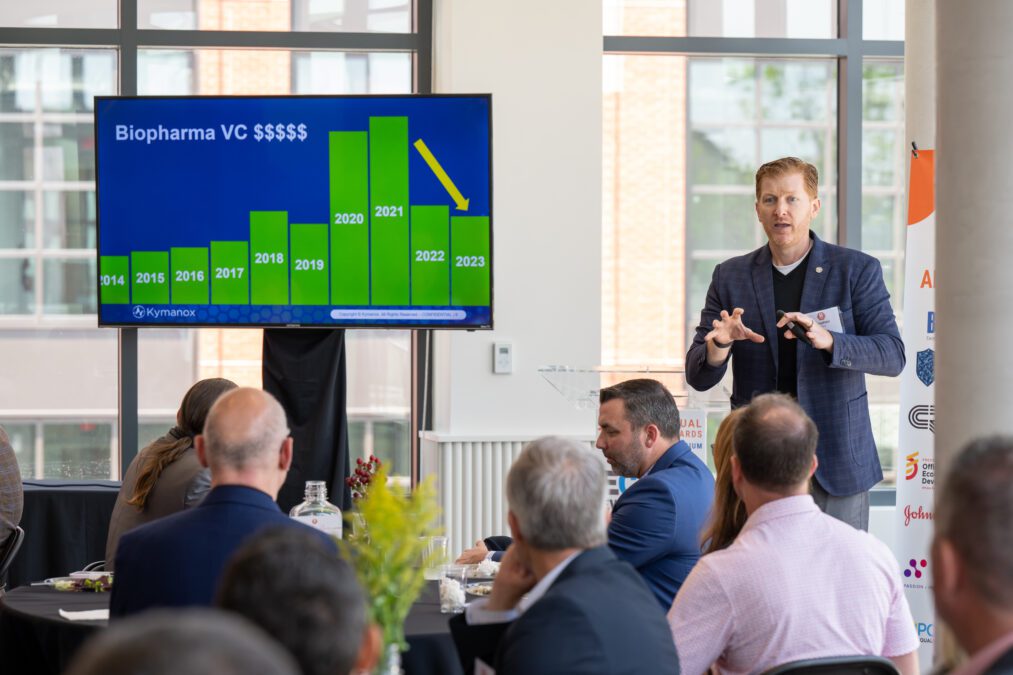
Perry’s leadership evolution has shaped Kymanox in remarkable ways and has been instrumental in driving the company’s growth, particularly when it comes to guiding a rapidly expanding global team in a dynamic market.
Perry recalls that the summer of 2017 was a pivotal time in Kymanox’s history, when hyper-growth was beginning to kick off for the company. Leadership is even more critical during periods of rapid expansion, where every decision can have profound implications for the future direction of an organization. He recalled that during this period his shifted focus to his personal growth and adopting a more empathetic approach with employees, which became key factors for success.
“I had the realization that leadership really means building the best version of yourself, which means you have to give time and energy to yourself,” Perry reflected.
This shift in leadership style wasn’t an overnight transformation, but part of his leadership evolution that focused more on people than processes alone – a big epiphany for a seasoned project manager. He realized that not only did focusing on people increase productivity, but also fostered satisfaction among employees. This change helped to create a positive work environment that was ripe for innovation and creativity.
Some examples of people-first changes have included upgrading the global headquarters while still allowing everyone to work remotely, making sure healthy snacks are always available in the breakroom, providing people flexible time off (i.e., unlimited paid time off) so people can integrate their meaningful work into their meaningful lives, and more support systems and personnel inside the organization to make people’s jobs more fulfilling.
Engineering White Space on Your Calendar
Perry consciously engineers a large amount of ‘white space’ on his calendar, up to 50% for some given weeks. These spaces don’t mean that he’s not working; rather, these white spaces allow him time for strategic thinking and planning – critical elements that are overlooked in the hustle-bustle of everyday corporate life. Also, this ample white space provides time to react to both good and bad surprises – while keeping everything that was previously scheduled 100% on track and without compromising the essentials of sleep, movement, or nutrition.
In addition to key mental health benefits, intentional white space enables him to step back from daily operations and consider bigger picture strategies that can drive long-term growth at Kymanox. By dedicating regular blocks of uninterrupted time for deep thought, Perry ensures that key decisions are informed by thorough analysis and reflection, instead of rushed judgments.
Leading a Global Team
Perry didn’t stop at motivating his local workforce; he expanded his influence across borders to lead 300 professionals globally with grace and acumen, while still emphasizing personal development as central to professional achievement.
Facing challenges unique to multinational organizations, such as cultural diversity, language barriers, additional time zones, and different working styles, Perry deftly navigated through them all by adopting inclusive strategies and fostering open communication channels.
His belief in investing time for strategic thinking and planning was instrumental. Perry prioritized understanding and communication over tasks tied to outdated goals – an uncommon but highly effective strategy that allowed him to steer Kymanox through the tumultuous waters of rapid expansion without losing sight of the company’s long-term vision.
Perry’s leadership style is bold yet compassionate; understanding yet challenging – much like a seasoned captain steering his ship through turbulent seas with clear and confident commands to the crew. He believes strongly in personal growth and wellness as a foundation for career success, and which is evident from his approach to leading Kymanox.
Leadership is an ongoing process, not a single, ultimate goal. Perry’s path from engineer to project manager to the Founder and CEO of Kymanox exemplifies this journey.