For much of modern drug development, the question hasn’t just been can we target the biology—it’s been can we prove it early enough to matter.
That tension is becoming increasingly visible as therapies grow more precise and biology more complex. At this year’s AAPS National Biotechnology Conference, that challenge is moving to the forefront, with growing attention on how biomarkers, translational science, and early clinical strategy intersect.
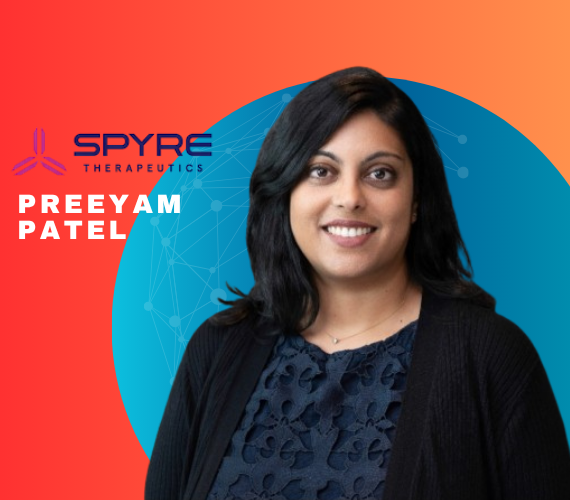
For Preeyam Patel, Director of Translational Sciences at Spyre Therapeutics, Inc., that question sits at the center of her work—and her session.
What emerges from her perspective is not just a technical problem, but a broader industry signal: the rules for how we validate drugs are evolving, and the systems supporting that validation are still catching up.
1. You’ve built your career at the intersection of discovery and translation. How do you think about that bridge today?
Preeyam Patel: I started out doing early discovery work in immunology—looking at how the immune system becomes dysregulated in disease. Over time, I became really interested in the gap between what we think will work and what actually works in humans.
Translational science really sits in that space. It’s about understanding how biology behaves in real systems and using that to make better decisions about which drugs to move forward.
I’ve worked across both wet lab biology and computational modeling, and I think that combination is important. It helps bridge what we can model with what we actually see in biology.
2. Your talk at AAPS focuses on a particularly difficult problem in early development. What’s the core challenge you’re addressing?
Preeyam Patel: A lot of times in disease, a protein or molecule is elevated—that’s what makes it an attractive target. But when you start in phase one clinical trials, you’re working in healthy volunteers, where that biology often isn’t present.
So you end up in this situation where the thing you want to measure—the thing you’re targeting—isn’t easily detectable. That makes it difficult to show that your drug is actually engaging the target.
“It makes for a very difficult conundrum of how do you start, right? Like how do you convince a regulator… that it is important to go after and how do you actually target it to show that your molecule is engaging it?”
That’s really what I’m focusing on—how we can use biomarkers across early and later trials to make better decisions, even when the biology isn’t obvious at the start.
3. Biomarkers are becoming more central—but also more complex. Where is the industry struggling?
Preeyam Patel: Biomarkers can be incredibly variable. They can be based on proteomics, cell assays, different analytical methods—and they don’t behave the same way across individuals.
That variability makes it hard to define what “good” looks like. How do you qualify an assay? How do you validate something that changes significantly from person to person?
With pharmacokinetics, you’re looking for a drug in the blood—it’s very clear what you should be measuring. But with biomarkers, we don’t always have that same level of standardization.
I think one of the bigger conversations happening now is around how we create more consistent frameworks for biomarker validation—especially as these tools become more important in decision-making.
4. You’ve spent much of your career in the Maryland biotech ecosystem. How has that environment shaped your work?
Preeyam Patel: I started my biotech career in Maryland in 2020, which was a challenging time. There were supply shortages, and I was working in an incubator where we had to share resources just to keep experiments going.
That experience really shaped how I think about collaboration. The Maryland ecosystem is very connected—people are willing to help each other, and there’s a strong sense of community.
You also see a lot of growth. New lab spaces, new companies—it’s expanding quickly, and that’s exciting for both science and the local economy.
At the same time, there’s a real focus on keeping talent local and supporting early-career scientists, which is something I care deeply about through mentoring and community involvement.
5. For those attending—or following along from afar—what makes AAPS a meaningful moment for the industry?
Preeyam Patel: What’s exciting about AAPS is the opportunity to hear how different groups are thinking about similar problems.
In my session alone, people are asking questions like: how do we move forward with difficult targets? How do we validate diagnostics? How do we handle safety challenges in early development?
It’s less about having all the answers and more about sharing approaches and learning from each other.
For those not attending, I’d say follow along with what’s being shared—especially around biomarkers and new technologies. That’s where a lot of the conversation is heading.
Why This Conversation Matters
What Patel surfaces isn’t just a technical hurdle—it’s a structural one.
As therapies become more targeted and biology more nuanced, the traditional playbook for early validation is being tested. Biomarkers, once a supporting tool, are becoming central to decision-making—yet the standards and systems around them remain inconsistent.
That’s exactly where organizations like the American Association of Pharmaceutical Scientists play a critical role.
By convening researchers, clinicians, and translational scientists at moments like the National Biotechnology Conference, AAPS is serving as a neutral forum—surfacing shared challenges and bringing together credible science from multiple viewpoints to help the field work through them together.
Because increasingly, the future of drug development won’t just depend on better science. It will depend on how quickly—and how confidently, through credible research—we can prove it works.