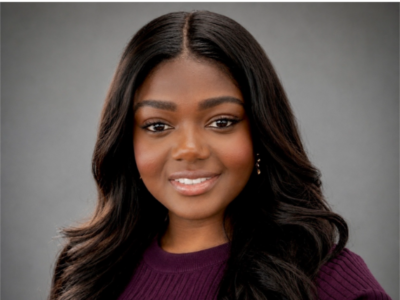
A candid conversation with Tom Spitznagel on team culture, regulatory muscle, and why flexibility is an important part of their biomanufacturing strategy for successful projects.
MacroGenics has long been a leader in antibody development, but today, it’s gaining fresh recognition as a go-to CDMO partner. With a 25-year track record, a purpose-built single-use facility, and a team that’s scaled dozens of molecules from the lab bench to the clinic, MacroGenics brings a uniquely collaborative and experienced perspective to contract development and manufacturing.
To understand what makes the company different—and why so many biotechs in Maryland and beyond are turning to MacroGenics for CMC and GMP support—we sat down with Tom Spitznagel, Senior Vice President of Technical Operations. From regulatory readiness to AI predictions, Tom walked us through the mindset, infrastructure, and partnerships that have helped MacroGenics evolve into the CDMO next door.
Q: Tell us about your role and how long you’ve been at MacroGenics.
A: I’m the Senior Vice President of Technical Operations, which means I oversee our internal manufacturing, our biopharmaceutical development group, our quality organization, facilities & engineering, EH&S, supply chain, and CMC project management. I’ve been here since 2013.
Over that time, I’ve seen the company grow from an internal pipeline powerhouse to a more outward-facing organization that now helps other companies navigate the same CMC and regulatory challenges we’ve faced ourselves.
Q: MacroGenics was originally focused entirely on internal development. When and why did you expand into CDMO services?
A: We’ve always had a long history of partnership deals, many of which included manufacturing arrangements. Many companies will do this when they have excess capacity. For us, it was about leveraging our infrastructure to support others while continuing our internal programs. We saw an opportunity to expand our offerings to help other companies and it’s worked out really well.
Serving as a CDMO helps us sharpen our own scientific edge. by supporting different technologies and therapeutic strategies. This combination of internal programs and external partnerships has made us stronger. It’s also enabled us to build a scalable CDMO infrastructure rooted in the same scientific rigor that’s
defined our in-house pipeline.
Q: What makes MacroGenics’ CDMO model so effective?
A: Flexibility. We’re hyper-focused on that, both for our own molecules and with our partners. We don’t mandate a rigid tech transfer path. If someone wants to do an engineering run, great. If not, that’s fine too. We have our preferred platform—which has gotten several products approved—but we’re open to different approaches. That mindset helps us move quickly and meet our clients where they are.
What’s unique is that we offer that flexibility without compromising on quality. We’re not a volume-driven CDMO trying to jam projects through the pipeline. We build realistic timelines, adapt to our partners’ needs, and bring the full weight of our scientific and operational expertise to the table. We’ve struck a balance: high-touch service with phase-appropriate rigor, delivered by teams who understand what it takes to get a molecule from preclinical development through commercial production. That’s the real differentiator.
Whether it’s our own pipeline or somebody else’s molecule, the goal is still the same: get therapies to patients.
Q: What about regulatory experience—how does that benefit your clients?
A: We’ve filed over 20 INDs and a BLA, and supported another major BLA for one of our partners. That experience gives us deep insight into what the FDA is really looking for. Every IND comes with a set of questions. Over time, you learn what’s essential, what’s expected, and what is optional for early stage development. Most CDMOs don’t get that kind of direct regulatory feedback. We do—and we share those lessons.
For early-stage companies especially, this is huge because many of them don’t have in-house regulatory teams or prior experience filing with FDA. Understanding expectations can be the difference between a smooth review and a surprise delay.
Q: How important is quality and compliance in your CDMO offering?
A: It’s everything. We’re a licensed facility, so we get regular FDA inspections as well as audits from big pharma partners. They all pressure test our systems. Every time they come in, we learn something and improve.
Compliance isn’t static—it’s a continuous improvement process. And because we’ve had so many outside eyes on our systems, new clients can feel confident they’re walking into a well-run, well-tested operation.
Q: What does an ideal client partnership look like to you?
A: It starts with mutual respect and transparency. We’ve been in our partners’ shoes—we’re still developing our own pipeline—so we understand the urgency and the pressure. And we genuinely enjoy working with teams that are collaborative, transparent, and willing to have open conversations when something goes sideways. That happens in every program. The key is how you work through it together.
I always tell clients, “We treat your molecule like it’s ours.” That means we’re not just delivering a scope—we’re invested in your outcome. That approach really resonates with smaller and midsize companies who are looking for a true partner, not just a vendor.
Q: You mentioned team culture a few times. What makes the MacroGenics team unique?
A: We have very little in the way of silos. People move between departments, pitch in where needed, and really understand the full development and manufacturing process. Some of our senior staff have 20 to 30 years of experience. That depth allows us to take smart risks where it’s safe and focus energy where it really matters.
We also just like working together. We treat people with respect, and we try to have fun doing hard things. That energy comes through to our partners. Our culture encourages people to ask for help when needed, and that creates a strong sense of ownership and accountability across the team.
Q: What’s your take on the role of AI in biomanufacturing?
A: It’s still early days. There’s a ton of excitement, but a lot of it hinges on how your data is structured. If it’s not organized properly, it is difficult to take full advantage of AI. But I think we’ll start to see real value in areas like process optimization, predictive maintenance, and supply chain.
For now, even the big pharma companies are just scratching the surface—but five years from now? It could be a very different landscape. And I think the companies that invest early in digitizing and standardizing their operations will have a head start when those AI tools mature.
Q: Why has Maryland been such a good home for MacroGenics?
A: When I moved here in the ’90s, there weren’t that many biotech companies. But over time, the ecosystem matured. NIH, FDA, great universities—it’s all right here. Now there are enough companies that people don’t have to leave the state to grow their careers.
There’s also a kind of biotech diaspora here—people from HGS, MedImmune, LifeTech—they’ve gone on to build other great companies. It’s created a strong network. We all know each other. We’ve worked together before. That cross-pollination helps everyone level up.
And from a recruiting and partnering perspective, that’s a huge advantage. When clients visit,
they feel that depth of experience in the room.
Q: Any final thoughts for early-stage biotech companies reading this?
A: Don’t wait. Even if you’re not ready to manufacture yet, it’s worth starting the conversation early. We can help you understand what you’ll need and when. We’ve been there, and we’re happy to share what we’ve learned.
Helping the greater good is part of our mission—whether we end up working together or not.
As Maryland’s biotech ecosystem continues to grow, MacroGenics is playing an increasingly pivotal role—not just as an innovator, but as a trusted CDMO partner helping the next generation in Maryland and beyond. With a team built for speed, quality, and partnership, they’ve quietly become one of the most collaborative and capable manufacturing partners on the East Coast. And with leaders like Tom Spitznagel at the helm, they’re doing it with humility, humor, and a deep respect for the science—and the people—behind every therapeutic breakthrough.