For early-stage medtech companies, the challenge isn’t just proving the technology—it’s building the infrastructure required to bring it to life.
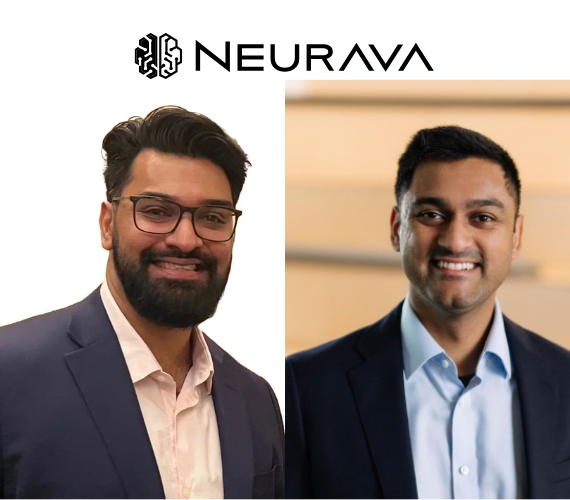
For Vivek Ganesh and Jay Shah, co-founders and co-CEOs of Neurava, that realization came into focus as the company transitioned from research to execution. What began as a Purdue-based innovation has evolved into a capital-efficient medtech platform preparing for clinical validation, regulatory milestones, and commercialization.
But getting there required a critical decision: where to build.
Their move to Baltimore wasn’t just about geography—it was about aligning with an ecosystem capable of supporting manufacturing, clinical development, and capital access. Increasingly, that ecosystem includes coordinated support from Launchport, the Maryland Department of Commerce, and funding mechanisms like the Biotechnology Investment Incentive Tax Credit (BIITC).
As Neurava approaches a pivotal stretch, their story reflects a broader shift across medtech: execution is now ecosystem-dependent.
1. You built Neurava across two cities before consolidating in Baltimore. What made that moment the right time to choose a single home base?
Jay Shah: We founded Neurava in 2019 when we were grad students at Purdue. For several years, we operated across Indianapolis and Baltimore, especially from 2021 to 2025. But as the company grew, it became clear that being in one place would make collaboration and execution much easier.
We evaluated different options, but Baltimore stood out. The medtech ecosystem here is strong, and being in a facility like Launchport—where we’re close to our contract manufacturer and device assembler—has made a big difference operationally.
We also found the support from the state to be meaningful. Whether it’s programs through the Maryland Department of Commerce, access to grants, or proximity to the FDA and NIH, those factors really helped solidify the decision.
Vivek Ganesh: I’d add that Baltimore offers a level of vertical integration that’s hard to find. A lot of our materials, boards, and devices are built locally, which supports our manufacturing process in a meaningful way.
There’s also strong connectivity to funding networks here which plays a role in supporting early-stage companies in Maryland. That combination makes it a much stronger environment for a medical device company at our stage.
2. How has the Baltimore ecosystem influenced your ability to grow—especially within neuro and medtech?
Vivek Ganesh: The ecosystem has been a major enabler for us. There’s a strong push to elevate neuro as a focus area, and we’ve benefited from that momentum.
You have institutions like Johns Hopkins and the University of Maryland, as well as organizations like the Biopark, all contributing to a growing network. And with Neurotech Harbor, we’re able to connect with other founders and companies working in similar spaces.
What’s unique for us is that we sit at the intersection of neuro and cardiopulmonary. That creates a shared knowledge base that helps de-risk what we’re building.
Jay Shah: There’s also a strong sense of collaboration here. Whether it’s other founders, clinicians, or ecosystem partners, people are willing to share insights and support each other.
That kind of environment makes a real difference when you’re building something complex.
3. You’re developing an AI wearable platform focused on epilepsy monitoring. What problem are you solving, and how is your approach different?
Vivek Ganesh: Our work is rooted in SUDEP—sudden unexpected death in epilepsy—which is one of the leading causes of mortality in epilepsy patients.
We’ve developed a two-device AI wearable platform. The first detects convulsive seizures and provides alerts, particularly for early-stage patients. The second monitors cardiac and respiratory activity to identify patients at higher risk.
The goal is to create a more comprehensive monitoring system that gives physicians better visibility into what’s happening outside of clinical settings.
We’re targeting FDA clearance for the both devices next year, with a commercial launch in early 2027. Jay Shah: This year is really about execution—clinical validation, regulatory submission, and building out our commercial strategy. It’s a critical period leading into that 2027 launch.
4. As co-founders and co-CEOs, how do you structure your partnership to manage both the science and the business?
Jay Shah: We started as friends in the lab before founding the company, so we had a strong foundation from the beginning. Communication has always been key for us, especially as the company has grown.
Vivek Ganesh: As we scaled, we realized it was critical to define clear “swim lanes.” Jay leads clinical, operations and commercialization, while I focus on fundraising, strategic partnerships, and M&A.
That structure allows us to operate efficiently and stay focused. We’ve been able to build a full platform, generate clinical data, and move toward commercialization with a small team and relatively limited capital—which reflects that discipline.
Being in person now has also made a big difference in how we communicate and make decisions.
5. As you approach commercialization, what does this next phase look like—and what role does Baltimore play in that future?
Vivek Ganesh: This is a major inflection point for us. Everything we’ve been building over the past several years is coming together as we move toward commercialization.
We’re focused on expanding the team, raising additional capital, and executing on our go-to-market strategy.
At the same time, we’re proud to be building in Baltimore. There’s a shared belief here that if one company succeeds, the ecosystem succeeds—and we want to contribute to that.
Jay Shah: The goal is to bring a Baltimore-built product to market that makes a real difference for patients. We’ve spent years building toward that moment—now it’s about delivering.