From CMC strategy and analytics to CDMO partnerships and AI-enabled operations, life sciences ecosystem gathered at Propel Labs to discuss the growing pressure to execute with speed and precision.
The biotech industry is entering a new phase where breakthrough science alone is no longer enough to attract capital, reach the clinic, or survive long enough to scale. As investors demand clearer paths to commercialization, emerging companies are being forced to raise the bar on their drug development strategy.
The bottleneck is shifting away from discovery itself and toward execution — clinical readiness, manufacturability, analytical rigor, scalable processes, and the ability to make high-stakes development decisions under compressed timelines and limited runway.
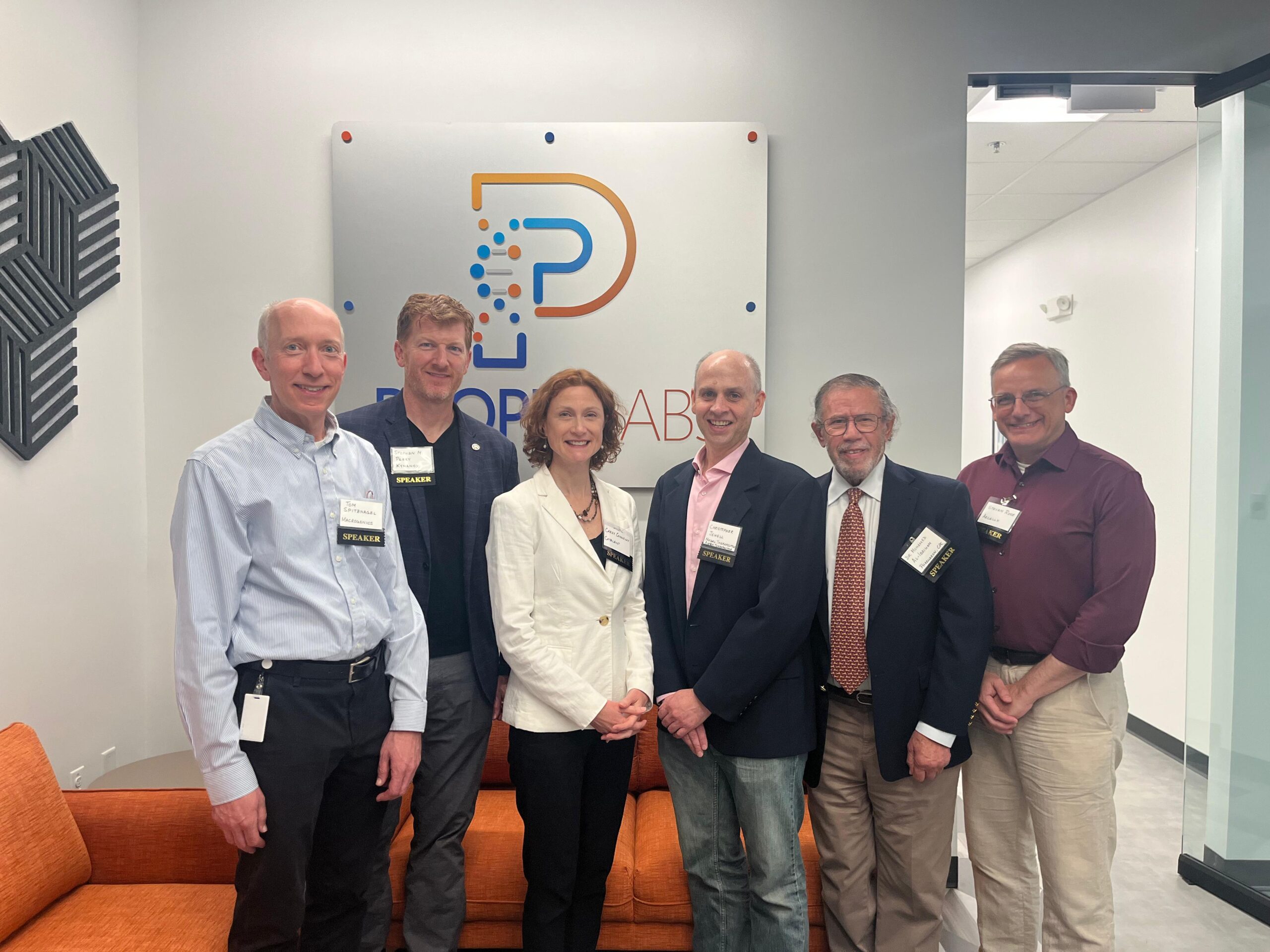
At a recent BioBuzz Insights to Impact event hosted at Propel Labs in Germantown, MD several industry leaders spoke to a room of about 100 startups and industry professionals about just this topic. Featured speakers included Christopher Jewell, co-founder and chief scientific officer at Nodal Therapeutics; Dr. Mohamed Al-Ibrahim, Senior Physician Investigator at Pharmaron; Steven Rose, Head of Protein Sciences Development and Manufacturing at Arcellx; Carey Connelly, Sr Director Process Development at Catalent; Stephen M. Perry, Chairman of Kymanox; and Tom Spitznagel, Sr Vice President, Technical Operation of MacroGenics, among others across Maryland’s life sciences ecosystem.
The discussions covered everything from IND strategy and clinical trial readiness to CDMO partnerships, analytics, manufacturing scale-up, patient recruitment, and the growing role of AI in biopharma operations.
A Conversation Grounded in Execution
Opening the evening, Chris Frew emphasized the importance of creating spaces where industry professionals can move beyond surface-level networking and engage in real operational conversations.
The evening featured fireside discussions and panels focused on early clinical strategy, manufacturing readiness, analytical development, and operational execution across biotech and advanced therapies.
The central theme throughout the evening was clear: scientific innovation alone is not enough. Success depends on operational discipline, strategic partnerships, manufacturability, and the ability to move efficiently under real-world constraints.
The Pressure to Move Faster — and Smarter
During the first discussion, Christopher Jewell reflected on how today’s biotech environment has shifted dramatically toward asset-focused execution.
Jewell explained that investors are increasingly looking for companies with a clear therapeutic direction and realistic path to the clinic, rather than broad platform concepts alone.
He also discussed the growing pressure on startups to make critical development decisions earlier than ever before.
“You have to have an asset quickly,” Jewell explained while discussing the realities facing emerging biotech companies navigating limited runway and increasing investor expectations.
Alongside him, Mohamed Al-Ibrahim highlighted how clinical development today requires balancing safety, regulatory expectations, efficiency, and cost simultaneously.
He emphasized that good recruitment and clinical execution “does not happen by accident,” particularly for early phase studies requiring participant retention and rapid enrollment timelines.
The discussion also explored how sponsors must think carefully about protocol design, vendor oversight, and trial simplification in order to avoid unnecessary delays and operational bottlenecks.
Why CDMO Partnerships Matter More Than Ever
As the conversation shifted toward CMC and manufacturing readiness, speakers repeatedly returned to one theme: partnerships are no longer transactional.
Stephen Rose — speaking in a personal capacity and noting that his comments did not necessarily reflect the views of Catalent — described the sponsor-CDMO relationship as an extension of the internal development team itself.
“It’s an extension of the team,” Rose explained, describing how sponsors increasingly rely on CDMOs not only for manufacturing capacity, but also for expertise, scalability, and problem-solving support.
Carey Connelly reinforced that idea, stressing the importance of transparency, flexibility, and operational alignment between organizations.
Connelly noted that both sides must stay focused on the ultimate goal: delivering therapies to patients while navigating inevitable development challenges.
The panelists also stressed the importance of evaluating manufacturability early in development, especially for advanced therapies like gene therapy.
Key concerns included:
- Stability and scalability
- Construct design
- Genome integrity
- Analytical characterization
- Simplicity of manufacturing processes
According to Connelly, overcomplicating processes early can create downstream manufacturing risks that become difficult and expensive to correct later.
Analytics Continue to Drive the Critical Path
One of the strongest recurring themes throughout the event was the importance of analytical development.
Speakers repeatedly described analytics as one of the biggest timeline drivers in clinical readiness and manufacturing.
“Method development definitely [is] always on the critical path,” one speaker emphasized during the manufacturing panel.
Panelists discussed how analytical characterization, formulation development, in-use stability studies, and retain strategies are often underestimated — particularly by emerging companies moving quickly toward IND submissions.
The conversations highlighted how even relatively small analytical oversights can create major downstream delays in comparability studies, process changes, or regulatory readiness.
Balancing Speed and Process Robustness
Another major discussion focused on the tension between speed and robustness during early clinical manufacturing.
Speakers noted that organizations often feel pressure to maximize yield or optimize processes too aggressively before entering the clinic.
However, several panelists argued that predictability and scalability are often more important than perfection during early phases.
For rare disease programs in particular, panelists noted that streamlined manufacturing strategies can sometimes make more sense than highly optimized commercial-scale approaches, especially when patient populations are small and funding is limited.
The broader message: development strategies must align with the actual realities of the therapeutic indication, patient population, and long-term commercial needs.
AI’s Expanding Role in Biotech Operations
Toward the close of the session, speakers explored the growing role of artificial intelligence in biotech manufacturing and process development.
Tom Spitznagel discussed how companies are increasingly investing in structured datasets and electronic lab notebook systems to better position themselves for future AI-enabled process insights.
At the same time, the panel warned against overestimating what AI can currently do without human expertise and oversight.
“It makes you better, it makes you faster, it makes you more efficient. However, it does not make you smarter,” one speaker cautioned during the discussion on AI adoption.
The conversation underscored a broader truth echoed throughout the evening: biotechnology remains a deeply human industry built on trust, scientific judgment, operational rigor, and collaboration.
A Regional Ecosystem Built on Collaboration
Beyond the technical discussions, the event also highlighted the strength of Maryland’s broader life sciences community.
From startups and CDMOs to clinical operators, manufacturers, workforce organizations, and emerging biotech leaders, the evening reflected an ecosystem increasingly focused on collaboration and execution.
As therapies become more complex and timelines more compressed, that collaborative infrastructure may become one of the region’s greatest competitive advantages.