The National Institutes of Health (NIH) has awarded nearly $2.7 million over five years to the University of Virginia’s Biomedical Data Science Innovation Lab (BDSIL), building on a model that has already brought together more than 150 early-career researchers to tackle complex challenges in human health. The award is led by John Darrell “Jack” Van Horn, Quantitative Foundation Distinguished Professor of Data Science and Professor of Psychology at UVA, and provides $539,999 annually through the National Institute of General Medical Sciences’ Innovative Programs to Enhance Research Training program, running through March 2031.
Van Horn said: “This support from the NIH is an investment in a very unique Team Science model which brings newly minted junior faculty together around problems they could not solve alone. By connecting biomedical researchers with data scientists who bring different methods, perspectives, and expertise, we can form new teams, ask better questions, and develop ideas that have the potential to become meaningful new research. That is what the Biomedical Data Science Innovation Lab was purposefully designed to do.”
A Model Built on Teams, Not Just Training
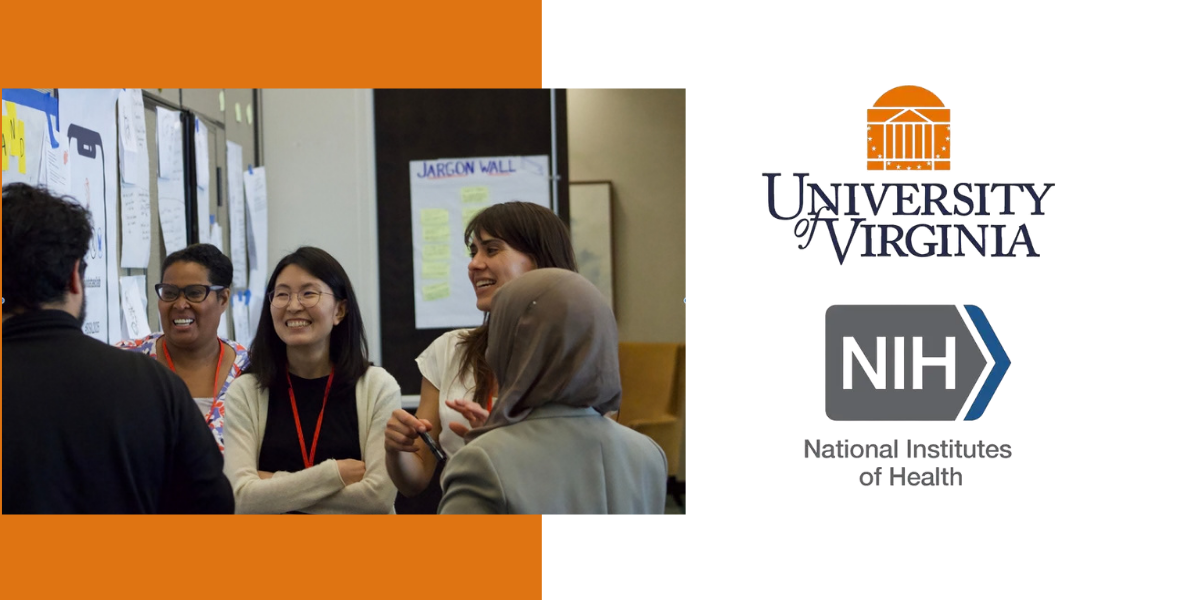
Rather than starting with established research teams, BDSIL brings together investigators with complementary expertise who might not otherwise get the chance to collaborate. Through intensive innovation labs, mentorship, and an ongoing seminar series, participants identify shared research questions, combine methodological and domain expertise, and develop new approaches to biomedical challenges.
The new award follows more than $2 million in previous NIH support for BDSIL since 2021, bringing total NIH investment in the initiative to nearly $5 million. Since the program launched, more than 150 junior faculty researchers have participated directly, with roughly 50 more taking part in related programs that grew out of the initiative — and participants have gone on to receive NIH R01 and R21 grants, National Science Foundation awards, and internal funding from their home institutions.
From a Five-Day Lab to Six Grant-Ready Projects
In May 2026, a UVA-focused edition of the Innovation Lab brought together 26 investigators from across the university, including researchers from the School of Data Science, School of Medicine, and the Paul and Diane Manning Institute of Biotechnology. Over several days, participants formed interdisciplinary teams around emerging research questions and developed six grant-ready projects, spanning multi-omic data integration, machine learning, foundation models, computational reproducibility, and AI-enabled drug discovery. The approach reflects a broader shift in biomedical science: increasingly complex research questions require expertise spanning traditional disciplinary boundaries, and advances in AI, machine learning, and computational methods — paired with growing access to large, diverse biomedical datasets — are creating new openings for discovery that BDSIL is designed to help researchers turn into collaborations.
What the New Funding Supports
The latest NIH investment will let Van Horn and collaborators expand the program’s integrated mentorship, collaborative innovation, and targeted research development work, with particular emphasis on supporting early-career faculty as they build independent research programs. For UVA’s School of Data Science, the initiative also demonstrates how data science can function as a connective discipline, drawing together researchers, methods, and ideas across traditional academic boundaries. BDSIL is supported by the National Institute of General Medical Sciences, part of the NIH.