
Women’s Health Nexus 2026 panelists say federal momentum is real, but founders who win the next cycle will be the ones who can translate policy signals into reimbursement paths, partner coalitions and a plan for the people their technology displaces.
The final panel of Women’s Health Nexus 2026 arrived at a charged moment. Two weeks earlier, the White House had signed an executive order creating a women’s health division at the National Institutes of Health. Three days earlier, voters had handed Democrats control of both chambers of Congress. And CMS had released its CY 2027 Medicare Physician Fee Schedule final rule just two days before the event.
The room at Congressional Country Club in Bethesda, Md., held roughly 200 attendees from more than 80 organizations, with founders, clinicians, policymakers and investors each represented by 40 or more participants. Earlier in the day, ten companies had pitched to seven judges, and Brainify AI was named winner of the pitch competition.
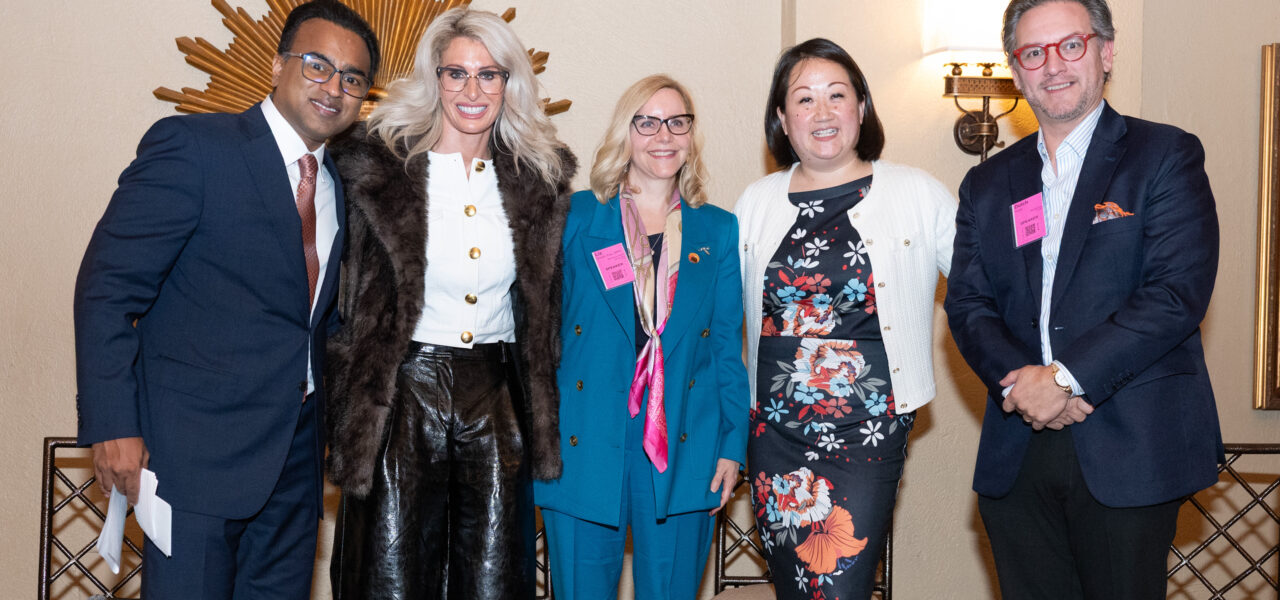
The easy framing is that women’s health has become a bipartisan priority and capital will follow. The panel, moderated by Vipul Kella, MD, accepted the first half of that framing and complicated the second. Ashley Vertuno, FACHE, CEO of HOPCo’s Arizona market; Liz Powell, founder of G2G Consulting and Women’s Health Advocates; Sunny Lu Williams, President and CEO of TechServ Corporation; and Dutch Rojas, founder of Rojas Media and PhyCap Fund, kept returning to the same gap. Policy can create an opening, but adoption is decided by an operator looking at a shrinking margin and an understaffed floor.
The signal is bipartisan, but the dollars are not yet appropriated
Powell, a former Capitol Hill staffer, offered the most optimistic read. Congress has repeatedly pushed back on proposed NIH cuts across party lines, she noted, and she expects a larger increase next year along with continued support for ARPA-H. By her estimate, only about 8% of NIH funding goes to women’s health, and she reads the fact that two very different administrations have each launched women’s health initiatives as a sign that more money is coming.
Kella pointed out that the new NIH division came without new dollars. Powell agreed, while noting that department secretaries hold discretionary funds and that a budget request naming a dedicated women’s health account gives appropriators a starting point. Women’s Health Advocates, she said, secured the first-ever Women’s Health Innovation Pilot in the House appropriations bill and is pushing a $200 million interagency designation across HHS to break women’s health research out of institute silos.
She also expects Senator Ron Wyden, positioned to chair the Senate Finance Committee, to drive hearings and legislation on affordability, insurance bureaucracy and keeping people in their homes for long-term care. Her closing caution was about time: legislation to close the gap between FDA approval and CMS coverage has been attempted in some form since the 103rd Congress.
Reimbursement is moving the other way
If Powell described money that may be coming, Vertuno and Rojas described money already leaving. Under the CY 2027 final rule, the physician conversion factor drops 1.86% for clinicians in qualifying alternative payment models and 2.36% for everyone else. Rojas was blunt about what that signals to physicians and about a parallel policy trend that favors large health systems and accelerates consolidation.
Vertuno connected the cuts to the pitch decks in the room. CMS continues to apply a 2.5% efficiency adjustment to work RVUs for non-time-based services, effectively paying physicians less on the assumption that procedures get faster. Many health technology pitches promise exactly that efficiency. When the payment system already claws it back, she said, founders need a different argument for adoption.
The same rule showed how quickly policy can reset a market. CMS will allow third-party vendors to provide remote physiologic monitoring technical services only until January 1, 2029. Kella observed that one rule could end the business model for hundreds of companies. Williams, who began in remote patient monitoring through telecom about 15 years ago, explained why that may not be a loss. She has sat on boards of smaller RPM companies that amounted to Bluetooth-enabled devices with no clinician and no actionable follow-up, sustained by investor dollars and subscriptions rather than demonstrated outcomes. Without clarity and a comparison point in the business model, she said, the category became a race to raise the most money.
For women’s health founders, the lesson is about durability. A reimbursement code is a policy decision, and policy decisions get revisited when the evidence behind them is thin.
The best pitches come with a workforce plan
The most practical guidance came from Vertuno, who moved four months ago from a hospital CEO role at HCA Healthcare to HOPCo, a physician-led, private equity-backed musculoskeletal, vascular and neuroscience organization operating in value-based care. Where a large system routed innovation through layers of committees, she now answers to a single small committee that asks whether a product will drive value, create access and produce a return.
What has not changed is the labor problem. Kella joked that a hospital administrator’s top five priorities are labor, labor, labor, labor and labor, with AI somewhere around 26th. A product that removes positions may solve a cost problem, he noted, but displaced employees often end up at a competitor across the street, and they took a long time to recruit.
Vertuno said she now asks every company what new skills her team needs to start learning today to move into new roles. She has heard pitches for imaging without technicians and for prior authorization outside the practice’s EMR. Some displacement is unavoidable, she acknowledged, but she still needs people to run the organization, and shortages persist in diagnostic imaging, among physicians and among advanced practice providers.
The pitches that land arrive with that answer built in. A company that says, in effect, “You may not need 20 people in this function, you may need six, and here is what the new role looks like,” is doing work most operators have never seen from a vendor. Only two companies have pitched her that way, and she called them among the best pitches she has heard. In a sector where the workforce is the binding constraint, a redeployment plan may be what gets a product past the committee.
Clinical credibility is a team requirement
Williams, who has worked across telecom, manufacturing and energy, said healthcare is unusual in asking founders to be entrepreneur, executive and clinical expert at once. If one founder cannot cover all three, the team must, and clinical operations knowledge cannot be outsourced to a fractional hire because it determines how the product fits into the workflow. Rojas, a healthcare investor for 27 years, said it is the lesson he has tried hardest to teach large venture firms. Someone who can run an OB-GYN department, he said, holds knowledge worth tens of millions of dollars that the market has not yet priced. Kella’s advice to medical students eyeing venture capital was similar: see patients for a decade first.
Rural health is a co-funding opportunity
Kella noted that many investors avoid rural healthcare despite tens of millions of underserved patients. Williams argued that the federal Rural Health Transformation Program is neither net new money, once prior cuts are counted, nor a realistic budget for rebuilding clinical delivery. Its real value is as “capital to team,” funding the partnerships needed to serve rural communities. She urged founders to treat it like co-investment and build coalitions across state, county and city government, large nonprofits, academic research institutions, community organizations and faith-based leaders.
Rojas brought the investor’s view. After visiting rural hospitals in Arizona, Oklahoma, Kansas and Texas, he called closure headlines misleading, because many of those hospitals struggle with basic financial management and cannot recruit full-time staff. He sees 15 to 20 investable areas in rural health and tied the thesis to women’s health. Physician-owned hospitals include many women physicians, he said, and he described helping an all-female OB-GYN group outside San Francisco build assets through a captive that could be worth more than $3 million per physician over a decade, giving it the strength to hire rather than sell. His group asked this year for an exception that would let rural physicians return home and own local hospitals. It was not granted.
Non-dilutive capital and a louder clinical voice
Williams also pointed founders to the Patient-Centered Outcomes Research Institute (PCORI), which she described as less exposed to federal policy swings because it is funded through a trust fund created under the Affordable Care Act. Its core question, whether an intervention is measurably better than alternatives, forces founders to understand their full competitive landscape. PCORI’s next cycle offers awards of up to $12 million per project, with letters of intent due in early January.
For clinicians who want to shape the environment directly, Rojas offered a tactic from his seven years of volunteer advocacy: coordinated calls. When a congressional office hears from a large group of specialists or primary care physicians in the same window on the same day, he said, staff start paying attention.
What happens next
The panel offered a clear brief for women’s health founders entering 2027. Federal attention is real and, for now, bipartisan, and appropriations, pilots and new research structures are taking shape. But the same policy machinery is cutting physician payment, closing reimbursement pathways that lacked evidence and pushing operators to scrutinize every product through a labor lens. The companies that turn this moment into market access will likely be the ones that arrive with comparative evidence, a coalition of partners, clinical credibility on the founding team and a credible plan for the workforce their technology will change.