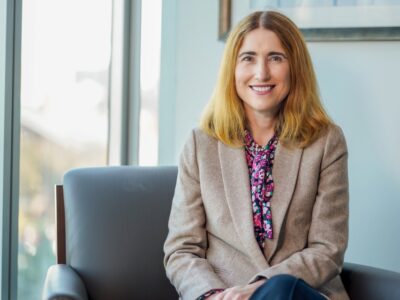
You may have seen him around the Johns Hopkins campus as a student leader and guest speaker at the Entrepreneur’s Forum or around the Capital Region attending networking events. We know him at BioBuzz as a BioBuzz 2022 Annual Awards Community Builder finalist for his role in empowering biotech entrepreneurs in the BioHealth Capital Region ecosystem. Notably, Dr. Taylor Cottle and his co-founder established the Nucleate Bio Baltimore DC Chapter in 2021 bringing the Activator program to the Capital Region. As he continues trailblazing and making substantial impact within our community, here is his story behind the origins of Aptabridge Therapeutics, Inc.
| From ABC to XYZ, our newest column, The XYZ, explores some of the most innovative people, organizations, and topics for the next generation of bioentrepreneurs. BioBuzz is thrilled to spark new concepts, conversations and communities. |
About Aptabridge Therapeutics, Inc
Aptabridge Therapeutics, Inc is dedicated to pioneering a next-generation drug design platform that leverages RNA nanostructures for immunotherapy. The company specializes in the development of highly stable, bi and multi-specific molecules aimed at treating multifaceted, complex diseases by engaging two disease targets with one molecule. By employing RNA nanostructures instead of antibodies for immunotherapy, Aptabridge Therapeutics aims to overcome challenges faced by bispecific antibodies with a product that promises to be safer, lower cost, and easier to manufacture. Their modular design approach ensures the reliable mixing and matching of binding modules on their nanostructures, facilitating the seamless integration of diverse disease-targeting modules. This approach enhances the versatility and scalability of the platform by allowing the disease-targeting modules in working immune targeting modules to be swapped out, ultimately addressing a wide range of diseases. Aptabridge Therapeutics’ vision for the platform is to produce an AI-augmented system that can be used directly in the clinic to take patient tissue, analyze for unique biomarkers, and then synthesize a therapeutic molecule all in one device.
About Taylor Cottle, Ph.D.
Dr. Taylor Cottle has been a part of the BioHealth ecosystem for over seven years. He received his Ph.D. from Johns Hopkins School of Medicine in Biophysics and Biophysical Chemistry under the mentorship of Dr. Taekjip Ha in 2023 and is currently pursuing an MBA at the Carey Business School. During his PhD, he studied novel Cas9 methods for biological imaging and used these methods to characterize mammalian cell genome maintenance. Early in his studies, Taylor realized his passion was in translating basic science into transformative therapies and bringing them to patients where they can have a tangible impact. Driven by his passion for innovation, he found his calling and began his entrepreneurial journey.
At Hopkins, Taylor participated in case consulting and business pitch competitions, as well as accelerator programs. The first business pitch was an international business pitch group called Gap Summit which showcased business ideas from early career biotech professionals. For the Gap Summit, Taylor and his team members built a project based on nucleic acid therapies. The experience turned out to be a great lesson in understanding the complexities of an idea, the size of the market, and the associated risks with gene therapies. This was a critical pivot point for Taylor. He began to rethink the problem he was solving with his innovation, reiterated the product design, and refined his pitch. Intent on developing an immunotherapy solution that would help patients, Taylor and his team found a nucleic acid-based molecule that can be designed to bind to specific molecules and recognize all the foreign targets. This therapeutic approach would allow physicians to arm a patient’s immune cells with a nucleic acid targeting system that helps them identify specific cancer markers within the patient. One of the biggest advantages of aptamers is that they can be dried down and shipped in a paper envelope at room temperature to be sent anywhere in the world. Not only that, but they are also cheaper to produce and globally scalable at a realistic cost. With a clear vision and value proposition, Aptabridge Therapeutics was formed.
What does it take to be an innovator?
You have to kind of love the thrill of creating something that doesn’t and has never existed. Most people that I talk to who are entrepreneurs are not happy with the status quo. There’s always something that can be a little bit better or improved. Or some way you can make the lives of customers or a product better. So you know that spark is something that I always had. At many points throughout my academic and entrepreneurial journey, I was always like well, ‘We’re building this technology. But why? What’s the purpose? What are the clinical outcomes?’ So I think having that in mind is also important for someone going through this experience and it gives you that motivation again. You’re going to have days where something is darn hard so you need that light at the end of the tunnel. You have to know that this is going to make it to a patient, to a customer, to a market.
After going through the Nucleate Activator program, Taylor developed an insatiable hunger to bring his venture forward. Through his involvement in the various accelerator programs on the Hopkins campus, including FastForward U’s Spark and FUEL, Taylor strengthened his business skills and built a network of mentors and collaborators. Taylor’s passion for innovation and storytelling in biotechnology and molecular medicine has become a permanent part of his identity as he continues to push forward in his venture and contribute to the bio-revolution that will continue to improve the quality of life for people worldwide.
After reiterating the design, Taylor pitched Aptabridge Therapeutics to Venture Capitalist (VC) firms with variable success. Despite setbacks, Taylor persevered, gathered more data, reinvented the pitch, and continued working on scientific development. In May 2023, Taylor secured the inaugural Hopkins Presidential Venture Fellowship allowing his team to continue developing the scientific platform in Baltimore. Currently, Aptabridge Therapeutics is in the process of building out its data set with a focus on getting a candidate and building its first molecule. In addition to the fellowship and securing smaller funds, Taylor is also in the process of writing three SBIRs for the National Institute of Health and National Science Foundation using new data gathered after receiving valuable feedback. Taylor’s goal by the end of 2024 is to go back to VCs, secure seed funding and continue building the company platform.
What advice would you give to entrepreneurs on networking?
Your network only works and is only useful if you have it before you need it. You can’t just generate a network. If you need it tomorrow, it’s going to be very hard to find the right person. So that’s why different events and just meeting people is very important. And then whoever you’re trying to meet, you’re going to find that person eventually. Our Chief Science Advisor was recommended to me by a business advisor who actually wasn’t a great fit for us, but this guy was just in his network. So we got the fast track to this path. Our CSO has probably 30-40 years of experience. So these are these are important connections.
As a designated tech hub, the Baltimore area offers an exceptional environment for life science startups like Aptabridge Therapeutics. The DMV area has had significant growth in both the tech and biotech sectors. This growth fosters a vibrant community of entrepreneurs who regularly gather to discuss industry trends and share insights, creating a perfect environment for life science startups. Unlike larger tech hubs such as Boston or San Francisco, where competition is fierce and resources are limited, Baltimore offers more space and opportunities for startups to grow and innovate. The cost of living and operating a business in Baltimore is comparatively lower, allowing startups to stretch their funding further and extend their runway. This affordability enables Aptabridge Therapeutics to invest in local talent through vocational training programs and leverage non-diluted funding to propel their initiatives forward.
What advice would you give on creating value for a start-up?
I think on top of all of that, build your story. Not only your start-up story but your personal story as well. That’s something that we’re building. It is more about understanding what your values are. What do you stand by? What are you doing?… It took a while to land on the Aptabridge value proposition. We are providing immunotherapy to improve patient response rates and make immunotherapy available everywhere. Those are the big-picture vision statements that drive your business.
In his spare time, Taylor studies the piano and cello and enjoys staying active by swimming with the local Hopkins swim club. He welcomes opportunities to connect and share his experiences. If you’re interested in connecting with Taylor, you can reach him via LinkedIn.