In life sciences, the conversation around AI has moved quickly from if to how. But beneath that momentum lies a more fundamental question: are organizations actually ready to use it?
That gap—between interest and readiness—is becoming one of the defining challenges for the industry. At the upcoming AAPS National Biotechnology Conference, that tension will be front and center, as leaders across biotech, pharma, and tech explore what it really takes to operationalize innovation.
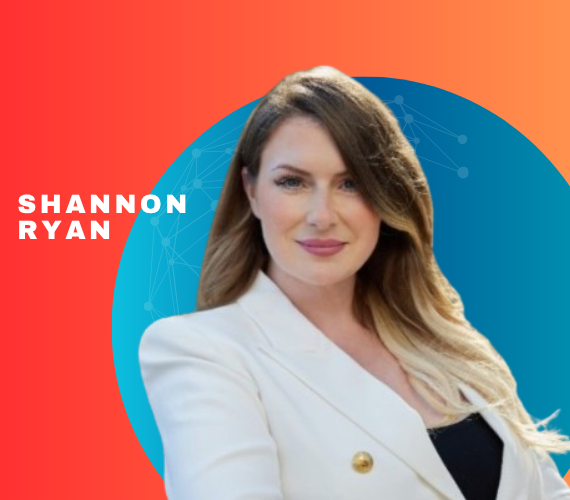
For Shannon Ryan, working at the intersection of digital strategy and engineering, the answer isn’t just about tools—it’s about mindset, infrastructure, and execution.
1. Your career has spanned healthcare, CROs, and now deep tech. How did that path shape your perspective on transformation?
Shannon Ryan: I started my career about 20 years ago when “this thing called Google” came out. From there, I moved through specialized healthcare, helped a contract research organization go through an IPO, and then moved into consulting around digital transformation.
Now I’m fully on the tech side—helping life sciences companies, pharma, CROs, and biotech organizations not just think about the future, but actually build toward it.
What’s been consistent across that journey is the need to understand both strategy and execution. Digital transformation isn’t just a concept—it’s something you have to operationalize.
2. Your session at AAPS focuses on AI in precision medicine. What’s the core problem you’re addressing?
Shannon Ryan: The biggest question right now isn’t just about AI itself—it’s whether companies are truly ready to implement it.
In my session, I’ll walk through that from multiple angles: the strategy behind adoption, the tactical steps to get there, and a live readiness demo that lets the audience see where their organization actually stands.
But it starts with a simple question: is your organization actually prepared for AI?
But readiness is not one thing. I think about it across four dimensions. First, your data, is it clean, accessible, and consented for the uses you have in mind. Second, your processes, can you actually integrate an AI output into a regulated workflow without breaking validation. Third, your people, do you have the talent, and just as important, the governance to use these tools responsibly. And fourth, your mindset, is the organization willing to move from pilot to production, or does every project quietly stall once the demo ends.
Most companies score well on one or two of those and badly on the others. That’s the real bottleneck. AI tools are easier to acquire than ever. Readiness is what separates the organizations that ship from the ones that stay curious.
3. You talk about an “innovation-first” mindset. What does that look like in practice?
Shannon Ryan: In life sciences, everything starts with data. So the question becomes: how are we handling that data, and where can we take it?
An innovation-first mindset means understanding where the industry has been—but also identifying where processes can be improved. Where are the manual steps? Where can data be optimized? Where can we identify anomalies faster?
It’s about moving from reactive to proactive—using technology to unlock better, faster insights that ultimately move science forward.
4. There’s still hesitation around AI across the industry. What are people getting wrong?
Shannon Ryan: The biggest misconception is that AI is going to replace jobs.
From a technologist’s perspective, that’s not the case. AI is meant to remove the manual, repetitive tasks that don’t require deep thinking—so people can focus more on strategy and problem-solving.
“We call it ‘human in the loop.’ A human will always need to be present because the tech reacts to the human.”
The opportunity isn’t replacement—it’s augmentation. And if we approach AI without fear, it becomes a tool that helps us move faster, especially when it comes to delivering therapies to patients.
5. For companies at different stages, where should they start—or what should they be thinking about now?
Shannon Ryan: It depends on where you are.
If you’re early, it might just be starting the conversation—thinking about lab automation or how AI could fit into your workflows. If you’re further along, it’s about implementation and making sure you have the right engineering support.
What’s critical in life sciences is that you can’t separate innovation from compliance. You have to understand regulatory requirements, FDA expectations, and how to handle data properly.
If I had to give every company three Monday-morning actions, it would be these.
First, inventory the AI you already have. That includes the unsanctioned use, the ChatGPT tabs open on personal laptops, the tools individual scientists are experimenting with. You cannot govern what you have not mapped, and most organizations are surprised by what’s actually in use.
Second, pick one use case and assign one named owner. Not a steering committee. One person who is accountable for the outcome, the validation, and the regulatory path. Committees do not ship models. People do.
Third, write down the human-in-the-loop boundary for every use case before launch. What does the model decide. What does it recommend. What stays with the human. Get it in writing. This is the single most valuable governance artifact you’ll produce, and it costs nothing.
But the biggest thing is not waiting. The market is moving quickly, and the companies that start adapting now are the ones that will be positioned to move faster later.
6. For those not attending AAPS, what should they be paying attention to?
Shannon Ryan: I’d encourage people to stay engaged with what’s happening in the market, especially around AI and machine learning. The pace of change in the last 18 months has been unlike anything I’ve seen, and the gap between leading and lagging companies is widening fast.
But more importantly, start looking internally. Where are the manual bottlenecks? Where can processes be improved? What does your readiness actually look like across data, process, talent, and mindset?
And then have the confidence to start those conversations. Don’t wait for a perfect strategy document. The companies pulling ahead are the ones treating AI as a discipline to build into the organization, not a project to launch and forget.
Because the faster we adopt what’s happening now, responsibly and with the right governance, the faster we get to better outcomes for patients. And that’s ultimately the goal for everyone in this industry.
Why This Conversation Matters
What Ryan highlights is a shift that goes beyond technology.
AI may be the headline—but readiness is the real story.
As life sciences organizations race to integrate new tools, the limiting factor isn’t access to technology—it’s the ability to align data, infrastructure, talent, and mindset around it. That’s where friction is emerging, and where competitive advantage is increasingly defined.
That’s also where convening bodies like the American Association of Pharmaceutical Scientists play a critical role.
By bringing together scientists, technologists, and operators, AAPS is creating a neutral forum for the industry to move the conversation from hype to execution—not by taking a position, but by surfacing credible research and perspectives from across the field so organizations can figure out how to use AI responsibly and effectively.
Because in the end, the promise of AI in biotech isn’t just about innovation.
It’s about whether the industry is ready to deliver on it.